

What a Zygomatic Implant Success Story Takes
25 July 2026When a patient has been told there is not enough upper-jaw bone for conventional implants, the conversation can feel as though it has reached a dead end. A zygomatic implant success story is different because it shows that severe bone loss does not automatically rule out a fixed new smile. With the right diagnosis, surgical experience and aftercare, zygomatic implants can create a stable foundation in cases that would otherwise require extensive bone grafting or a removable denture.
For many people, the result is not simply a new set of teeth. It is the ability to eat more comfortably, speak without worrying about denture movement and smile without trying to hide the upper teeth. However, success is never just about the final photograph. It depends on careful planning, realistic expectations and a treatment approach tailored to the individual patient.
Why conventional implants may not be suitable
Traditional dental implants are placed into the jawbone. In the upper jaw, long-term tooth loss, gum disease, ill-fitting dentures or previous failed treatment can leave too little bone in the back of the mouth to hold standard implants securely. The sinus cavities can further limit the available space.
Bone grafting and sinus lift procedures can help in selected cases, but they may add several months to treatment and are not right for everyone. Some patients want to avoid additional grafting surgery, while others have bone loss severe enough that grafting would be complex and less predictable.
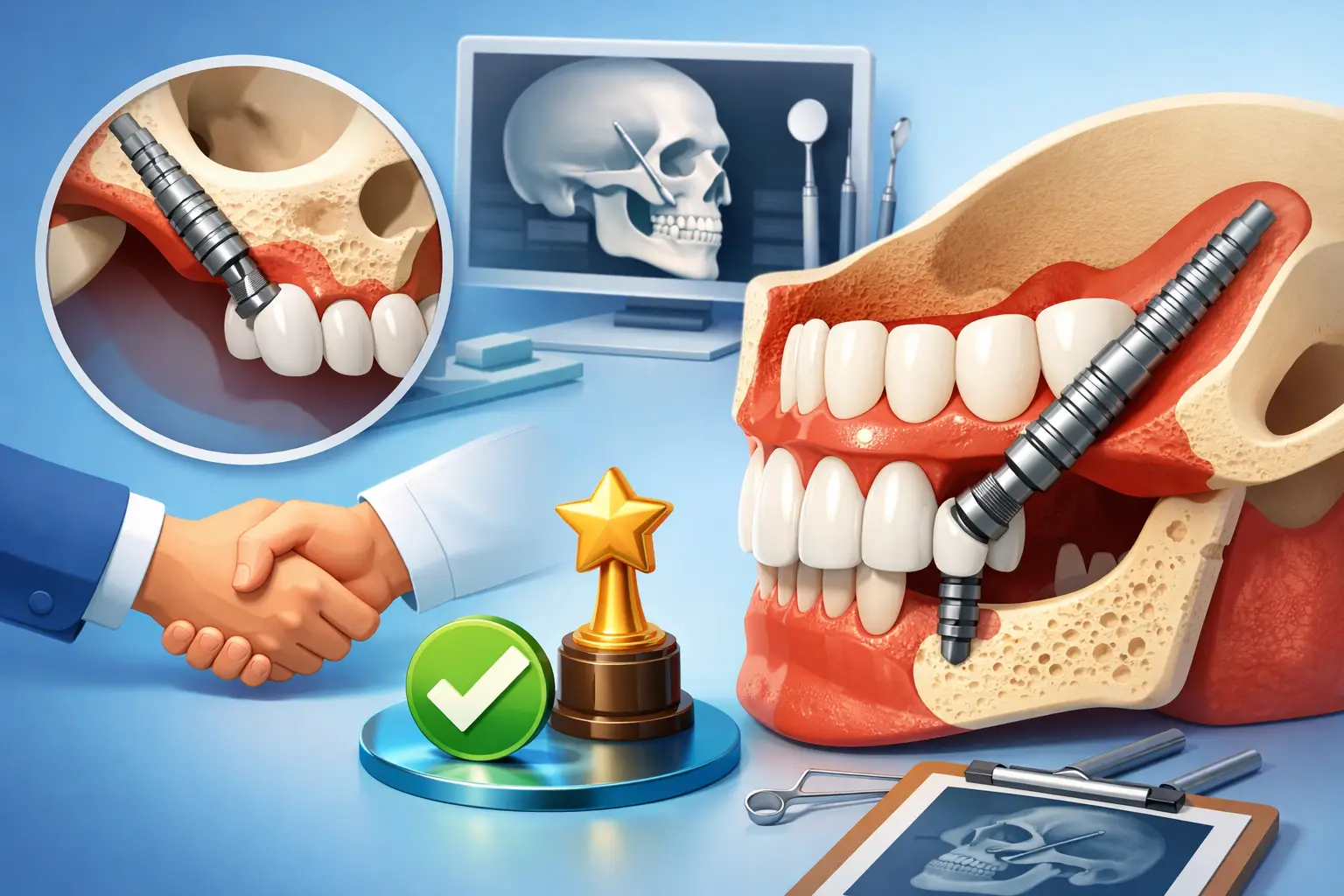
Zygomatic implants offer another route. Rather than relying only on the weakened upper jaw, these longer implants are anchored in the zygomatic bone, commonly known as the cheekbone. This bone is naturally dense and can provide a strong base for a full-arch restoration.
A zygomatic implant success story starts with the diagnosis
The most reassuring success stories do not begin in the operating theatre. They begin with an honest assessment of whether the treatment is clinically appropriate.
A detailed consultation should include a full medical and dental history, examination of the gums and remaining teeth, and 3D CBCT imaging. This allows the clinical team to assess bone volume, sinus anatomy, bite position and the relationship between the planned implant sites and important facial structures. Digital planning is particularly valuable because zygomatic implants follow a more complex path than conventional implants.
The plan may involve two zygomatic implants combined with conventional implants in the front of the upper jaw. In more advanced cases, four zygomatic implants may support the full arch. The correct option depends on the patient's anatomy, oral health and the final restoration required. There is no single arrangement that suits every patient.
A good clinician will also discuss factors that can affect outcomes, including smoking, uncontrolled diabetes, active gum infection, teeth grinding and the ability to maintain excellent oral hygiene after treatment. Zygomatic implants are an advanced solution, not a shortcut around these considerations.
From failing teeth to fixed teeth: a typical patient pathway
Consider the experience of a patient who has worn an upper denture for years after losing most of their teeth to advanced gum disease. The denture has gradually become harder to tolerate. Adhesive is needed for social occasions, certain foods are avoided, and the smile no longer feels natural. A previous dentist has explained that standard implants would require substantial bone grafting.
Following 3D imaging and specialist assessment, the patient may be found suitable for zygomatic implant treatment. Any teeth that cannot be saved are removed, the mouth is cleaned of infection where necessary, and the implants are placed according to the digital surgical plan. Depending on implant stability and the individual case, a fixed provisional bridge can often be fitted shortly after surgery.
That provisional stage matters. It gives the patient fixed teeth during healing, but it is not yet the final result. The bite, speech, gum healing and facial support are reviewed over time. Once the implants and surrounding tissues have settled, the final bridge is designed to provide a balanced bite, natural appearance and practical access for cleaning.
For an international patient, the pathway also needs to account for travelling. Treatment dates should be planned around the required appointments rather than a rushed holiday schedule. At Dentaglobal, this means coordinating clinical assessments, digital planning, treatment visits and post-treatment guidance so patients understand when they can travel and what support they will need when they return home.
What makes the outcome successful?
A fixed bridge is visible, but the strongest measures of success are often felt in daily life. Patients commonly value being able to bite into food with greater confidence, talk without a loose denture shifting and take part in photographs without self-consciousness. For someone who has lived with missing teeth for years, these changes can be significant.
Clinically, success means more than placing implants. The implants must remain stable, the surrounding tissues need to be healthy, the bridge must distribute bite forces correctly, and the patient must be able to clean around it effectively. A restoration that looks good but is difficult to maintain is not an ideal long-term result.
The final teeth should also suit the face rather than appearing artificially bright, bulky or uniform. Digital smile planning can help the team consider tooth shape, lip support, smile line and facial proportions before the definitive restoration is made. The aim is a smile that feels secure and looks appropriate for the person wearing it.
The trade-offs patients should understand
Zygomatic implant treatment can reduce the need for bone grafting and may shorten the route to fixed teeth, but it remains major surgical care. Swelling, bruising and discomfort are expected during the initial recovery period. Some patients may need a soft-food diet while healing, and all patients need to follow post-operative instructions closely.
Because the implants are placed close to the sinuses and other important anatomical structures, this treatment should be carried out by clinicians with specific experience in zygomatic surgery. Risks can include sinus complications, infection, changes in sensation and implant-related problems. These are not reasons to dismiss treatment automatically, but they are reasons to choose a clinic that plans thoroughly and communicates clearly.
It is also essential to understand that immediate fixed teeth, where suitable, are provisional teeth. They are designed to support function and appearance during healing. The final bridge is made after the clinical team has confirmed that healing is progressing as expected.
Aftercare protects the investment
Long-term success is shared work between the patient and the dental team. Even though implants cannot decay like natural teeth, plaque can still collect around them and cause inflammation. Daily cleaning beneath the bridge, use of the recommended brushes or water-cleaning devices, and regular professional reviews are essential.
Patients who live abroad should have a clear aftercare plan before treatment begins. This includes guidance on normal healing, who to contact if a concern develops and when reviews are needed. A reputable provider will not treat post-treatment support as an afterthought, particularly when patients are returning to the UK or elsewhere in Europe.
A zygomatic implant success story is therefore not defined by a single day of surgery. It is built through accurate diagnosis, experienced treatment, a well-designed bridge and committed maintenance over the years that follow.
If you are considering this option after being told that you have insufficient bone for conventional implants, bring your existing scans, treatment history and questions to a specialist consultation. A clear answer about suitability is more valuable than a quick promise - and it is the right first step towards a result you can rely on.