

Dental Implants Treatment Guide
16 April 2026Missing teeth change more than your smile. They affect how you chew, how clearly you speak, and often how confident you feel in work and social settings. This dental implants treatment guide explains what the process actually involves, who it suits, how long it takes, and what to expect if you are considering treatment in Turkey or closer to home.
For many adults, implants are the closest replacement to natural teeth because they restore both the visible tooth and the root beneath it. That matters for comfort, stability and long-term jawbone support. But implants are not a one-size-fits-all fix. The right plan depends on your bone level, gum health, medical history, budget and how many teeth need replacing.
What dental implants are and why they work
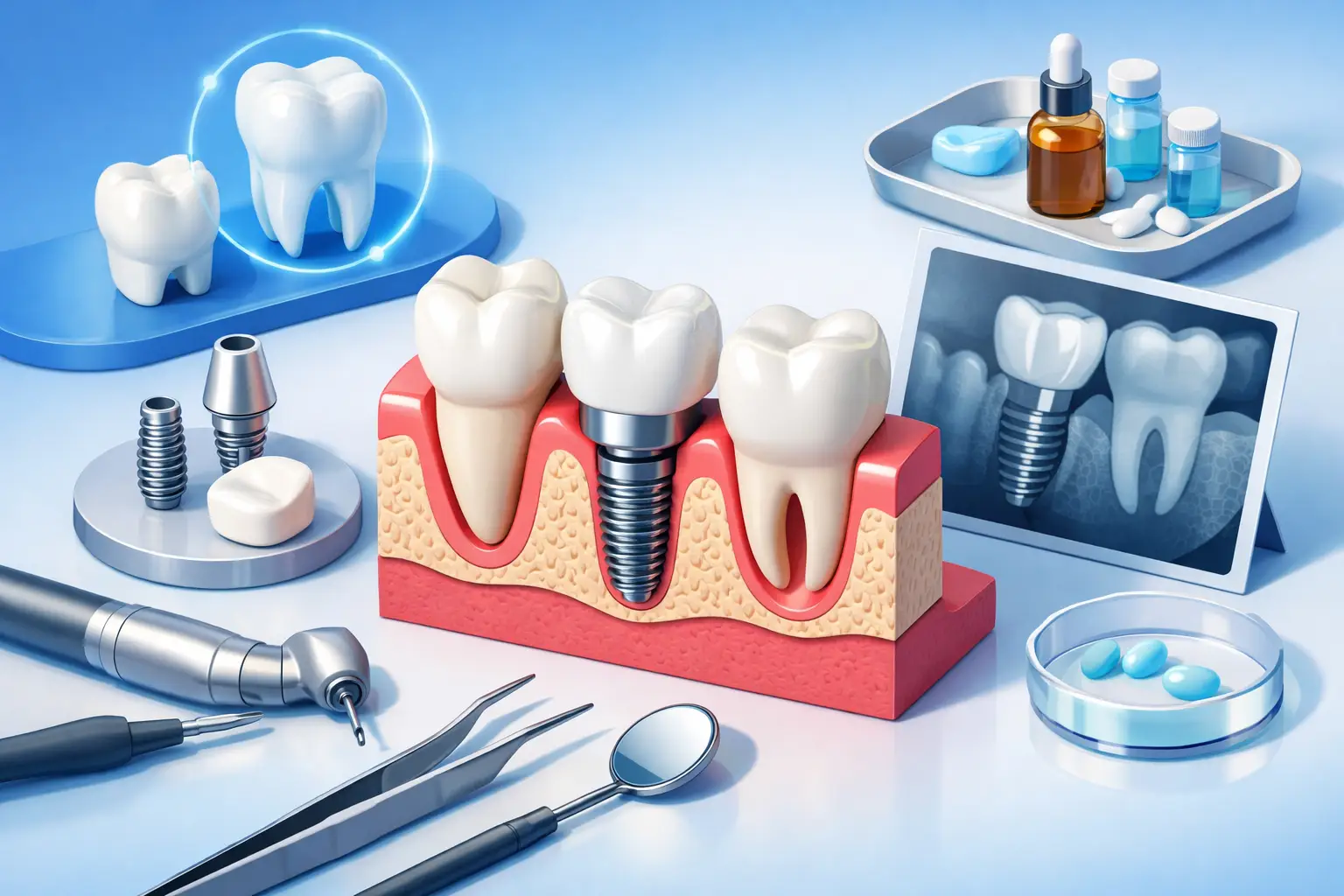
A dental implant is a small titanium post placed into the jawbone to act as an artificial tooth root. Once it integrates with the bone, it can support a crown for one missing tooth, a bridge for several teeth, or a full-arch restoration such as All-on-4 or All-on-6.
The reason implants work so well is that they are fixed in the jaw rather than resting on the gums like a removable denture. This usually gives better stability when eating and speaking. It can also help reduce the bone loss that often follows tooth loss, although outcomes depend on bone quality, oral hygiene and regular maintenance.
That said, implants are not always the fastest option. If you want treatment completed in the shortest possible time, a bridge or denture may be simpler. If you want a long-term fixed solution and are suitable clinically, implants are often the stronger investment.
Dental implants treatment guide: who is a good candidate?
Most healthy adults can be considered for implants, but suitability is decided clinically rather than cosmetically. Good candidates usually have enough jawbone to support the implant, healthy gums, and no uncontrolled medical issues that would interfere with healing.
Smoking, untreated gum disease and poorly controlled diabetes do not always rule implants out, but they can increase the risk of complications. Teeth grinding can also affect the long-term success of the restoration placed on top of the implant. In these cases, treatment may still be possible, but the planning needs to be more careful and the aftercare more disciplined.
If you have been told in the past that you lack enough bone, that does not always mean implants are impossible. Bone grafting, sinus lift procedures, or in more advanced cases zygomatic implants may provide alternatives. This is why proper imaging and specialist assessment matter so much.
The stages of implant treatment
The implant journey is usually more straightforward than patients expect, but it does involve several stages. The first is consultation and assessment. This normally includes a clinical examination, digital scans or 3D imaging, photographs and a discussion of your goals, symptoms and timeline.
Once the assessment is complete, the dentist creates a treatment plan. This should explain how many implants are needed, whether extractions or grafting are required, what type of restoration will be used, how long healing is likely to take, and the expected cost. For international patients, this planning stage is especially important because it helps organise travel around the clinical schedule.
The next step is implant placement. The implant is inserted into the jaw under local anaesthetic, and in some cases with sedation if appropriate. Many patients are surprised that the procedure itself is less uncomfortable than expected. Mild swelling and soreness for a few days are common, but severe pain is not the norm.
After placement comes healing, known as osseointegration. This is when the bone bonds with the implant surface. Healing time varies, but it often takes several weeks to a few months. Some patients can receive a temporary tooth or temporary fixed bridge during this period, while others need to wait before the final restoration is fitted.
The final stage is placing the crown, bridge or full-arch prosthesis. This is the visible part that restores your smile and bite. The shape, material and shade should be chosen with both aesthetics and function in mind.
Immediate loading vs delayed loading
One of the most common questions in any dental implants treatment guide is whether you can leave the clinic with teeth on the same day. Sometimes yes, sometimes no. This depends on bone quality, implant stability at placement, bite forces and the type of case.
Immediate loading means a temporary tooth or bridge is attached very soon after implant placement. This can be appealing, especially for front teeth or full-arch cases where appearance matters straight away. Delayed loading means the implant is left to heal before the final or temporary restoration is attached.
Neither option is automatically better. Immediate loading can shorten the visible treatment journey, but it requires the right clinical conditions. Delayed loading may be safer in more complex cases or where the bone needs more time to integrate.
Single implants, multiple implants and full-arch options
A single missing tooth can often be replaced with one implant and one crown. This is a conservative option because neighbouring teeth do not usually need to be reduced as they would for a traditional bridge.
If several teeth are missing, implants may support a bridge rather than replacing every tooth root individually. This can be an efficient way to restore function without overcomplicating treatment.
For patients missing most or all teeth, full-arch solutions such as All-on-4 or All-on-6 can provide a fixed alternative to dentures. These treatments use a strategic number of implants to support a full arch of teeth. They can be life-changing for patients struggling with loose dentures, severe tooth loss or widespread dental failure. However, they also require very careful planning, especially where bone loss, gum disease or bite issues are involved.
What recovery is really like
Recovery is usually manageable, but expectations should be realistic. Most patients can return to normal light activity quickly, though strenuous exercise is best avoided for a short period after surgery. Soft foods are often recommended in the early days, particularly in full-arch cases or when temporary restorations are in place.
Swelling, minor bruising and tenderness are common. Clear aftercare instructions, prescribed medication where needed, and good communication with the clinic all make recovery smoother. If you are travelling for treatment, you should also know how many days to remain locally after surgery before flying home.
Healing is not just about the implant site. Long-term success depends on how well you clean around the implant and how consistently you attend reviews. Implants do not decay, but the surrounding tissues can still become inflamed if hygiene is poor.
Costs, value and what patients should compare
Price matters, and most patients compare implant treatment carefully. That is sensible. But the lowest quote is not always the best value. A meaningful comparison should include diagnostics, implant brand and quality, surgeon experience, temporary restorations, final prosthetic materials, guarantees, and aftercare support.
For patients considering treatment abroad, Turkey is often attractive because costs can be significantly lower than in the UK while still allowing access to specialist-led care and digital dentistry. The key is not simply finding a cheaper clinic. It is finding a clinic that plans properly, communicates clearly, and provides structured support before, during and after treatment. Providers such as Dentaglobal are built around that full patient journey, which is particularly important when care involves more than one visit.
Questions to ask before you commit
Before starting implant treatment, ask who is planning the case and who will carry out the surgery. Ask what scans are included, whether bone grafting may be needed, what kind of temporary teeth you will have, and how long the full process is likely to take. It is also worth asking what happens if healing takes longer than expected.
You should feel that your treatment plan is specific to you, not copied from a standard package. Good implant dentistry is highly personalised. Two patients with the same number of missing teeth may need completely different solutions.
When implants may not be the right first step
Sometimes the best route is to treat infection, gum disease or failing teeth before moving to implants. In other cases, orthodontic treatment or bite correction may improve the final result. If a clinic recommends preliminary treatment first, that is not a sales tactic by default. It may simply mean they are planning for a better long-term outcome rather than rushing into surgery.
The most reassuring sign is clarity. You should understand what is being proposed, why it suits your case, what the trade-offs are, and what support you will have after treatment. Good implant care is not only about placing the implant well. It is about planning carefully, restoring function properly, and making sure the result still performs years later.
If you are considering implants, take your time with the decision and choose a team that explains the process with confidence and honesty. The right treatment plan should leave you feeling informed, not pressured.