

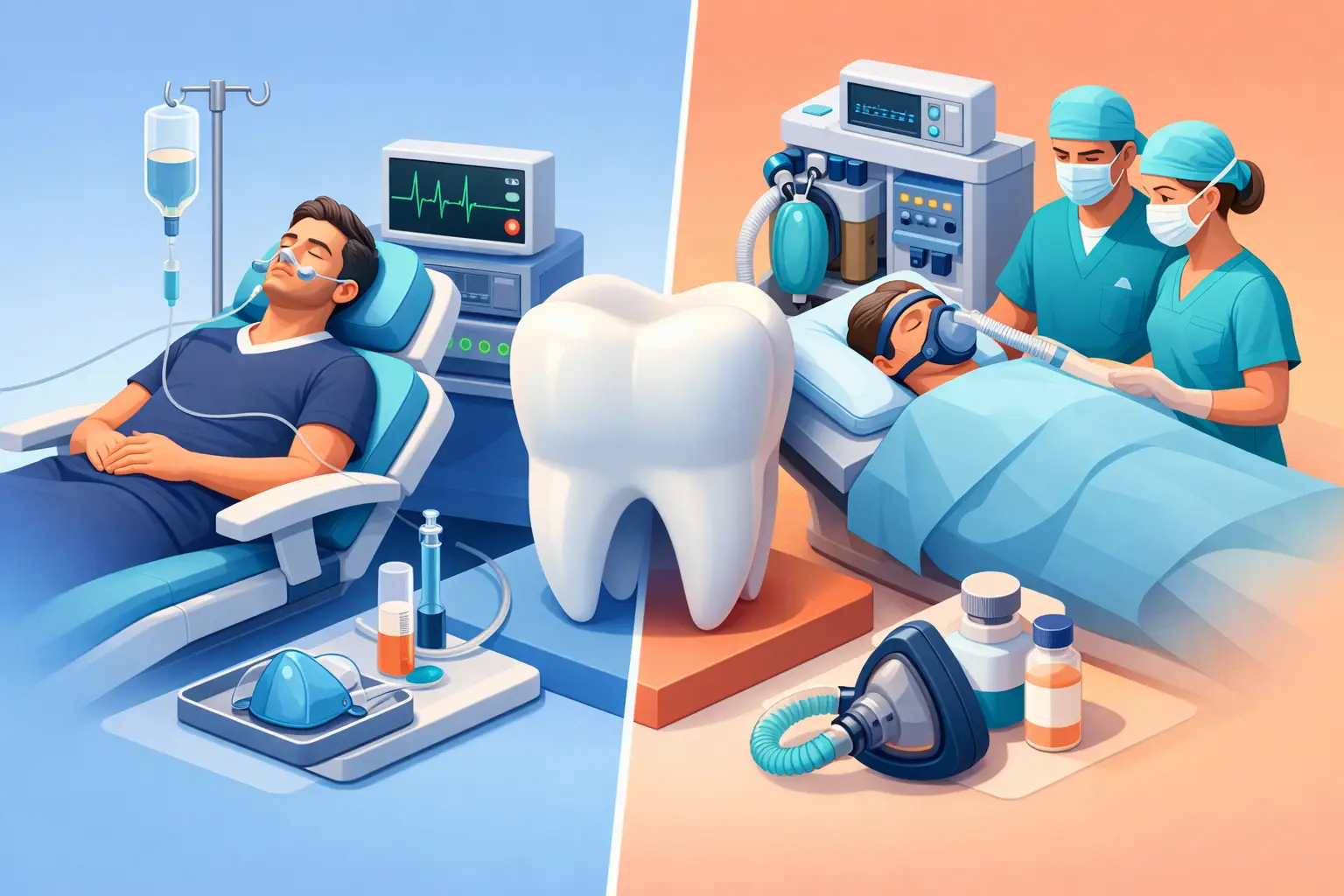
Sedation vs General Anaesthesia in Dentistry
7 September 2026A long implant appointment can feel very different depending on how relaxed you are, how much treatment is planned and how you recover afterwards. In the discussion around sedation vs general anaesthesia dentistry, the right choice is rarely about being “brave” in the chair. It is about choosing an approach that matches your medical history, anxiety level, procedure and safety needs.
For many people travelling for dental treatment, comfort is a major part of the decision. Whether you are having dental implants, a full-mouth restoration, surgical extraction or complex periodontal care, you should understand what each option does - and what it does not do - before confirming a treatment plan.
What is dental sedation?
Dental sedation uses medication to reduce fear, physical tension and awareness of the procedure. You remain breathing independently and can usually respond to instructions, although you may feel deeply relaxed and remember little of the appointment afterwards.
The level of sedation can range from mild to moderate or deep, depending on the medication, delivery method and your individual response. It is not the same as being unconscious. Local anaesthetic is still used to numb the treatment area, because sedation helps you feel calm but does not itself stop pain.
Common forms of sedation
Inhalation sedation, often delivered through a nosepiece, can help patients relax quickly and usually wears off relatively soon after treatment. Oral sedation involves prescribed medication taken before the appointment and may be suitable for some anxious patients, though its effect can be less predictable.
Intravenous, or IV, sedation is commonly considered for longer or more demanding dental procedures. Medication is administered through a vein and adjusted by a qualified clinician, allowing a controlled level of relaxation. Many patients undergoing IV sedation feel sleepy, calm and less aware of time, but they are not under general anaesthetic.
Your dentist will advise which options are available and clinically appropriate. This decision should never be based on preference alone. Your health, medications, airway assessment, treatment complexity and accompanying adult for the journey home all matter.
What is general anaesthesia in dentistry?
General anaesthesia places a patient in a controlled state of unconsciousness. You are not aware of the procedure and cannot respond to verbal instructions. Because general anaesthesia can affect breathing and protective reflexes, it requires a higher level of monitoring, specialist anaesthetic care and an appropriately equipped clinical setting.
For this reason, general anaesthesia is not routinely used for standard dental work. It may be considered when treatment is exceptionally extensive, when a patient cannot safely cooperate with care, or when severe dental phobia, special care needs or medical circumstances make other approaches unsuitable.
General anaesthesia is often delivered in a hospital or surgical environment rather than a conventional dental surgery. It brings a more involved pre-operative assessment, fasting instructions and a longer recovery period. Patients need an escort and should plan to rest after discharge.
Sedation vs general anaesthesia dentistry: the key differences
The main difference is consciousness. With sedation, most patients remain conscious and breathe without assistance. With general anaesthesia, the patient is unconscious and requires more intensive anaesthetic management.
Recovery also differs. The effects of light inhalation sedation can pass relatively quickly, while oral and IV sedation may leave you drowsy for the rest of the day. After general anaesthesia, it is common to feel tired, nauseated or disorientated for a period of time, and normal activities should be postponed until you have recovered fully.
Risk is another important consideration. Every clinical procedure carries some risk, but general anaesthesia is more complex because it affects the whole body more deeply. It is therefore reserved for cases where its benefits outweigh the additional requirements and risks. Sedation can provide excellent anxiety control for many patients without needing full unconsciousness.
Neither option is automatically better. The safer and more comfortable choice is the one selected after a proper clinical assessment.
Which option may suit implant and cosmetic dentistry?
Many adults having dental implants, multiple extractions, bone grafting or full-arch rehabilitation are concerned that treatment will be overwhelming. In practice, local anaesthetic combined with carefully selected sedation is often enough to make surgical dentistry manageable.
IV sedation may be particularly helpful if you have a strong gag reflex, significant anxiety, difficulty sitting still for extended periods or several procedures planned in one visit. It can make a lengthy appointment feel much shorter, while allowing the dentist to communicate with you when necessary.
General anaesthesia may be considered for highly complex cases, but it is not a shortcut for avoiding all discomfort. You will still need to follow recovery guidance, manage swelling and take prescribed medication after surgery. For implant patients, the healing period and careful aftercare remain just as important as the procedure itself.
Cosmetic dentistry such as veneers, crowns and teeth whitening does not usually require general anaesthesia. If anxiety is a barrier, a calm environment, clear communication, local anaesthetic where needed and an appropriate sedation option may be more proportionate.
Safety starts before your appointment
A responsible decision about sedation or general anaesthesia begins with your consultation. Your clinical team should ask about conditions such as obstructive sleep apnoea, heart or lung disease, diabetes, previous reactions to anaesthetics, allergies and current medication. Alcohol intake, smoking and recreational drug use should also be disclosed honestly, as they can affect safety and recovery.
Tell your dentist if you are pregnant, have recently been unwell or have experienced problems with sedation in the past. Do not stop prescribed medication unless a doctor or dentist has specifically told you to do so.
You may be asked to avoid food and drink for a set period before deeper sedation or general anaesthesia. Follow these instructions exactly. They are designed to reduce complications during treatment. You will also need a responsible adult to accompany you and stay with you after the appointment, particularly after IV sedation or general anaesthesia.
At Dentaglobal, treatment planning for international patients should include these practical details before travel is finalised. A well-organised journey allows time for medical screening, the procedure itself and appropriate recovery before flying home.
Recovery: plan for more than the dental procedure
Sedation can make treatment easier, but it temporarily affects judgement, coordination and memory. Do not drive, cycle, sign important documents, drink alcohol or make major decisions until the effects have worn off and your clinician says it is safe. Arrange transport rather than relying on public transport alone.
After general anaesthesia, recovery needs closer attention. Follow discharge instructions, eat and drink as advised, take medication correctly and contact the clinical team if you experience concerning symptoms. Swelling, tenderness and fatigue can be expected after oral surgery, but severe bleeding, breathing difficulty, chest pain, persistent vomiting or rapidly worsening pain require urgent medical advice.
For patients visiting from the UK or elsewhere in Europe, allow enough time in İzmir for a post-operative review where recommended. Flying too soon after surgery can be uncomfortable and may make it harder to access your treating team if you have concerns. Your treatment coordinator should explain the expected timetable before you book travel.
Questions worth asking your dentist
Before consenting to either option, ask who will provide the sedation or anaesthesia, what monitoring will be used and what you should expect during recovery. Ask whether your planned treatment can be completed with local anaesthetic alone, or whether sedation offers a meaningful benefit in your case.
It is also sensible to ask about alternative approaches. Some patients feel more comfortable splitting extensive work into shorter visits. Others benefit from having the treatment stages explained in advance, bringing headphones or agreeing a simple hand signal to pause the procedure. Comfort should be tailored, not assumed.
Your anxiety is valid, and it should be discussed openly rather than endured in silence. The best dental experience is not necessarily the one where you remember nothing. It is the one where you receive clinically appropriate care, feel properly supported and have the confidence to complete the treatment that can improve your oral health and smile.