

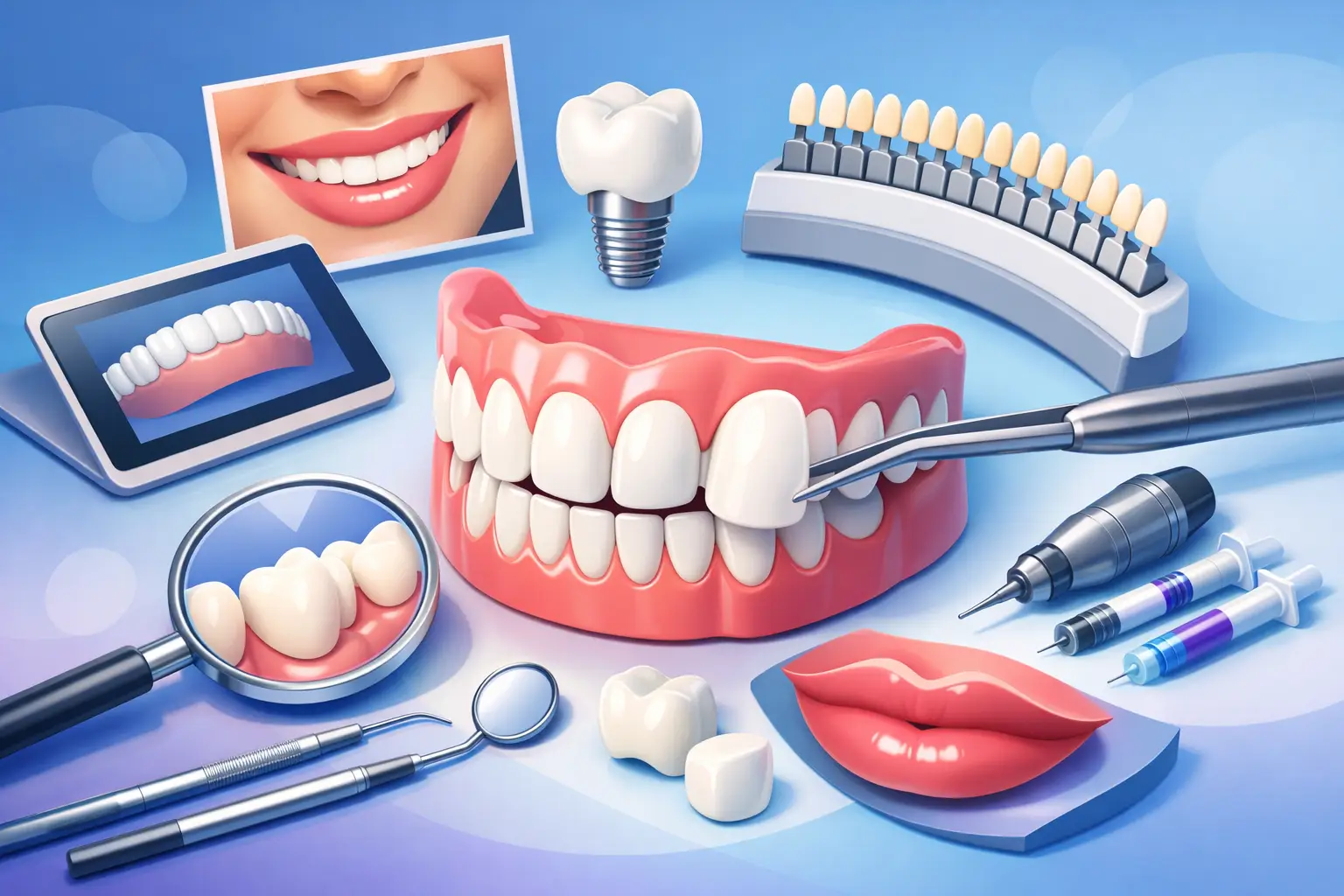
A Guide to Full Smile Design and Treatment
6 August 2026A full smile transformation is rarely about making every tooth look identical or unnaturally white. It is about restoring comfort, function and proportion while creating a result that suits your face, personality and long-term oral health. This guide to full smile design explains how a carefully planned treatment can bring those priorities together.
For many patients, the decision starts with a practical concern: worn teeth, gaps, old crowns, missing teeth, uneven gums or a smile they have learned to hide. The right solution depends on the cause, the condition of the teeth and gums, and what you want your smile to do for you every day.
What full smile design means
Full smile design is a personalised approach to improving the appearance and function of the visible teeth, gums and bite. Rather than selecting veneers or crowns in isolation, the dentist assesses how each element works together when you speak, laugh and bite.
A complete plan may involve cosmetic treatments such as veneers, zirconium crowns or whitening. It may also include restorative care, including fillings, root canal treatment, periodontal care, dental implants or full-arch restorations. Orthodontic treatment can be recommended where tooth position needs to be corrected before cosmetic work begins.
This is why a full smile design is not a single procedure with a fixed price or timeline. One patient may need whitening and a small number of veneers. Another may need to stabilise gum health, replace missing teeth with implants and rebuild worn teeth with crowns. A responsible plan treats the foundation first, then focuses on appearance.
The first stage: understanding your smile and oral health
A good smile design begins with a detailed consultation. Your dentist will discuss what you would like to change, but also what is currently causing discomfort, instability or concern. Clear communication matters here. A natural-looking smile is subjective, and your preferences should guide decisions about tooth shape, brightness and character.
Clinical assessment usually includes an examination of the teeth, gums, bite and jaw function. Digital photographs, X-rays and 3D imaging may be used to understand the available bone for implants, identify hidden infection, assess existing restorations and plan tooth proportions more accurately.
Your facial features are also considered. Tooth length, the curve of the smile, lip movement and gum visibility all influence the final design. A smile that looks attractive in a close-up photograph may not look balanced in motion. Digital dentistry helps dentists preview options, but it should support clinical judgement rather than replace it.
Why the bite matters
If teeth are heavily worn, chipped repeatedly or uncomfortable when chewing, the bite needs careful attention. Simply placing veneers or crowns over an unstable bite can place new restorations under excessive pressure.
In some cases, treatment may involve rebuilding the biting surfaces to restore lost height. In others, orthodontics or night protection may be advised. This can add time to treatment, but it protects the investment made in the final result.
Choosing treatments for a full smile design
The materials and procedures selected should reflect your dental condition rather than a trend. The following options are often combined, although not every patient needs each one.
Veneers and crowns
Veneers are thin restorations placed on the front surface of teeth to improve shape, colour and minor alignment concerns. They can be a conservative choice when the underlying teeth are healthy and there is enough enamel for a reliable bond.
Crowns cover the entire tooth and may be more appropriate for teeth that are heavily restored, broken, root-treated or significantly worn. Zirconium crowns are valued for their strength and natural appearance, particularly where durable full coverage is required.
The trade-off is that crowns generally require more tooth preparation than veneers. A specialist should explain why one option is recommended over another and show how it fits within the wider treatment plan.
Dental implants and full-arch solutions
Where teeth are missing or cannot be saved, dental implants can provide stable replacement teeth without relying on neighbouring natural teeth. For patients missing most or all teeth in an arch, All-on-4 or All-on-6 treatment may offer a fixed full-arch restoration supported by a limited number of strategically placed implants.
Not everyone is suitable for the same implant approach. Bone volume, gum condition, general health, bite forces and smoking status all affect planning. Patients with severe bone loss may require additional procedures, including grafting or advanced zygomatic implant solutions. These cases need thorough imaging and specialist assessment.
Gum treatment, whitening and orthodontics
Healthy gums frame the smile. Bleeding, recession, inflammation or uneven gum levels should be addressed before permanent cosmetic restorations are fitted. Gummy smile treatment may also be considered where excess gum display affects the balance between teeth and lips.
Whitening is often completed before veneers or crowns are colour-matched, because restorations do not whiten in the same way as natural enamel. Orthodontics can be worthwhile when tooth movement would reduce the amount of preparation needed for veneers or improve the bite. It may feel like a slower route, but it can create a more conservative and stable result.
A guide to full smile design treatment planning
Once your assessment is complete, you should receive a clear treatment plan that sets out the recommended procedures, sequence, expected appointments and costs. It should also distinguish between essential health treatment and elective cosmetic changes, so you can make informed choices.
For international patients, planning begins before travel wherever possible. Recent dental photographs, X-rays and a description of your concerns can help the clinical team provide an initial indication. However, a final plan should only be confirmed after an in-person examination and any necessary digital scans.
At Dentaglobal, specialist-led planning and digital workflows are used to coordinate complex restorative and cosmetic cases for patients travelling to İzmir. This matters because international care requires more than a well-planned procedure: it requires realistic appointment scheduling, clear communication and practical guidance before you return home.
Depending on the complexity of treatment, a trial smile or temporary restorations may be used to test shape, bite and appearance. This stage allows adjustments before the final restorations are made. It is particularly valuable when multiple front teeth are being changed, as small differences in length or contour can alter the whole smile.
How long does full smile design take?
Timing depends on the treatments involved. A cosmetic case involving whitening and a limited number of veneers may be completed in a shorter period than a full-mouth rehabilitation. Implant treatment can require healing time before final crowns or bridges are fitted, although temporary teeth may be possible in suitable cases.
Rushing is not always the best value. The laboratory phase, gum healing, bite assessment and review appointments all contribute to a reliable result. If you are travelling from the UK or elsewhere in Europe, ask how many visits are required, how long each visit should be, and whether a provisional stage is included.
It is also sensible to ask what happens if an unexpected issue is found, such as a tooth needing root canal treatment or gum disease requiring stabilisation. A clinic should explain how this would affect timing and costs before proceeding.
Looking after your new smile
The long-term success of smile design depends on daily care and regular dental reviews. Veneers, crowns and implant restorations cannot develop decay themselves, but the teeth and gums around them remain vulnerable to plaque, gum disease and bite-related damage.
Brush twice daily with a soft toothbrush and fluoride toothpaste, and clean between teeth every day using the method recommended for your restorations. If you clench or grind your teeth, wear a professionally made night guard. Avoid using teeth to open packaging or bite very hard objects, as even strong ceramic restorations can chip under concentrated force.
Patients travelling for treatment should leave with written aftercare advice, details of any temporary restorations and a clear route for post-treatment support. Maintain routine check-ups with your local dentist as well, especially where implants, gum treatment or extensive restorative work are involved.
The best smile design should still feel like your own smile - only healthier, more comfortable and easier to show. Take time to ask questions, compare treatment choices and choose a plan that protects your oral health as carefully as it improves your appearance.