

Best Options for Missing Teeth Explained
20 April 2026Losing a tooth rarely feels like a small issue. One gap can change how you chew, how clearly you speak, and how confident you feel when you smile. That is why understanding the best options for missing teeth matters early - not just for appearance, but for long-term oral health, comfort and daily function.
A missing tooth does more than leave space. Neighbouring teeth can begin to shift, the opposing tooth may over-erupt, and the jawbone in that area can gradually shrink. For some patients, the concern is cosmetic. For others, it is the frustration of avoiding certain foods or feeling older than they are. The right treatment depends on how many teeth are missing, where the gap is, the condition of the gums and bone, and what kind of result you want over the long term.
What are the best options for missing teeth?
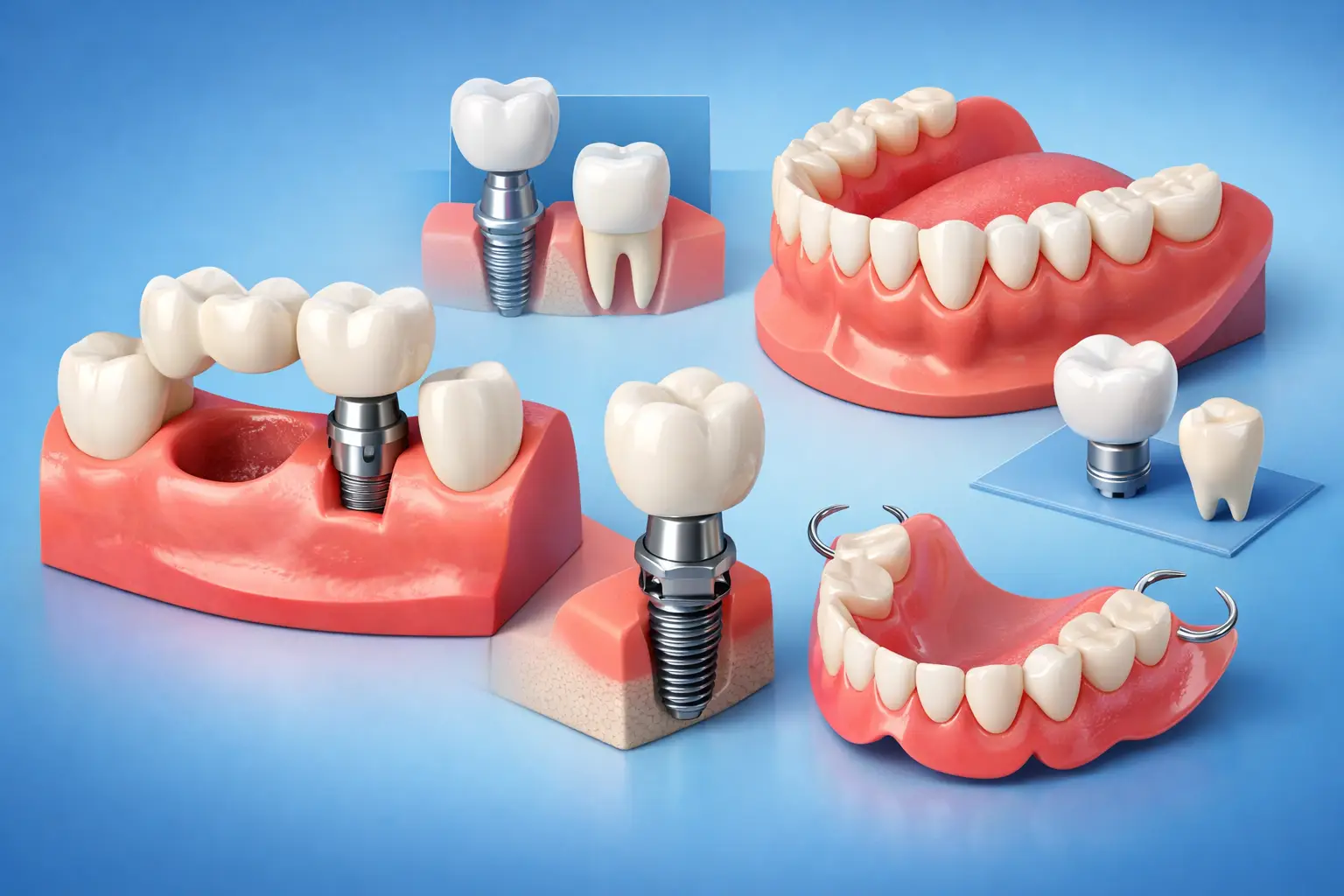
There is no single answer for everyone. The best options for missing teeth usually fall into three main categories: dental bridges, removable dentures and dental implants. Each has clear advantages, but each also comes with trade-offs.
If you are missing one tooth, a bridge or a single implant may be suitable. If you have several missing teeth, an implant-supported bridge or partial denture could make sense. If most or all teeth are missing, full dentures, All-on-4, All-on-6 or in more complex cases zygomatic implants may be considered. The most suitable option is the one that restores function reliably, fits your anatomy and budget, and gives you confidence in everyday life.
Single missing tooth: bridge or implant?
When only one tooth is missing, many patients compare a traditional dental bridge with a single implant crown.
A bridge fills the gap by using the teeth on either side as support. It can be a practical solution when the neighbouring teeth already need crowns, or when implant treatment is not suitable for medical or anatomical reasons. Treatment time is often shorter than with implants, and the upfront cost is usually lower.
The downside is that a conventional bridge often requires healthy adjacent teeth to be prepared. That means removing tooth structure from teeth that may otherwise not need treatment. Bridges can work very well, but they do not stimulate the jawbone underneath the missing tooth, so bone loss may continue in that area over time.
A dental implant replaces the missing root as well as the visible tooth. It is placed into the jawbone and topped with a custom crown once healing is complete. For many patients, this is the closest option to a natural tooth in terms of feel, stability and appearance. It also helps preserve bone.
The trade-off is that implant treatment takes longer and costs more initially. It also depends on having enough bone, although bone grafting may be possible where needed. If you want a fixed solution that does not involve the neighbouring teeth, an implant is often the strongest long-term option.
Several missing teeth: fixed vs removable solutions
As more teeth are lost, the decision becomes less about a single gap and more about how to restore the bite as a whole.
A removable partial denture is often the most affordable route. It can replace several teeth without surgery and can usually be made relatively quickly. For patients who need a straightforward solution fast, especially while planning future treatment, it may be useful.
However, removable appliances are not everyone’s preference. Some patients dislike the movement, the pressure on the gums, or the fact that the denture must be removed for cleaning. Over time, as the shape of the gums and jaw changes, adjustments may be needed.
An implant-supported bridge offers a more stable fixed alternative. Instead of replacing each tooth with an individual implant, strategically placed implants can support multiple teeth. This often gives a more secure bite and a more natural feel than a removable denture. It can also reduce the number of implants required compared with replacing every tooth separately.
This option suits many adults who want strong function and a fixed result but still need a treatment plan that is efficient and cost-conscious.
Full-arch tooth loss: modern alternatives to loose dentures
When all or most teeth in the upper or lower jaw are missing, conventional full dentures are still a valid treatment option for some people. They remain one of the lowest-cost solutions and can improve appearance significantly. For patients with medical limitations or those who prefer to avoid surgery, dentures may be the right choice.
That said, many denture wearers struggle with movement, reduced bite force and irritation, especially in the lower jaw. Adhesives can help, but they do not solve the underlying issue of reduced support as bone shrinks over time.
This is where implant-supported full-arch treatment changes the picture. All-on-4 and All-on-6 systems use a limited number of implants to support a full fixed bridge. Rather than replacing each tooth one by one, the entire arch is restored on four or six implants, depending on the case.
For suitable patients, this approach can provide a dramatic improvement in stability, chewing function and confidence. It is particularly valuable for people who are tired of loose dentures or who want a more secure, long-term answer without placing an implant for every missing tooth.
The difference between All-on-4 and All-on-6 is not simply about having more implants. It depends on bone quality, bite forces, anatomy and treatment goals. Some mouths benefit from the extra support of six implants, while others can achieve an excellent outcome with four well-positioned implants.
When bone loss makes treatment more complex
One of the most common concerns after years of missing teeth is bone loss. This can make standard implant treatment more difficult, but not always impossible.
In some cases, bone grafting can rebuild volume before implants are placed. In more advanced upper-jaw cases, zygomatic implants may be considered. These longer implants anchor in the cheekbone rather than relying only on the upper jaw, making them a valuable option for patients who have been told they do not have enough bone for conventional implants.
This is where proper assessment matters. Digital imaging, bite analysis and specialist planning can show whether a patient truly has limited options or simply needs a more advanced approach.
How to choose the best option for your situation
The best treatment is not always the one with the highest price or the fastest timeline. It is the one that fits your mouth, your expectations and your long-term priorities.
If appearance is your main concern and the surrounding teeth already need work, a bridge may be sensible. If preserving bone and having a stand-alone fixed tooth is most important, an implant often offers more long-term value. If you are replacing a full arch and want strong day-to-day stability, implant-supported full-arch treatment can make a major difference to comfort and confidence.
Budget matters too, and it should be discussed openly. A lower initial cost can look appealing, but if a solution needs more maintenance, replacement or adjustment over time, it may not remain the most economical choice. At the same time, not every patient needs the most complex treatment available. Good planning is about suitability, not upselling.
For international patients, practical details also play a role. Treatment stages, healing periods and follow-up arrangements need to be organised carefully. A clinic that combines specialist-led care with digital diagnostics and clear patient coordination can make the process much more predictable, especially when care involves travel. This is one reason many patients compare options in Turkey, where clinics such as Dentaglobal combine advanced restorative treatment with a structured international patient journey.
Questions worth asking before treatment
Before deciding, it helps to ask a few clear questions. Is the solution fixed or removable? How long is it expected to last? Will it affect healthy neighbouring teeth? Is bone support adequate? What maintenance will be needed? And if you are travelling for care, how will follow-up be managed once you return home?
The answers often reveal more than the treatment name itself. Two patients can both be told they need implants, yet one may need a straightforward single implant and another may need full-arch rehabilitation with extractions, temporary teeth and staged healing. Clarity at the planning stage prevents disappointment later.
Best options for missing teeth depend on timing too
Acting sooner usually gives you more choice. The longer a tooth is missing, the greater the chance of movement, bite changes and bone loss. That does not mean delayed treatment cannot succeed, but it may mean more steps are needed.
If you have recently lost a tooth, or have been managing a gap for years, the right next step is not guessing based on price lists or online photos. It is having a detailed assessment that looks at function, bone levels, gum health and the result you want to live with every day.
A well-planned tooth replacement should let you eat comfortably, speak naturally and stop thinking about the gap. If a treatment can do that reliably, while fitting your health needs and budget, it is not just a dental procedure - it is a practical way to get normal life back.