

Veneers Treatment Guide for a Natural Smile
21 June 2026A better smile should not come at the cost of guesswork. If you are comparing clinics, weighing up costs, or planning treatment abroad, this veneers treatment guide is designed to give you a clear picture of what veneers can do, where they have limits, and how to decide whether they are the right choice for you.
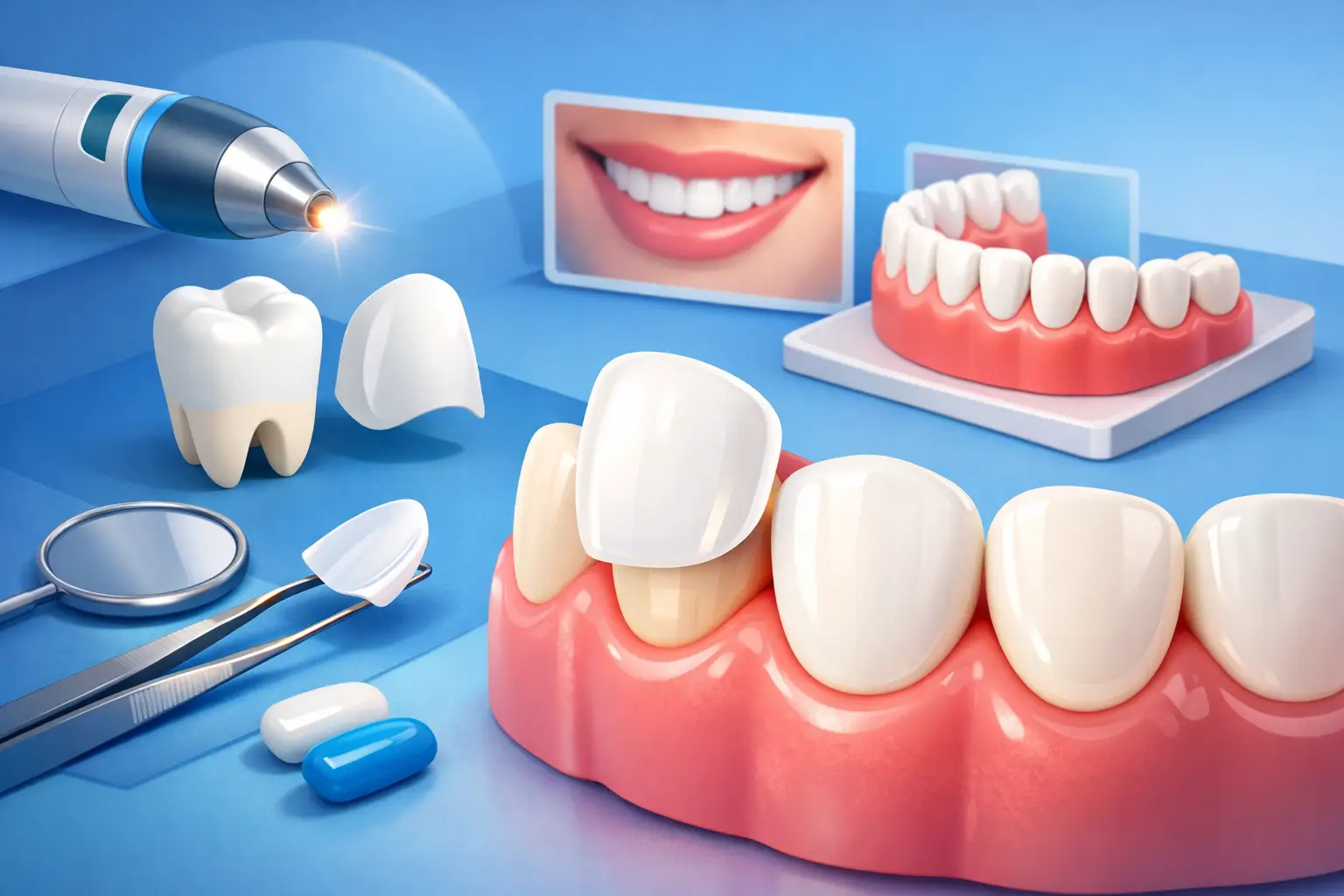
Veneers are thin coverings bonded to the front surface of teeth to improve shape, colour, size, and overall symmetry. They are commonly chosen by adults who are unhappy with worn edges, staining that does not respond well to whitening, small gaps, minor chips, or teeth that look uneven in photographs and everyday conversation. The appeal is straightforward - veneers can create a more polished smile without the need for full crowns on every tooth.
What veneers can realistically fix
The best veneer cases are not about creating an artificial white smile. They are about improving harmony. Veneers can be effective when teeth are healthy but visually compromised, especially if the concerns are mostly cosmetic rather than structural.
They are often used to correct discolouration caused by medication, ageing, trauma, or enamel defects. They can also improve teeth that appear short, slightly misshapen, mildly crowded, or uneven in width. In some cases, veneers are used to close small spaces between front teeth or to restore a balanced smile line after years of wear.
That said, veneers are not the answer to every cosmetic complaint. If teeth are heavily decayed, unstable, severely misaligned, or affected by active gum disease, those problems usually need to be treated first. Patients who grind their teeth may still be suitable, but they often need careful planning and a protective night guard afterwards.
Veneers treatment guide: porcelain or composite?
One of the first decisions in any veneers treatment guide is material choice. The two most common options are porcelain veneers and composite veneers. Both can improve the appearance of your smile, but they differ in durability, finish, and treatment planning.
Porcelain veneers
Porcelain veneers are custom-made in a dental laboratory and then bonded to the teeth. They are known for their refined appearance, resistance to staining, and long-term durability. Because porcelain reflects light in a way that closely resembles natural enamel, it is usually the preferred option for patients who want the most lifelike result.
Porcelain also tends to hold its polish and colour better over time than composite. For patients who drink coffee, tea, or red wine regularly, this can be a practical advantage. The trade-off is that porcelain treatment is more involved and usually costs more than composite.
Composite veneers
Composite veneers are sculpted directly onto the teeth by the dentist using tooth-coloured resin. They can often be completed more quickly and at a lower cost, making them attractive for patients with a smaller budget or more limited cosmetic goals.
Composite can work very well in the right hands, particularly for small chips, minor reshaping, or a modest smile refresh. However, it is generally less stain-resistant than porcelain and may need polishing, repairs, or replacement sooner. If you want a long-term, highly polished finish, porcelain is often the stronger option.
Are veneers always minimally invasive?
Many patients understandably ask whether veneers require drilling. The honest answer is: it depends. Some veneer cases require only minimal preparation, while others need a small amount of enamel reduction to create space and avoid a bulky result.
No-prep or very low-prep veneers can be suitable for certain teeth, especially when the goal is to add volume or length. But this approach is not ideal for everyone. If a tooth already projects forward, adding a veneer without careful preparation can make the smile look thick or unnatural. Good cosmetic dentistry is not about preserving enamel at all costs if the final shape looks wrong. It is about balancing tooth health, facial aesthetics, and function.
A proper assessment should include photographs, digital planning, bite analysis, and discussion of your expectations. This is particularly important for international patients, because treatment needs to be planned efficiently without sacrificing detail.
The treatment process from consultation to final fit
The veneer journey should feel organised and transparent. Whether you are a local patient or travelling for care, the process usually starts with a consultation and smile assessment. At this stage, the dentist reviews your oral health, discusses your goals, and checks whether veneers are clinically suitable.
If you are a good candidate, records are taken. These may include digital scans, photographs, and X-rays where needed. The planning stage matters because the most successful veneer cases are customised to the patient’s face, lip line, tooth proportions, and bite. A smile that looks attractive on one person may look overdone on another.
For porcelain veneers, the next step is tooth preparation, if required, followed by impressions or digital scans. Temporary veneers may be placed while the final restorations are made. Once ready, the veneers are tried in, checked for fit and appearance, and then bonded permanently.
Composite veneers usually involve fewer appointments, as the material is applied and shaped directly on the teeth. Even so, artistry matters. Shade selection, edge contour, and surface texture all influence whether the result looks natural or obviously dental.
What makes veneers look natural
Natural-looking veneers are rarely the brightest possible shade. They are the right shade for your complexion, age, and surrounding teeth. They also need believable contours, slight translucency where appropriate, and proportions that suit your facial features.
A common mistake is focusing only on whiteness. Patients often arrive with a reference photo of a very bright smile, but brightness alone does not create a premium result. Tooth length, width, gum display, and the way the upper teeth sit against the lower lip are just as important.
This is where specialist-led planning and digital dentistry can make a real difference. Visual planning helps set expectations before treatment begins. It also reduces the risk of ending up with veneers that feel too large, too flat, or too uniform.
How long veneers last
Porcelain veneers can last many years when well made and properly maintained. Composite veneers generally have a shorter lifespan, although this varies depending on oral habits, diet, bite forces, and hygiene. The exact timeline is different for every patient, and any clinic promising a fixed number of years without qualification is oversimplifying the reality.
Longevity is influenced by several factors: whether you clench or grind, how stable your gums are, how well the veneers are bonded, and whether you use your teeth to open packaging or bite hard objects. Regular dental reviews also matter. Small issues are easier to correct early than after they become fractures or bond failures.
Cost, value, and treatment abroad
Veneer treatment costs vary widely depending on material, case complexity, the number of teeth treated, and the clinic’s planning standards. The cheapest quote is not always the best value. A low initial price can become expensive if the smile looks artificial, needs replacement too soon, or creates bite problems that require correction.
For patients considering treatment in Turkey, cost efficiency is often part of the decision, but it should sit alongside clinical quality and aftercare. A well-structured international patient process matters. You need clarity on how many days treatment will take, whether temporaries are needed, how reviews are handled, and what support is available once you return home.
This is where experienced clinics such as Dentaglobal can offer a practical advantage, especially for patients who want specialist care, digital planning, and a smoother journey from consultation to follow-up.
Who should think twice about veneers
Veneers are not a shortcut around untreated dental disease. If you have active gum problems, severe enamel loss, large fillings on the front teeth, or major bite issues, another treatment may be more appropriate. In some cases, orthodontics, whitening, gum treatment, or crowns provide a safer or more stable outcome.
Patients with unrealistic expectations should also pause. Veneers can transform a smile, but they do not change the underlying face, and they should not erase all individuality. The best result usually looks healthier, fresher, and more balanced - not obviously manufactured.
Veneers treatment guide: questions worth asking your clinic
Before committing, ask how the smile will be planned, whether a trial smile or mock-up is available, how much enamel reduction is expected, what material is recommended and why, and what happens if adjustments are needed after fitting. You should also ask about maintenance, guarantees, and whether the clinic has experience treating patients who are travelling from abroad.
Good clinics welcome these questions. In fact, clear answers are often a sign that the planning is sound.
Choosing veneers is partly about aesthetics, but it is also about trust. When the diagnosis is careful, the design is personalised, and the treatment is carried out with long-term function in mind, veneers can be a reliable way to improve your smile without over-treating healthy teeth. If you are still deciding, focus less on the fastest sales pitch and more on who is willing to assess your smile properly and explain what is genuinely right for you.