

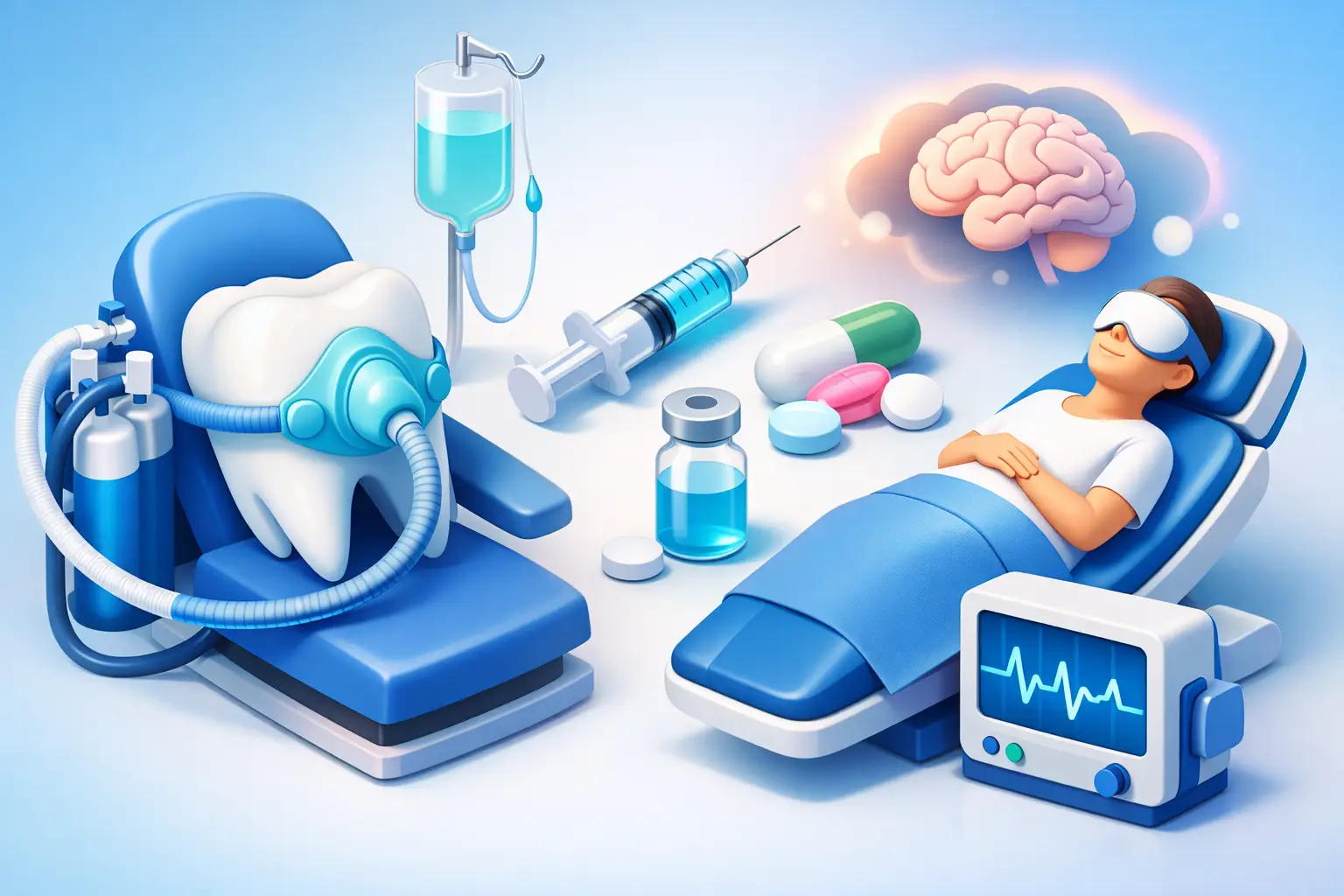
A Clear Guide to Dental Sedation Options
4 August 2026A dental treatment plan can look exciting on paper - especially when it brings you closer to a healthier, more confident smile - while still raising one pressing question: will it be comfortable? This guide to dental sedation options explains how dentists manage anxiety, sensitivity and longer procedures, so you can discuss your care with clarity rather than apprehension.
Sedation is not a single treatment. It is a range of approaches, selected according to your health, level of anxiety, the procedure involved and how much time is needed in the dental chair. The right choice for a straightforward filling may be very different from the right choice for implant surgery or a full-mouth rehabilitation.
What dental sedation does - and does not do
Dental sedation helps patients feel calmer and more able to tolerate treatment. Depending on the method, you may remain fully alert, feel deeply relaxed and sleepy, or have limited memory of the appointment afterwards. It is often particularly helpful for people with dental fear, a strong gag reflex, difficulty sitting still, or a procedure that requires several hours of focused work.
Sedation does not usually replace local anaesthetic. Local anaesthetic is the medication that numbs the treatment area and prevents pain. Even with IV sedation, your dentist will normally use local anaesthetic before placing an implant, preparing teeth for crowns, or carrying out surgical treatment. The two methods work together: one manages comfort in the mouth, while the other can reduce stress and awareness.
A careful medical assessment is essential. Your clinician will ask about your medical history, current medicines, allergies, alcohol or recreational drug use, previous experiences with anaesthesia and, where relevant, pregnancy. Be completely open during this conversation. The safest plan is always based on accurate information, not on choosing the strongest option.
A guide to dental sedation options
Local anaesthetic for routine and precise care
For many treatments, local anaesthetic is all that is required. It numbs a specific area while you stay awake and able to communicate normally. Modern techniques and careful injection methods make it suitable for procedures ranging from fillings and root canal treatment to crowns, veneers and many extractions.
Its main advantage is simplicity. Recovery is quick, and most people can return to normal activities once the numbness wears off. However, it does not remove anxiety. If the sound of dental instruments, the feeling of lying back, or a previous difficult experience makes you tense, local anaesthetic alone may not provide the reassurance you need.
Inhalation sedation for gentle relaxation
Inhalation sedation, often called happy gas or relative analgesia, involves breathing a carefully controlled mixture through a small nosepiece. It can create a warm, relaxed feeling within minutes, while you remain conscious and responsive throughout the appointment.
This option can suit patients with mild to moderate anxiety, a sensitive gag reflex or shorter procedures. Its effect fades quickly once the gas is stopped, which can make recovery more convenient than deeper forms of sedation. It may not be ideal, however, if you cannot breathe comfortably through your nose, have certain respiratory conditions, or need complex treatment that calls for a deeper level of relaxation.
Oral sedation before your appointment
Oral sedation uses prescribed medication taken before treatment to reduce anxiety. It can help patients feel calmer before they arrive at the clinic and may make the appointment seem shorter. The level of effect varies between individuals, which is one reason it must only be used under a dentist’s direction.
You will need a responsible adult to accompany you home, and you should not drive, operate machinery or make important decisions afterwards. Oral sedation can be a useful middle ground for some patients, but it is less adjustable during treatment than IV sedation. If the procedure is lengthy or your anxiety is severe, your clinician may recommend a different approach.
IV sedation for complex or anxiety-sensitive treatment
Intravenous, or IV, sedation is administered through a small cannula placed in a vein. It allows the dental team to adjust the level of sedation during the procedure, making it a common option for surgical extractions, multiple implants, bone grafting and patients who find dental treatment particularly difficult.
Most patients remain conscious and can respond to simple instructions, but feel significantly more relaxed and may remember little of the appointment. Your breathing, pulse, blood pressure and oxygen levels are monitored throughout by appropriately trained professionals.
IV sedation is not the same as being fully unconscious. It offers a deeper level of calm while maintaining a level of responsiveness and protective reflexes. Because its effects can last beyond the appointment, you must arrange an escort and follow the clinic’s aftercare instructions carefully. Plan a quiet day afterwards rather than trying to continue with sightseeing, work or travel arrangements.
General anaesthesia in selected cases
General anaesthesia makes you fully unconscious and is generally reserved for specific clinical circumstances, such as highly complex surgery, particular medical needs or situations where other methods are unsuitable. It requires a suitably equipped setting and an anaesthesia team, so it is not the routine answer to dental anxiety.
For most adult patients, local anaesthetic with or without conscious sedation provides excellent comfort and control. The decision should be clinical, not simply based on a preference to be asleep. A responsible provider will explain why general anaesthesia is, or is not, appropriate for your individual case.
Which option may suit your treatment?
The procedure matters, but it is only part of the decision. A patient having one implant may be comfortable with local anaesthetic, while another may benefit from IV sedation because of intense anxiety or a previous traumatic experience. Similarly, a cosmetic patient receiving veneers may not need sedation for tooth preparation, but may value it if they have a pronounced gag reflex or need several teeth treated in one extended visit.
For full-arch implant treatment, such as All-on-4 or All-on-6, the treatment plan may involve extractions, implant placement and provisional teeth. Sedation can make a longer surgical appointment feel far more manageable, but suitability depends on your medical profile and the precise clinical approach. Zygomatic implants and other advanced procedures also require detailed planning by experienced clinicians.
Do not feel that asking for sedation means you are being difficult. Anxiety is a real barrier to oral health for many adults. The useful question is not, “What is the strongest sedation available?” It is, “What level of support will allow me to receive treatment safely and comfortably?”
Sedation vs general anaesthesia: the key differences
The main difference is consciousness. Under sedation most patients remain conscious and breathe without assistance. Under general anaesthesia the patient is unconscious and requires more intensive anaesthetic management.
Recovery differs too. Light inhalation sedation can wear off relatively quickly, while oral and IV sedation may leave you drowsy for the rest of the day. After general anaesthesia it is common to feel tired, nauseated or disorientated for a period, and normal activities should be postponed until you have recovered fully.
Risk is the third consideration. Every clinical procedure carries some risk, but general anaesthesia is more complex because it affects the whole body more deeply, so it is reserved for cases where the benefits outweigh the additional requirements. For many patients, sedation provides excellent anxiety control without full unconsciousness.
Safety starts before your appointment
A responsible decision about sedation or general anaesthesia begins at your consultation. Your clinical team should ask about conditions such as obstructive sleep apnoea, heart or lung disease, diabetes, previous reactions to anaesthetics, allergies and current medication. Alcohol intake, smoking and recreational drug use should be disclosed honestly, as they can affect both safety and recovery.
Tell your dentist if you are pregnant, have recently been unwell, or have had problems with sedation in the past. Do not stop prescribed medication unless a doctor or dentist has specifically told you to.
You may be asked to avoid food and drink for a set period before deeper sedation or general anaesthesia. Follow those instructions exactly. You will also need a responsible adult to accompany you and stay with you afterwards, particularly after IV sedation or general anaesthesia.
Planning sedation when travelling for dental treatment
International patients should raise the subject of sedation during their remote consultation, not after arrival. Share your health information and ask whether sedation is recommended, offered and clinically suitable for the proposed procedure. This allows the care team to plan appointment timing, medical checks and recovery arrangements before your trip.
Sedation also changes the practical side of a dental holiday. You may need to fast before certain forms of sedation, depending on the instructions provided. You will require an adult escort after oral or IV sedation, and should avoid driving or travelling alone immediately afterwards. It is sensible to build recovery time into your itinerary rather than booking demanding activities around a surgical appointment.
At Dentaglobal, treatment planning for international patients is designed to address these details early, alongside the clinical plan, appointment schedule and post-treatment guidance. A clear process matters because comfort is not limited to what happens in the dental chair.
Questions worth asking at your consultation
Before agreeing to sedation, ask who will provide it, what monitoring will be used, and what you will feel during and after treatment. You should also understand whether you need to fast, which medicines to take or avoid, whether an escort is required, and when it is safe to fly, drive, exercise or drink alcohol.
Ask about alternatives as well. Sometimes extra time, topical numbing gel, noise-reducing headphones, short breaks and a calm, step-by-step explanation can make treatment manageable with local anaesthetic alone. Good dentistry is not about using more medication than necessary; it is about matching care to the patient.
The best next step is a frank conversation with your dentist about your health, concerns and treatment goals. When you know what to expect, comfort becomes a planned part of your smile journey rather than something left to chance.