

Same Day Dental Implants Explained
5 June 2026Missing a visible tooth can change how you eat, speak and smile almost overnight. That is why same day dental implants appeal to so many patients - they offer the possibility of leaving the clinic with a fixed-looking tooth or bridge on the day of surgery, rather than facing a long gap in treatment.
What are same day dental implants?
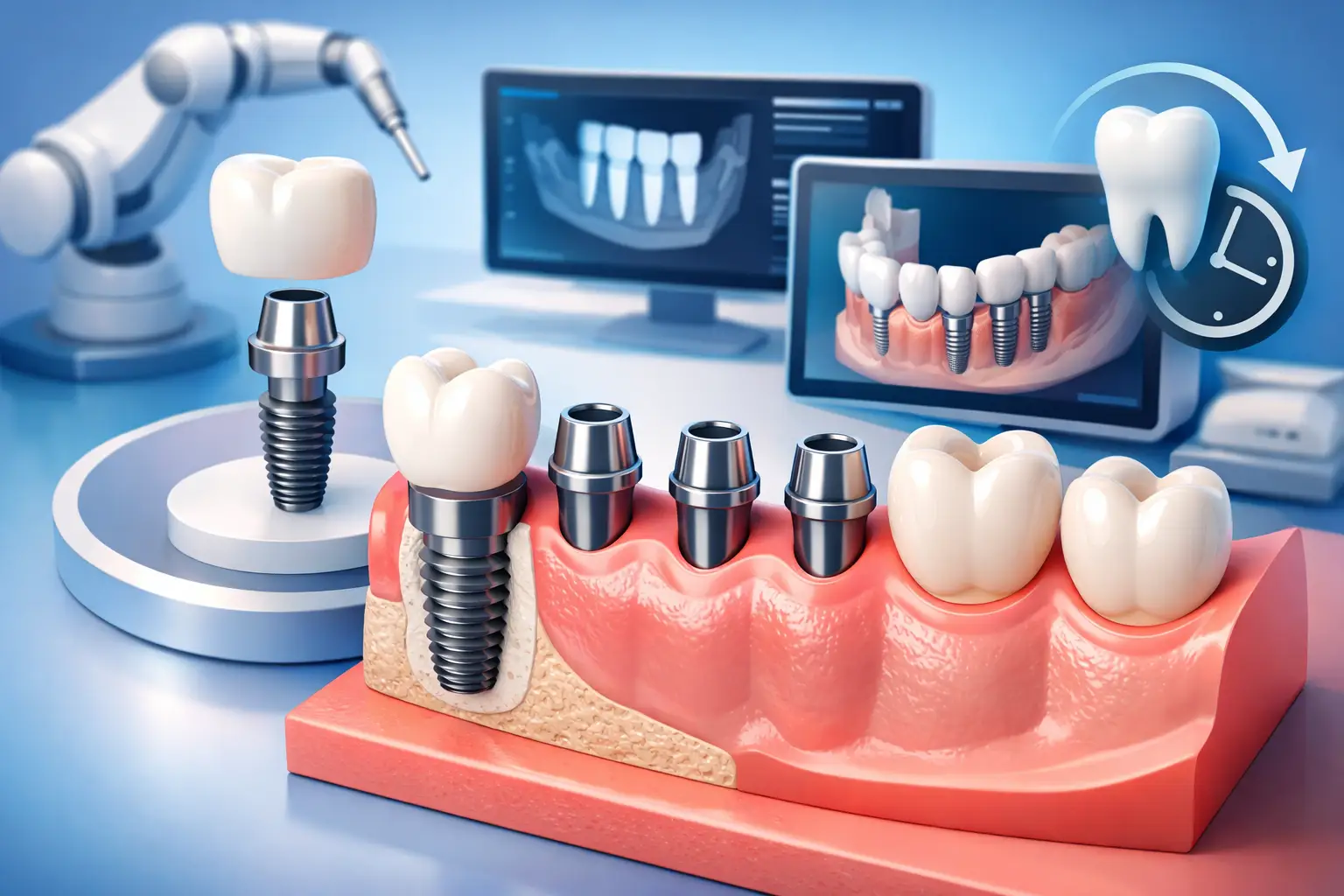
Same day dental implants are implants placed into the jawbone with a temporary tooth, bridge or full-arch prosthesis attached on the same day, or within a very short period after surgery. You may also hear this called immediate loading or teeth in a day. The key point is speed, but not at the expense of planning.
For the right patient, this approach can shorten the visible treatment journey. Instead of having an implant placed and then waiting several months before any tooth is fitted, patients can often leave with an immediate restoration that looks natural and helps preserve confidence in daily life.
That said, the final tooth is not usually the one fitted on day one. In many cases, the first restoration is a carefully designed temporary solution. Once healing is complete and the implant has integrated with the bone, it is replaced with the definitive crown or bridge.
How same day dental implants work
The process starts long before the procedure itself. Digital scans, X-rays and a full clinical assessment are used to check bone volume, gum health, bite forces and the position of nearby anatomical structures. If a tooth needs to be removed, the dentist also evaluates whether extraction and implant placement can happen safely in one appointment.
On treatment day, the failing or damaged tooth may be extracted first if it is still present. The implant is then placed into the jawbone in a carefully planned position. If the implant achieves enough initial stability, a temporary crown or bridge can be attached shortly afterwards. This is the part that makes same day treatment possible.
Initial stability matters because the implant must stay secure while the bone heals around it. During the following weeks and months, the implant undergoes osseointegration, which is the biological process where bone bonds to the implant surface. The temporary restoration helps you maintain appearance and function, but it must be treated with care while healing takes place.
Immediate loading versus immediate placement
These terms are often confused. Immediate placement means the implant is placed directly after tooth extraction. Immediate loading means a temporary tooth is attached straight away. You can have one without the other, although in many same day cases both happen together.
This distinction matters because not every fresh extraction site is suitable for a loaded implant, and not every implant placed on the same day should receive a temporary tooth. Good clinicians make that decision based on your bone quality, gum condition and bite.
Who is a good candidate?
Same day dental implants can work very well for patients with good general oral health, sufficient bone support and stable gums. They are often a strong option for single missing teeth in the front of the mouth, where appearance matters most, and for selected full-arch cases using protocols such as All-on-4 or All-on-6.
Patients who do not grind heavily, smoke heavily or have uncontrolled gum disease usually have a more predictable path. Bone density also plays a major role. If the implant cannot be secured firmly at placement, immediate loading may not be advisable.
Some patients are still suitable for implants, but not for same day loading. If there is active infection, significant bone loss, poor oral hygiene, uncontrolled diabetes or strong bite pressure, a staged approach may be safer. This does not mean treatment is off the table. It simply means the treatment plan needs to prioritise long-term success over speed.
The main benefits of same day dental implants
The biggest advantage is obvious: you avoid leaving with a visible gap or a removable temporary solution. For many patients, especially those travelling for treatment or balancing work and social commitments, that matters a great deal.
There are practical benefits too. Same day treatment can reduce the number of surgical stages, shorten the overall visible treatment timeline and help shape the gums earlier for a more natural emergence profile. In full-arch cases, it can give patients fixed teeth quickly after years of wearing unstable dentures.
Psychologically, the impact can be just as significant. Being able to smile, speak in meetings, eat more confidently and return to normal routines sooner often makes the process feel much easier. For international patients, it can also make treatment abroad more efficient when planned properly.
The limits and trade-offs
Fast treatment is appealing, but same day does not mean rushed. In implant dentistry, speed only works when the clinical conditions are right.
The main trade-off is that the temporary tooth or bridge usually needs protection while healing happens. You may be asked to avoid hard foods, chew more carefully and follow stricter aftercare instructions than you would with conventional delayed loading. If those instructions are ignored, the risk of implant movement increases.
There is also a difference between having teeth fitted the same day and having your final result completed the same day. Soft tissues change as they heal, and the bite may need refinement before the final prosthesis is made. Patients should go into treatment with a clear understanding that immediate teeth are often provisional, not the finished version.
Same day dental implants for full-arch cases
For patients missing most or all teeth, same day dental implants can be used to support a fixed full-arch bridge. This is one of the most life-changing applications of the treatment because it can replace unstable dentures with a more secure, natural-feeling solution.
In these cases, several implants are placed strategically to support an entire upper or lower arch. A temporary fixed bridge may be attached the same day, allowing the patient to leave with teeth in place. This can be particularly useful for dental tourism patients, as it reduces the period spent without functional teeth.
However, full-arch treatment is not one-size-fits-all. Bone anatomy, sinus position, bite force and aesthetic expectations all influence the plan. Some patients need additional procedures or a different implant strategy. The best results come from careful digital planning, experienced implant clinicians and realistic communication about healing phases.
What to expect if you are travelling for treatment
If you are considering same day dental implants abroad, treatment coordination becomes part of the clinical experience. Remote consultation, sharing scans or photographs, and having a clear itinerary before you fly can make the process far smoother.
A well-organised clinic will explain how many visits are required, how long you should stay after surgery, what type of temporary restoration you will receive and when the final restoration is expected. This is especially important for international patients, because immediate treatment still requires follow-up and a long-term plan.
At Dentaglobal, this kind of structured planning is a core part of patient care. For overseas patients in particular, the goal is not just to complete treatment efficiently, but to make the journey understandable, comfortable and clinically sound from first assessment to post-treatment support.
Questions worth asking before you commit
Before agreeing to treatment, ask whether you are receiving a temporary or final tooth on the day. Ask how implant stability is measured, what happens if same day loading is not clinically safe once surgery begins, and whether a back-up plan is in place.
You should also ask about materials, healing time, maintenance and guarantees. If you are comparing prices, make sure you are comparing like for like. A lower quote may not include scans, sedation, temporary teeth, bone grafting, follow-up reviews or the final prosthesis.
This is one area where clarity matters more than marketing. A trustworthy treatment plan should explain not only what is possible, but also what is advisable in your specific case.
Recovery and aftercare
Most patients can return to light daily activities quickly, but recovery instructions should be followed closely. Mild swelling, tenderness and temporary dietary restrictions are common. Good oral hygiene, prescribed medication and avoiding pressure on the implant area are all part of protecting the result.
Follow-up appointments allow the clinical team to monitor healing, adjust the temporary restoration if needed and plan the final stage. Even when the cosmetic change is immediate, the biology still takes time. Respecting that healing process gives the implant the best chance of lasting well.
If you are looking at same day dental implants, the best starting point is not the promise of speed. It is a proper assessment that tells you whether speed and stability can go together in your case.
Ready to find out if you are a candidate? Visit our Dental Implants page for pricing, the full treatment process and our warranty details.