

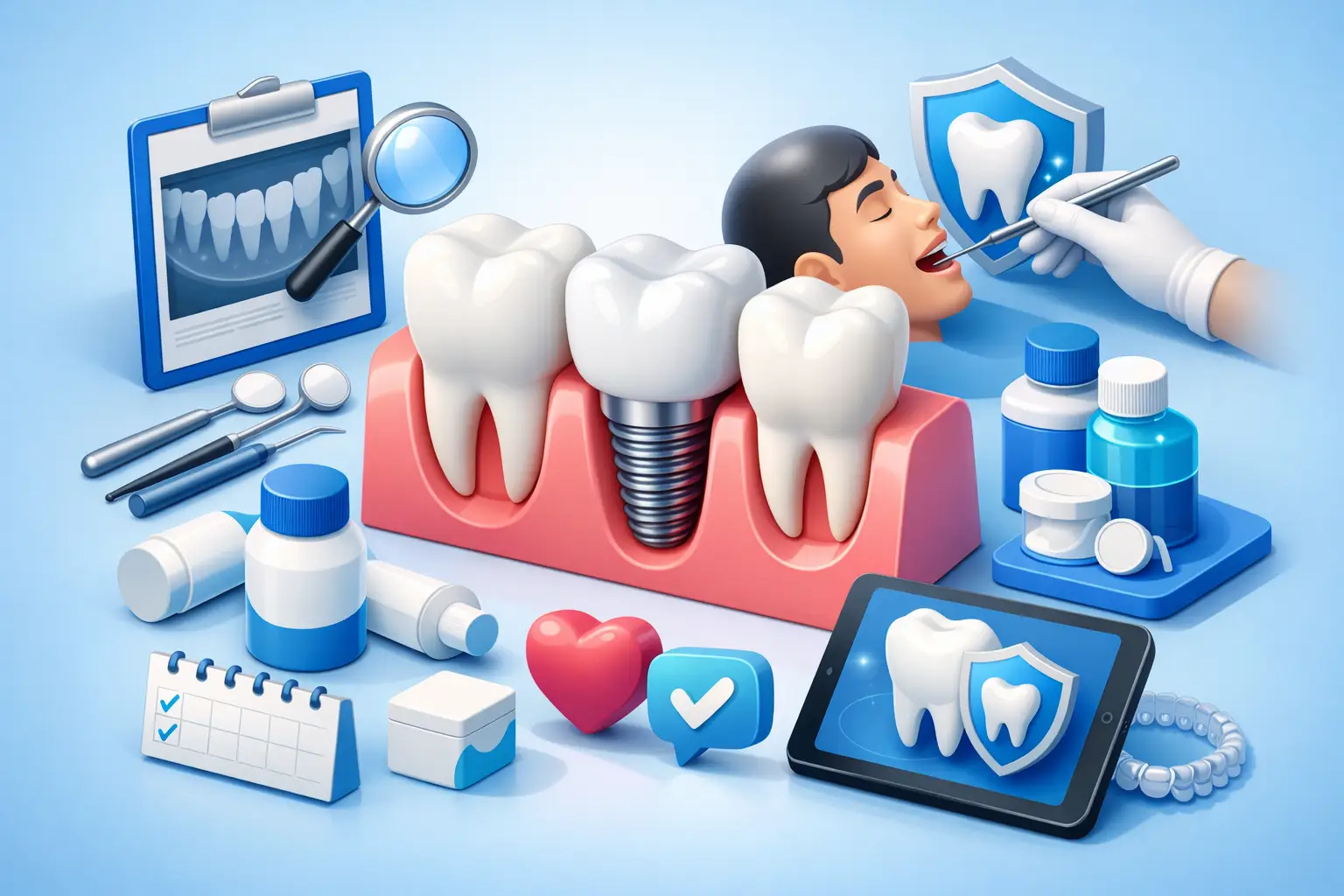
Post Treatment Dental Support Explained
27 June 2026You do not judge a dental treatment only by the day you leave the clinic. You judge it a week later when the swelling settles, a month later when chewing feels normal again, and much later when the result still looks and functions as planned. That is why post treatment dental support matters so much, especially for patients who have travelled for implants, crowns, veneers or full-mouth rehabilitation.
For many patients, the biggest concern is not the procedure itself. It is what happens afterwards. Will discomfort be normal or a warning sign? What if a temporary restoration feels high? How should you clean around a new implant bridge? If you are returning home to another city or another country, these questions become even more important. Good support after treatment should reduce uncertainty, protect the clinical result and help you recover with confidence.
What post treatment dental support actually includes
Post treatment dental support is more than a quick message asking how you feel. It should be a structured part of care that begins before you leave the clinic and continues through healing, review and longer-term maintenance.
In practical terms, this support often includes clear aftercare instructions, guidance on food and oral hygiene, advice on medication, expected healing timelines, and a way to report concerns if something does not feel right. For more complex cases, it may also include scheduled follow-up reviews, remote check-ins, x-ray assessment when needed, and coordination for later treatment stages.
The right level of support depends on the treatment you have had. A simple filling and a full-arch implant case do not require the same level of monitoring. That is where experience matters. Patients need advice that matches the procedure, their medical history and the pace of healing expected for their case.
Why post treatment dental support matters more for dental tourism
When patients travel abroad for treatment, value and quality are both important, but continuity of care becomes just as important. You may only be in the clinic for a limited number of days. That means planning cannot stop at treatment delivery. It has to account for the period when you are back at home.
This is one reason international patients often look closely at follow-up systems before committing to care. They want to know who to contact, how quickly they can expect a reply and what happens if they need reassurance after returning home. A clinic can have strong clinical skills, but if support disappears once the patient boards the plane, the experience feels incomplete.
A well-managed international pathway should anticipate common post-treatment questions. Mild bruising after surgery, temporary sensitivity after cosmetic work or speech adaptation with new full-arch teeth may all be normal. Without support, normal healing can feel alarming. With support, patients know what to expect and when to seek review.
Healing is not the same for every treatment
Different procedures create different recovery patterns. This sounds obvious, but it is often overlooked. Patients sometimes compare their healing to a friend’s experience or to something they have read online, and that can create unnecessary worry.
After dental implants, for example, some tenderness, swelling and caution with chewing are expected early on. The important issue is whether healing is progressing in the right direction. With veneers or crowns, the concern may be less about swelling and more about bite comfort, sensitivity and adaptation to the new shape of the teeth. After periodontal treatment, support often focuses on cleaning technique, gum response and preventing relapse.
Full-mouth rehabilitation requires even closer attention because there are more moving parts. Temporary restorations may be used while the bite is refined, tissues heal or implants integrate. In these cases, support is not just about reassurance. It helps guide the transition from treatment completion to stable long-term function.
What good aftercare looks like in practice
High-quality aftercare is clear, specific and easy to follow. Patients should leave with instructions that make sense in real life, not vague advice that creates more questions. That includes knowing what to eat in the first days, when to return to normal brushing, how to clean around bridges or implants, and what level of sensitivity is expected.
It should also be easy to identify what is urgent and what is not. A little soreness when chewing may settle. Persistent bleeding, unusual swelling, a loose temporary or severe pain should be reported quickly. Patients feel more secure when they know the difference.
Communication matters just as much as clinical detail. If support is slow, confusing or inconsistent, anxiety rises. If it is prompt and structured, patients are more likely to follow instructions properly and less likely to ignore a problem until it becomes harder to manage.
For an international clinic, multilingual communication can make a real difference here. After treatment, patients are often tired, sometimes uncomfortable and not always in the best position to interpret technical language. Clear communication reduces mistakes and builds trust.
Post treatment dental support and long-term results
Even excellent dentistry still depends on what happens next. Veneers can chip if patients ignore bite advice. Implant work can be compromised by poor hygiene or smoking. Crowns can feel uncomfortable if a patient delays reporting a bite issue. In other words, treatment quality and aftercare quality are connected.
This is particularly true for restorative and implant cases, where the goal is not only an attractive result but a stable one. Healing tissues need time. Bone integration needs monitoring. The bite may need minor refinement once the mouth adapts. When support is built into the patient journey, small issues can often be corrected before they become larger ones.
That does not mean every patient will need repeated intervention. Many recover smoothly with standard guidance. The point is that support should be available and clinically meaningful when needed.
What patients should ask before choosing a clinic
If you are considering treatment abroad, ask direct questions about support after treatment. What instructions will you receive before leaving? How are follow-up concerns handled once you are back home? Are remote reviews available? If your treatment involves stages, how is the schedule managed between visits?
You should also ask how the clinic handles complications or adjustments. No ethical clinic will promise that every case is completely problem-free. Dentistry involves biology, healing response and patient habits, so some variation is normal. What matters is whether the clinic has a clear, responsible process for managing the unexpected.
A dependable provider will explain both the strengths and the limits of remote support. Some concerns can be assessed through photos, video and a detailed symptom review. Others may require in-person examination, either at the treating clinic or with a local dentist for urgent assessment. Honest guidance is more valuable than overpromising.
The role of digital communication in modern support
Modern dentistry does not end at the clinic door. Digital communication has made post-treatment care far more practical, especially for international patients. Photos, video calls and digital records help clinicians review healing, check soft tissue response and advise on next steps without unnecessary travel.
This does not replace physical examination in every situation, and good clinics will be clear about that. But it does improve continuity. A patient who notices swelling around an implant site or discomfort with a temporary bridge can receive timely guidance rather than waiting and hoping it resolves.
For providers such as Dentaglobal, this type of structured communication fits naturally into a broader patient journey. It supports the same goals patients care about from the start - clarity, reliability and confidence that care continues after the main treatment phase.
Support also depends on the patient
Good support is a shared process. The clinic must give accurate guidance and remain available, but the patient also has responsibilities. Taking medication correctly, following dietary advice, maintaining hygiene and reporting concerns promptly all affect the outcome.
This is where realistic expectations matter. New restorations can feel unfamiliar at first. Speech may need a short adjustment period. Soft tissues may take time to settle around cosmetic work. Not every change means something has gone wrong. At the same time, patients should not feel they must simply put up with symptoms that seem unusual. The purpose of support is to remove that guesswork.
The best results usually come when patients are well informed before treatment begins. If you already understand the healing stages, likely sensations and review process, the recovery period feels much more manageable.
Choosing dental treatment is not only about finding the right procedure at the right price. It is also about choosing a care pathway that still works once you are back in your own routine, in your own home, and expecting your new smile to keep performing as it should. Strong post treatment dental support gives that pathway real substance - and that peace of mind is often just as valuable as the treatment itself.