

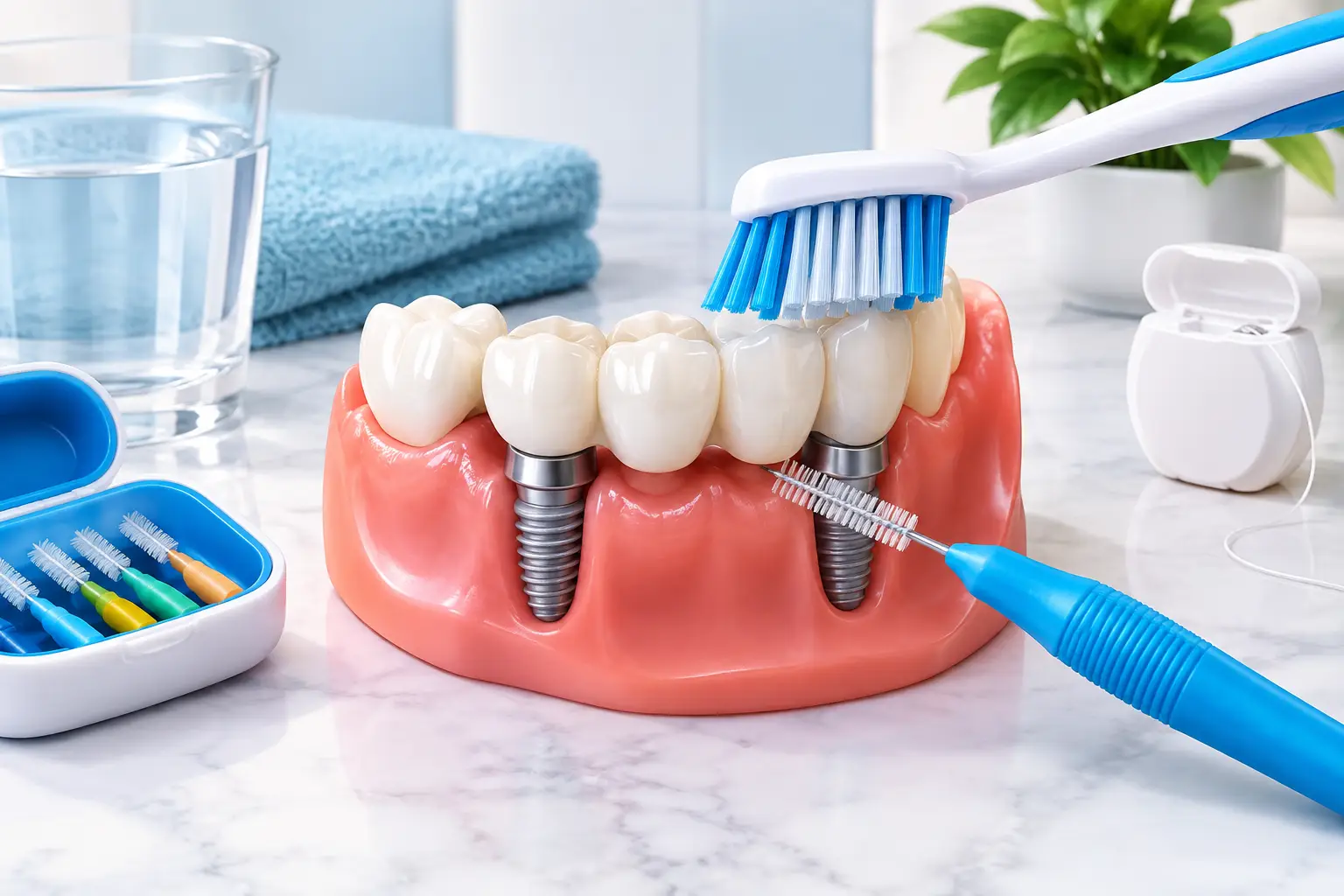
How to Clean Implant Bridges Safely at Home
17 September 2026Food caught beneath an implant bridge can feel uncomfortable within hours, but the greater concern is what cannot be seen: plaque collecting around the implant gums and beneath the restoration. Learning how to clean implant bridges correctly is one of the most effective ways to protect your investment, keep your breath fresh and support the long-term health of your implants.
An implant bridge cannot decay like a natural tooth, but the gum and bone around an implant can still become inflamed. Without consistent cleaning, this may progress to peri-implant disease, a condition that can threaten the support of the implant itself. A simple, well-chosen routine makes a meaningful difference.
Why implant bridge cleaning needs extra care
A bridge is designed to restore function and appearance, whether it replaces several teeth or forms part of a full-arch implant restoration. Unlike individual natural teeth, it may have spaces beneath it where plaque and food debris can settle. These areas are often difficult to reach with a standard toothbrush alone.
The right technique depends on the type of bridge you have. A fixed full-arch bridge, such as an All-on-4 or All-on-6 restoration, needs careful cleaning under the bridge and around each implant site. A smaller fixed bridge may require cleaning around the supporting implant crowns and under the replacement tooth. Your dentist or hygienist should show you the exact areas to focus on before you leave the clinic.
How to clean implant bridges: a daily routine
Aim to clean your bridge thoroughly twice a day, preferably after breakfast and before bed. Gentle, regular care is safer than aggressive brushing or forcing cleaning aids into tight spaces.
1. Brush the bridge and gumline carefully
Use a soft manual toothbrush or an electric toothbrush with a soft head. Brush the outside, biting and tongue-side surfaces of the bridge, taking time to sweep gently along the gumline. Hold the bristles at a slight angle towards the gums rather than scrubbing hard across the restoration.
An electric brush can be particularly useful if dexterity is limited, but it is not essential. The important factor is consistency and reaching all surfaces. Use a low-abrasion toothpaste, ideally one recommended by your dental professional. Highly abrasive whitening toothpastes may gradually dull or scratch certain bridge materials, especially if used with excessive pressure.
2. Clean underneath the bridge every day
For many patients, this is the step that protects the gums most effectively. A specialised implant floss, floss threader or super floss can guide a soft section of floss underneath a fixed bridge. Once in place, move it gently back and forth beneath the bridge and around the implant-supported areas.
Do not snap floss into the gums or pull forcefully against the bridge. If the space is too tight, or you are unsure how to thread the floss safely, ask your hygienist for a demonstration. The best tool is the one you can use comfortably and reliably at home.
3. Use interdental brushes where they fit
Interdental brushes are small, cylindrical brushes designed to clean gaps that ordinary brushing misses. They can be highly effective around implant bridges, but size matters. A brush that is too small will not clean well, while one that is too large can irritate the gums or damage soft tissue.
Your dentist or hygienist can measure the spaces around your bridge and recommend the correct size. Insert the brush gently, without forcing it, and clean the accessible sides of the implant restoration. Replace interdental brushes when the bristles become worn or distorted.
4. Add a water flosser if recommended
A water flosser can help dislodge food debris from beneath a bridge and rinse around the gumline. It is especially helpful for full-arch restorations, where cleaning access can be more limited. Use it on a low setting at first, directing the stream along the gumline and beneath the bridge rather than directly into the gums.
A water flosser is a useful addition, not a complete substitute for brushing and mechanical cleaning with floss or interdental brushes. It removes loose debris effectively, but plaque is a sticky biofilm that usually needs physical disruption.
5. Finish with the right rinse
A non-alcohol mouthwash can freshen the mouth and support daily hygiene without causing dryness. If your dentist has prescribed an antibacterial rinse, use it only as directed. Strong antiseptic rinses are often intended for short-term use after treatment, not as a permanent replacement for effective brushing and interdental cleaning.
Choosing cleaning products for implant bridges
There is no need to fill the bathroom cabinet with every product available. Most patients need a soft toothbrush, low-abrasion toothpaste, a suitable flossing aid or interdental brush, and possibly a water flosser. The ideal combination varies according to the shape of the bridge, the position of the implants and the health of your gums.
Avoid using sharp objects, toothpicks with splintering edges or metal instruments beneath your bridge. These can injure gum tissue and may scratch the restoration. Smoking also increases the risk of gum inflammation and implant complications, so reducing or stopping smoking is one of the strongest steps you can take for long-term implant health.
Common mistakes to avoid
The most common mistake is brushing only the visible teeth. A bridge may look clean from the front while plaque builds up underneath. Skipping the underside because it is difficult to access can allow inflammation to develop quietly.
Another issue is using too much force. Bleeding does not mean you should stop cleaning altogether, but it does mean the area needs attention. Gentle cleaning should continue while you arrange a dental review, particularly if bleeding persists. Aggressive brushing, oversized interdental brushes and harsh toothpaste can make sore gums worse.
It is also unwise to assume that an unpleasant taste or odour is normal with a fixed bridge. Food may be trapped beneath the restoration, but persistent odour can also indicate inflammation or an area that is not being cleaned effectively.
When to contact your dentist
Arrange an appointment promptly if you notice persistent bleeding, swollen gums, tenderness, pus, a bad taste that does not improve after cleaning, or movement in the bridge. Pain on biting, a change in how the bridge fits, or a chipped restoration should also be assessed.
Implant problems are generally easier to manage when they are identified early. Routine professional hygiene visits are not optional extras after implant treatment. Your clinician can remove hardened deposits from areas that are difficult to reach, assess the gum tissues and check the stability of the bridge and implants.
For international patients, it is sensible to arrange a maintenance plan before travelling home. Dentaglobal can provide clear post-treatment guidance so that your local dentist or hygienist understands the type of restoration you have and the care it requires.
A note on removable implant bridges
Some implant-supported bridges are designed to be removed by a dentist during maintenance, while others may be removable by the patient. Never attempt to take out a fixed bridge yourself. If your restoration is removable, follow the specific instructions provided by your clinician for removing, cleaning and reinserting it.
The materials and attachment system matter. What is appropriate for a removable overdenture is not necessarily safe for a screw-retained fixed full-arch bridge. When in doubt, ask before changing your routine.
A clean implant bridge should feel comfortable, smell fresh and allow you to eat and smile with confidence. Give the areas beneath and around it the same attention you give the visible teeth, and let regular professional checks protect the result you worked hard to achieve.