

How Does Dental Tourism Work?
12 May 2026A full smile restoration in the UK can cost as much as a small car. That price gap is exactly why so many patients ask, how does dental tourism work, and whether travelling abroad for treatment is actually practical, safe and worth it.
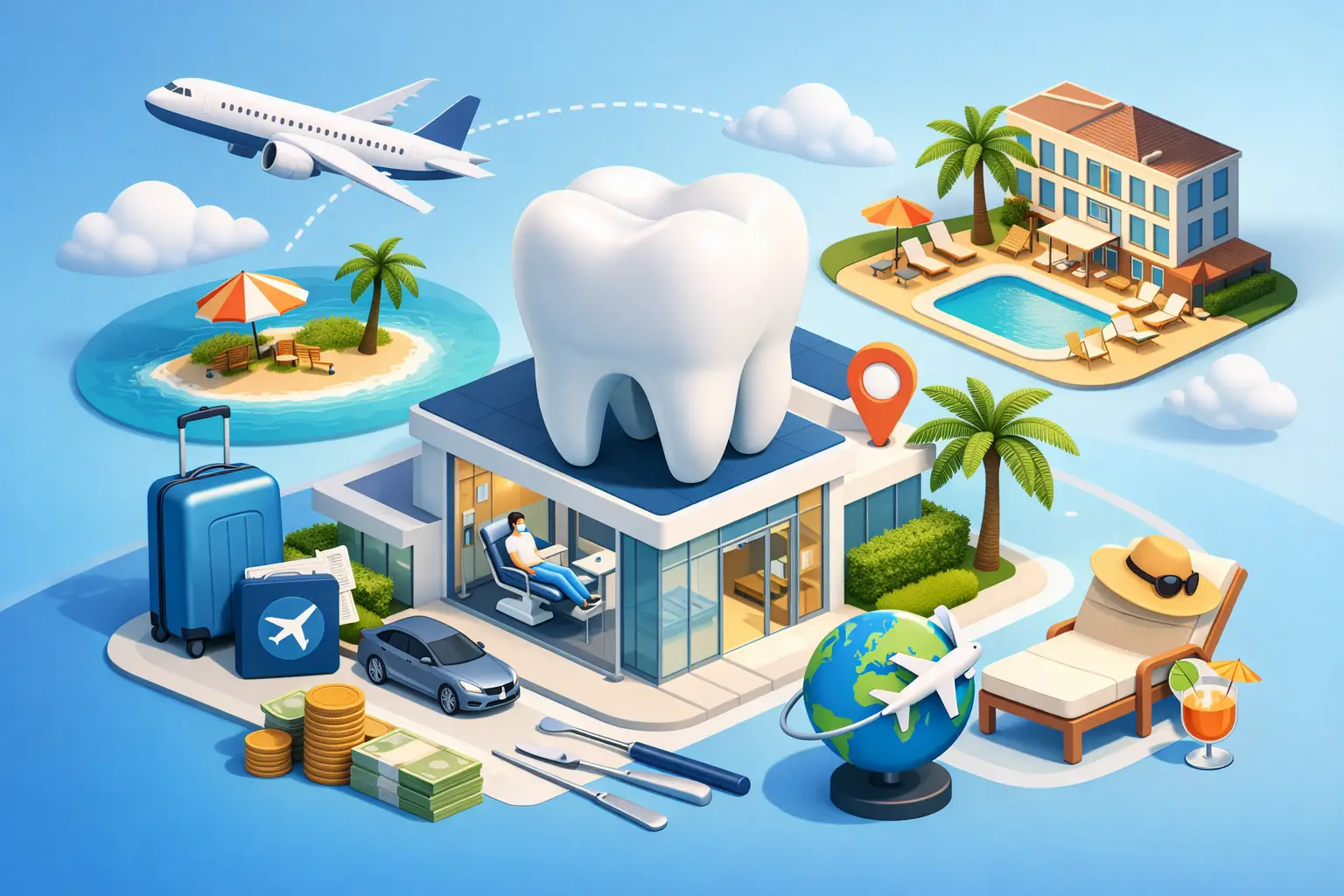
The short answer is that dental tourism combines planned dental treatment with international travel. But the real process is more structured than many people expect. Reputable clinics do not simply book you in and hope for the best. They assess your case in advance, confirm whether your treatment is suitable for travel, build a timeline around your clinical needs, and support you before, during and after your visit.
For patients considering implants, veneers, crowns or full-mouth rehabilitation, understanding the process matters. The quality of your result depends not only on the procedure itself, but also on diagnosis, planning, timing and aftercare.
How does dental tourism work in practice?
In practice, dental tourism starts long before your flight. Most patients begin by sharing photos, X-rays or a recent dental report. This allows the clinic to make an initial assessment and explain which treatments may be appropriate, how long you may need to stay, and whether your case requires one visit or two.
This first stage is not just about price. A good clinic uses it to identify limits as well as possibilities. For example, someone asking for veneers may actually need periodontal treatment first. A patient considering implants may need scans to assess bone density, or may be a better candidate for All-on-4, All-on-6 or, in more advanced cases, zygomatic implants.
Once your case is provisionally reviewed, you normally receive a treatment plan. This outlines the expected procedures, estimated costs, likely treatment duration and any steps needed before you travel. At this point, the best providers are clear about what can be confirmed remotely and what still depends on in-clinic examination and 3D imaging.
After that comes travel coordination. Many international patients choose providers that can help organise airport transfers, accommodation guidance, appointment scheduling and multilingual communication. This reduces the stress of managing treatment in an unfamiliar country and keeps the journey focused on clinical efficiency rather than logistics.
The typical patient journey
Most dental tourism journeys follow the same broad pattern, although the number of visits depends on the treatment.
The first step is remote consultation. You send your records, describe your concerns and explain what result you want. Some patients are focused on replacing missing teeth. Others want cosmetic improvement, such as correcting worn, discoloured or uneven teeth. In many cases, both health and aesthetics are part of the plan.
The second step is clinical review and treatment planning. This is where your provider explains the likely procedures, expected outcomes, estimated timescale and any alternatives. This part matters because not every quick fix is the right long-term choice. A trustworthy clinic should explain trade-offs, not only the headline benefit.
The third step is travel and in-person diagnostics. Once you arrive, the dental team carries out a full examination. This may include panoramic X-rays, digital scans, photographs and 3D imaging. These checks confirm whether the original plan still stands or whether it needs to be refined.
The fourth step is active treatment. Simple cosmetic cases such as whitening or some bonding procedures may be completed quickly. Crowns and veneers often require several appointments over a few days. Implant treatment is more complex. Some patients receive implants and temporary teeth during the first visit, then return months later for final restorations once healing is complete.
The fifth step is recovery and aftercare. Even if treatment is finished before you fly home, follow-up is still part of the process. You should leave with clear guidance on eating, cleaning, healing, medication and what to expect over the next days or weeks.
Which treatments are suitable for dental tourism?
Dental tourism tends to work best for treatments that can be planned clearly and delivered efficiently within a defined schedule. This includes veneers, crowns, bridges, implants, full-arch restorations, whitening, root canal treatment and some orthodontic or periodontal procedures.
That said, suitability depends on complexity. A single crown is very different from full-mouth rehabilitation. Patients needing extensive implant work, bite correction or treatment for active gum disease need especially careful planning. These cases can still be very suitable for treatment abroad, but they demand stronger diagnostics, better communication and realistic timeframes.
Emergency dentistry is a different matter. If you are in severe pain and need immediate local support, treatment near home is often more practical. Dental tourism is usually best for planned care rather than urgent, same-day crisis management.
What makes the cost lower abroad?
Lower pricing is one of the main reasons patients travel, but cheaper does not always mean lower quality. In many destinations, clinic operating costs, staff costs and general overheads are lower than in the UK or Western Europe. That changes the final treatment price significantly.
At the same time, modern clinics serving international patients often invest heavily in digital dentistry, specialist teams and patient coordination. So the better question is not simply why prices are lower, but what is included. You need to understand whether the quote covers diagnostics, temporary restorations, sedation if needed, follow-up checks and any laboratory work.
This is where clarity matters. A low headline price can become less attractive if key elements are added later. Patients should compare value, not just the starting figure.
How to judge whether a clinic is trustworthy
If you are asking how does dental tourism work safely, the answer starts with provider selection. You should look for evidence of qualified clinicians, digital diagnostic capability, clear treatment planning and a structured patient journey.
Good clinics explain the process in detail. They do not pressure patients into rushing decisions or promise identical outcomes for every case. They also show an understanding that international patients need more than dentistry alone. Communication, scheduling, comfort and post-treatment support all matter.
It also helps to look for consistency. Before-and-after cases, verified patient feedback, transparent service information and clear explanations of implant systems, materials and methods can tell you far more than a bold sales pitch.
Clinics such as Dentaglobal are built around this more structured model, combining specialist-led treatment with digital planning and support for international patients from first consultation through to aftercare.
What are the main risks and trade-offs?
Dental tourism can be excellent value, but it is still healthcare, not a bargain holiday purchase. The main risk is choosing on price alone. If diagnosis is weak, materials are poor, or treatment is rushed into an unrealistic timeframe, the long-term cost can be much higher.
Another consideration is follow-up. Some procedures need monitoring, adjustments or staged work over time. That does not make treatment abroad a bad idea, but it does mean your plan should account for what happens after you return home. You need to know whether the clinic offers remote follow-up, whether a second visit is expected, and what support is available if something needs attention later.
There is also the issue of timing. Implant healing cannot be hurried just because a patient has booked a short stay. Cosmetic work should respect bite function, not only appearance. The best outcomes usually come from clinics that are disciplined about treatment protocols rather than trying to fit everything into the shortest possible visit.
How long do you need to stay?
The answer depends entirely on the treatment. Some cosmetic procedures can be completed within a few days. Crowns and veneers often require around five to seven days, depending on preparation, digital design and fitting. Implant treatment may need a staged approach, with the first visit for surgery and temporaries, followed by a second visit after healing.
This is one of the biggest misconceptions about dental tourism. Patients sometimes assume every case can be completed in one trip. In reality, some treatments can, and some should not. A responsible clinic will tell you the difference.
How aftercare works once you return home
One of the biggest concerns around dental tourism is aftercare, and rightly so. Dentistry does not end the moment a patient boards the plane home, so aftercare planning should be discussed before treatment starts. Patients need to know how the clinic handles follow-up questions, what happens if adjustments are needed, and which parts of treatment may require review at a later stage. For implant and full-mouth cases in particular, the long-term result depends on maintenance, hygiene and clear professional guidance.
Remote follow-up is now a normal part of international care. Photos, video calls and digital communication let clinicians monitor healing, answer questions and decide whether a local check-up is needed - but remote support is only useful if it is responsive and properly organised.
Patients carry responsibility too. Instructions on cleaning, medication, smoking, diet and review timing all have to be followed for the result to hold.
Who benefits most from dental tourism?
Dental tourism is often a good fit for patients who need multiple treatments and want to reduce overall costs without compromising clinical standards. It also suits those seeking implant solutions, smile makeovers or full-mouth rehabilitation where waiting times and fees at home are significant barriers.
It is less suitable for patients expecting instant answers without diagnostics, those unable to travel comfortably, or anyone with complex medical issues requiring very close coordination with local healthcare providers. The right decision depends on your dental needs, your timeline and how confident you feel in the clinic's planning process.
Is dental tourism worth it?
For many patients, yes. If you want high-quality restorative or cosmetic treatment, need a more affordable route, and choose a clinic with strong planning and aftercare, dental tourism can be a very practical option. It gives patients access to advanced procedures that may feel financially out of reach at home.
But the value comes from the full experience, not just the invoice. Good dental tourism works because it combines specialist dentistry, careful case selection, modern diagnostics and reliable patient support. When those pieces are in place, travelling for treatment can feel less like a risk and more like a well-managed healthcare decision.
If you are considering treatment abroad, the smartest first step is not booking a flight. It is getting a proper assessment, asking precise questions and choosing a team that treats your long-term oral health as seriously as the final smile.