

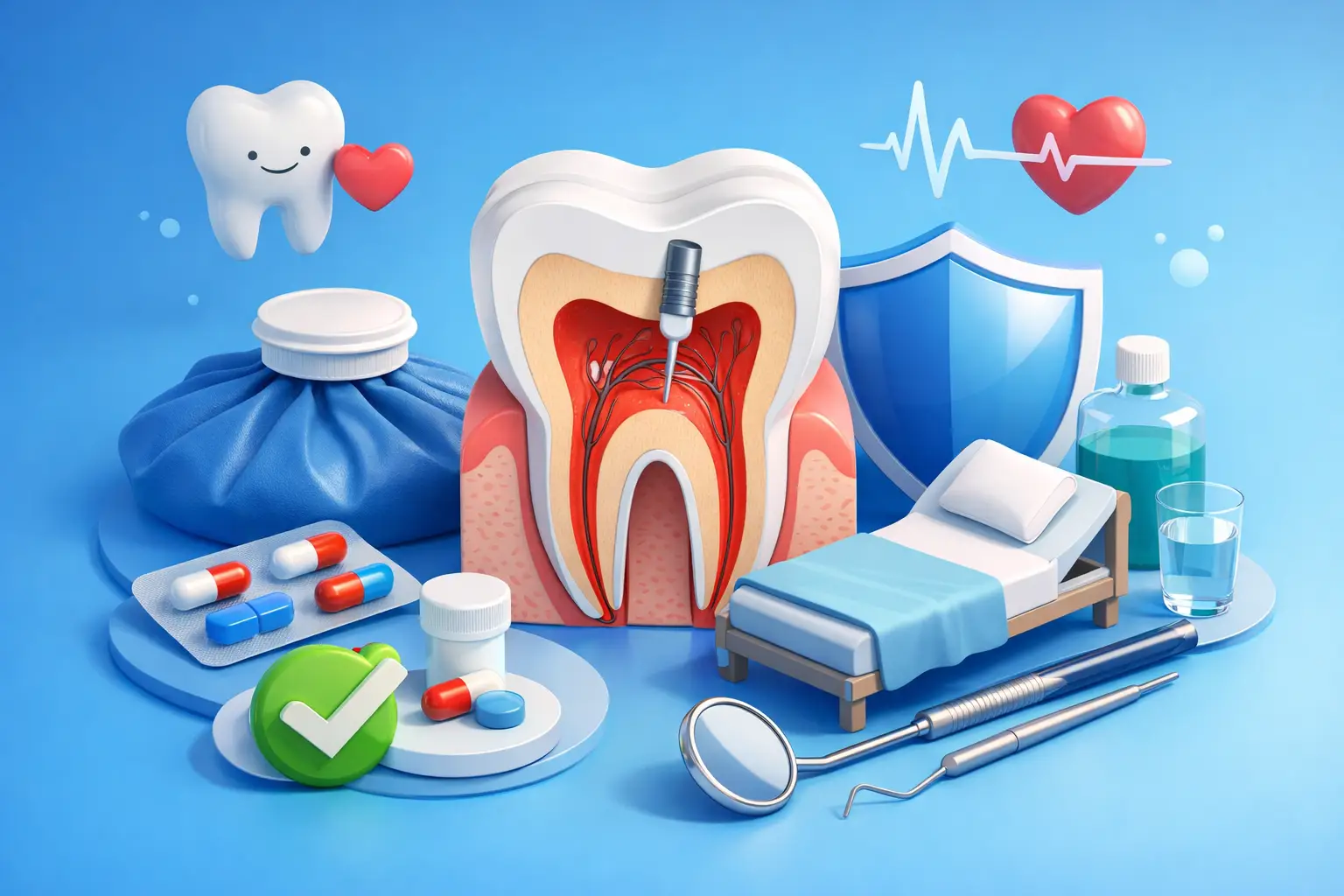
Your Guide to Root Canal Recovery After Treatment
10 August 2026A root canal usually brings relief from the toothache that made treatment necessary. Once the local anaesthetic wears off, however, it is normal to notice tenderness when biting or a mild ache around the treated tooth. This guide to root canal recovery explains what is expected, how to protect the tooth and when to ask your dentist for further advice.
Root canal treatment removes infected or inflamed tissue from inside a tooth, then cleans and seals the root canals. The tooth and the tissues around its roots can need time to settle afterwards. Recovery is usually straightforward, but your own treatment plan, the condition of the tooth and whether a temporary or permanent restoration has been placed will all affect the process.
The first 24 hours after root canal treatment
For the first few hours, take care not to bite your cheek, lip or tongue while the anaesthetic is still working. Choose soft food and avoid hot drinks until normal feeling has returned. This is particularly relevant if treatment has taken place on a lower tooth, where numbness can last longer.
Some sensitivity is common once the numbness fades. The tooth may feel bruised, especially when you close your teeth together or chew. This happens because the area around the root can be irritated before and during treatment. For most patients, discomfort is manageable and begins to improve over the next few days.
Take any pain relief exactly as advised by your dentist or pharmacist. If you have been prescribed medication, follow the instructions carefully and complete a course of antibiotics only when it has been prescribed for your specific clinical needs. Antibiotics are not routinely needed after every root canal treatment.
A slightly uneven bite can make the treated tooth feel more painful than it should. If that tooth meets first when you bite, or if pain is becoming sharper rather than settling, contact the clinic. A small bite adjustment may be all that is required.
Guide to root canal recovery: eating, cleaning and comfort
Choose food that does not overload the tooth
Until the tooth has its final restoration, it is wise to chew on the other side where possible. A tooth that has undergone root canal treatment can be more brittle, especially if it has lost a substantial amount of its original structure. Hard foods such as nuts, crusty bread, ice and boiled sweets can crack a weakened tooth or dislodge a temporary filling.
Soft, nourishing meals are a sensible choice for the first day or two. Soup that has cooled to a comfortable temperature, yoghurt, eggs, pasta, rice, fish and cooked vegetables are usually easier to manage. There is no need to restrict your diet for longer than necessary, but return to firmer foods gradually as tenderness improves.
Keep the area clean without overdoing it
Continue brushing twice daily with a soft toothbrush and fluoride toothpaste. Brush around the treated tooth gently but thoroughly. The gums may feel tender if a rubber dam clamp was used during treatment or if the tooth was already inflamed, yet avoiding the area can allow plaque to build up.
You can clean between your teeth as normal unless your dentist has given different instructions. If a temporary filling is present, floss carefully and pull the floss out sideways rather than lifting it sharply upwards, which may loosen the temporary material. An alcohol-free mouthwash can be used if it feels comfortable, but it does not replace brushing and interdental cleaning.
Give your body time to settle
Most people can return to work and normal daily activities the following day. If you feel tired after a long appointment, rest, drink water and avoid demanding exercise until you feel comfortable. Strenuous activity is not automatically harmful, but it can make throbbing or swelling feel more noticeable during the first 24 hours.
Smoking and vaping can delay healing in the mouth and increase the risk of complications, particularly where gum health is already compromised. Limiting or avoiding them during recovery is a practical step for protecting the treated area and your wider oral health.
Why the final crown or filling matters
Root canal treatment saves the natural tooth, but the treatment is not fully complete until the tooth has been permanently restored. Depending on its position and how much healthy tooth structure remains, your dentist may recommend a definitive filling, an onlay or a crown.
Back teeth take substantial chewing pressure and commonly need the extra protection of a crown or onlay. Front teeth may sometimes be restored with a filling if enough strong enamel remains. The right option depends on the tooth, your bite and any existing cracks, rather than a one-size-fits-all rule.
Do not delay the final restoration without discussing it with your dentist. A temporary filling is designed to seal the tooth for a limited period, not to withstand long-term chewing forces. If it breaks, feels loose or falls out, arrange a review promptly to reduce the chance of bacteria entering the tooth again.
Recovery when you are travelling for dental care
For international patients, clear aftercare is part of a well-planned treatment journey. Before leaving the clinic, make sure you understand whether your restoration is temporary or permanent, when it should be checked and how to reach the dental team if you have concerns after returning home.
Flying after routine root canal treatment is often possible, but timing should be agreed with your treating dentist. It depends on the level of infection, whether swelling is present, the complexity of treatment and whether further appointments are required. If a tooth needs a crown, sufficient time must also be allowed for scans, design, fitting and final bite checks.
At Dentaglobal, treatment planning for travelling patients should account for clinical recovery as well as appointment availability. Keep any treatment records and radiographs provided by your clinic, as they can be useful if you need advice from a dentist at home.
When to contact a dentist during root canal recovery
Mild tenderness that improves day by day is usually reassuring. Persistent or worsening symptoms deserve attention. Contact your dentist promptly if you develop visible swelling of the gum, face or jaw; severe pain that is not controlled by recommended pain relief; a fever or feeling generally unwell; or a rash, breathing difficulty or other possible reaction after taking prescribed medicine.
You should also call if your bite feels wrong, the temporary restoration has come out, or you notice a bad taste, discharge or renewed swelling near the tooth. These signs do not always mean the root canal has failed, but they should be assessed rather than managed at home.
Difficulty breathing or swallowing, rapidly increasing facial swelling, or swelling spreading towards the eye requires urgent medical assessment. Do not wait for a routine dental appointment in these circumstances.
Follow-up is part of protecting your result
Your dentist may arrange a review to assess symptoms, check the restoration and monitor healing on an X-ray when appropriate. Healing around the root can take months and may not be visible immediately, even when the tooth feels normal. Attending follow-up appointments gives your dentist the best opportunity to confirm that the tooth is stable and functioning well.
A saved natural tooth can serve you for many years when it is properly restored and cared for. Treat the first week as a period of protection rather than restriction: eat thoughtfully, keep the tooth clean, follow the clinical instructions you were given and speak to your dental team early if something does not feel right.