

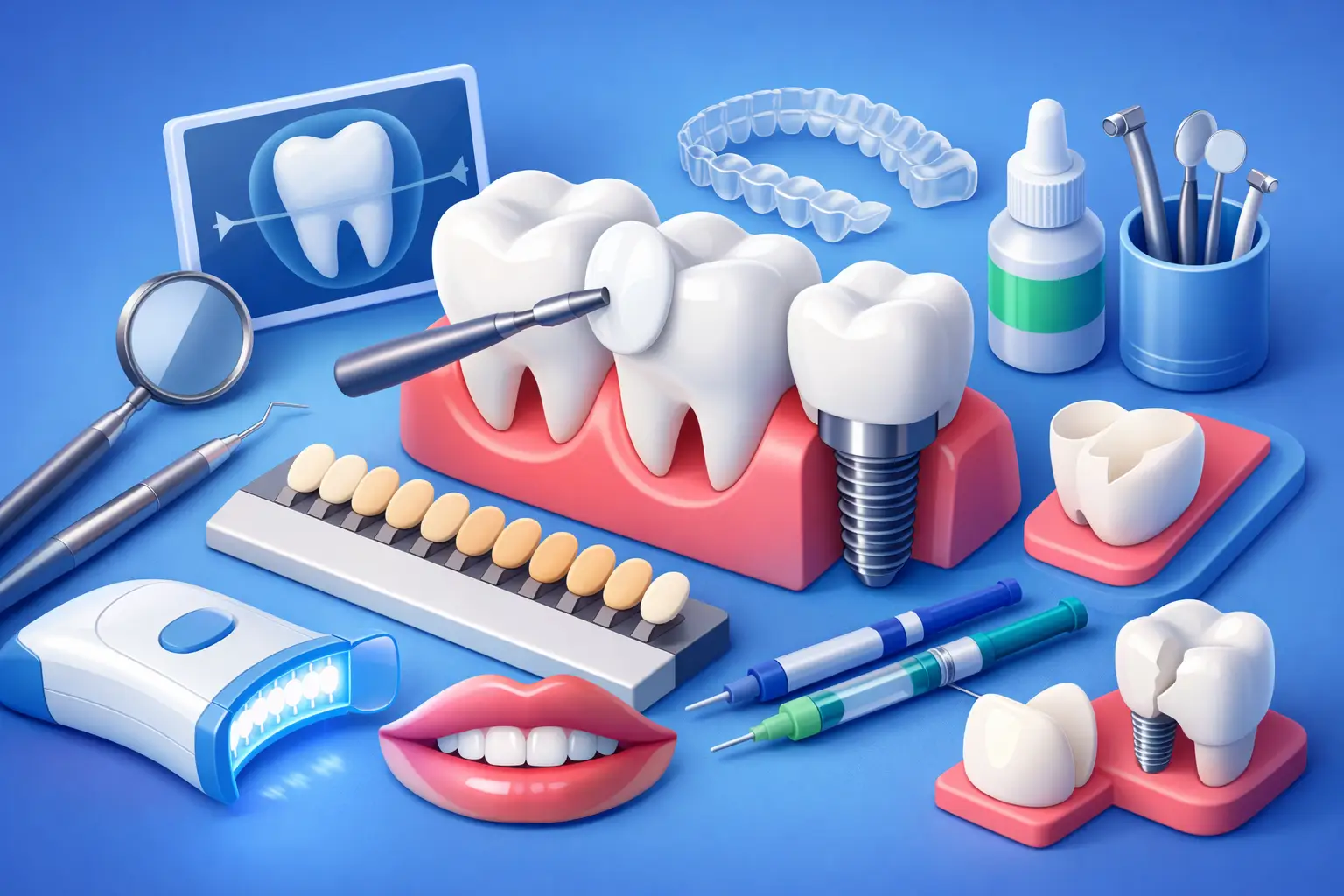
Cosmetic Dentistry Treatment Guide
8 May 2026A better smile is rarely about one treatment in isolation. Most patients who search for a cosmetic dentistry treatment guide are not simply choosing between whitening and veneers - they are trying to work out what will look natural, what will last, what will fit their budget, and whether the plan will also protect long-term oral health. That is the right place to start.
Cosmetic dentistry works best when appearance and function are planned together. A brighter, straighter smile can make a real difference to confidence, but the strongest results come from careful diagnosis, realistic expectations and treatment that suits your teeth, bite and lifestyle.
What a cosmetic dentistry treatment guide should help you decide
The first question is not, “What is the most popular treatment?” It is, “What problem are you trying to solve?” Staining, worn edges, gaps, crowding, missing teeth, old restorations and uneven gums may all affect the appearance of a smile, but they are treated in very different ways.
A good plan also considers whether there are underlying issues such as gum disease, tooth decay, clenching, enamel wear or bite instability. Cosmetic work placed on an unhealthy foundation often leads to disappointment, repairs and extra cost later. In practice, the best cosmetic treatment is usually the one that improves appearance without creating unnecessary intervention.
Cosmetic dentistry treatment guide by treatment type
Teeth whitening
Whitening is often the simplest starting point for patients with healthy teeth and general staining from food, drink or smoking. It can lift the overall shade of the smile without changing the natural tooth structure.
That said, whitening does not change the colour of crowns, fillings or veneers. If you already have visible restorations on front teeth, the result can become uneven unless those restorations are updated afterwards. Whitening also has limits. Deep internal discolouration, antibiotic staining or teeth darkened after trauma may need a different solution.
Veneers
Veneers are thin coverings placed on the front surface of teeth to improve shape, colour, proportion and minor alignment issues. They are often chosen when patients want a more uniform smile and whitening alone will not achieve the desired result.
The main trade-off is preparation. Some veneer cases require minimal reshaping of the tooth, while others need more adjustment to create the right thickness and fit. Veneers can look highly natural when planned well, but they are not the right answer for every patient. If the teeth are heavily restored, significantly weakened or affected by a poor bite, crowns or orthodontic treatment may be more suitable.
Crowns
Crowns cover the full visible part of a tooth above the gum line and are usually considered when a tooth is damaged, heavily filled, root treated or structurally compromised. In cosmetic dentistry, zirconia and other modern crown materials are often selected for their strength and appearance.
Compared with veneers, crowns involve more tooth preparation, so they should be used for clear clinical reasons rather than as a default cosmetic option. Where strength matters as much as appearance, they can be an excellent long-term solution.
Orthodontics
Straightening teeth can improve symmetry, spacing and bite without removing healthy tooth structure. For many adults, this is the most conservative route to a better smile.
The trade-off is time. Orthodontic treatment does not usually deliver an instant result, and some patients still choose whitening, edge bonding or veneers afterwards to refine the final appearance. But when crowding or spacing is the main issue, moving teeth into the correct position often gives a better long-term outcome than masking the problem with restorations.
Composite bonding
Bonding uses tooth-coloured resin to reshape edges, close small gaps and improve minor irregularities. It is a useful option for patients who want a less invasive treatment and a lower initial cost.
It is important, however, to be realistic about maintenance. Bonding can stain, chip and wear more easily than ceramic restorations, especially in patients who bite hard objects or grind their teeth. It is effective in the right case, but it is not always the most durable choice.
Implants and full-mouth restorations
When missing teeth affect the smile, implants can restore both appearance and chewing function. For single missing teeth, they can offer a stable and natural-looking replacement without relying on neighbouring teeth. For more extensive tooth loss, implant-based full-arch solutions may provide a major cosmetic and functional improvement.
These treatments need careful planning, especially where bone volume, gum condition and smile line are involved. They can be life-changing, but they are not quick cosmetic fixes. In some cases, additional procedures or staged treatment are required to achieve a predictable result.
Gum aesthetics
Sometimes the teeth are not the main issue. Excess gum display, uneven gum levels or inflamed tissue can make a smile look unbalanced even when the teeth themselves are attractive. Gum contouring or gummy smile treatment can improve proportion, provided the underlying cause is properly diagnosed.
This is one area where digital planning and specialist assessment make a real difference. The goal is not simply to remove tissue, but to create harmony between tooth length, gum line and facial appearance.
How to choose the right treatment plan
The right cosmetic plan depends on four factors: your dental health, your goals, your timeline and your budget. These points are connected, and changing one often affects the others.
If you want the most conservative approach, whitening, orthodontics or bonding may come before veneers or crowns. If you want a faster transformation and have multiple concerns at once, ceramic restorations may offer a more efficient route. If several teeth are damaged, missing or heavily restored, cosmetic treatment may need to be combined with restorative or implant dentistry rather than approached as smile design alone.
This is also where patient expectations matter. Many people bring reference photos, but a smile that looks good on one face may look artificial on another. Tooth proportion, age, lip movement, skin tone and facial shape all influence what will look natural. A credible clinic will guide you towards a result that suits you, not a copy-and-paste template.
Why diagnostics matter before cosmetic dentistry
A confident result starts long before treatment begins. Photographs, digital scans, X-rays and bite assessment help identify what is possible and what should be avoided.
This matters especially for patients travelling abroad for care. Efficient treatment planning is valuable, but speed should never replace diagnosis. If there is hidden decay, active gum disease, a fractured tooth or severe grinding, that must be addressed within the plan. Cosmetic dentistry should improve confidence, not store up complications for later.
Digital dentistry can also help patients understand the likely result before committing to treatment. When planning is clear, decisions become easier. You know what is being treated, why it is being recommended, and what maintenance will be needed afterwards.
Cost, value and treatment abroad
For many patients, price is part of the decision from the start. That is understandable. Cosmetic and restorative dental treatment can represent a significant investment, particularly in the UK and parts of Europe.
The key point is to compare value, not headline price alone. A lower fee may be attractive, but it should come with specialist-led care, quality materials, transparent planning and reliable aftercare. Patients considering treatment in Turkey often do so because they want advanced care at a more accessible cost, but they also want reassurance that the process will be well managed from consultation through to follow-up.
This is where a structured international pathway matters. Clear communication, realistic scheduling, diagnostics, treatment coordination and post-treatment support all reduce stress for patients who are arranging care around flights, work and time away from home. For that reason, many international patients look for clinics that combine modern technology with an organised patient journey, as Dentaglobal does in İzmir.
Questions worth asking before you start
Before committing to cosmetic treatment, ask what alternatives exist, how much natural tooth structure will be altered, how long the result is expected to last, and what maintenance is likely. You should also ask what happens if your bite changes, if you grind your teeth, or if you need repairs in future.
These are not negative questions. They are practical ones. Good cosmetic dentistry is not about selling the biggest treatment plan. It is about choosing the smallest effective intervention that delivers the result you want safely and predictably.
A final thought on getting the result right
The best smile improvements do not look overdone or rushed. They look healthy, balanced and believable. If your next step is a consultation, focus less on finding the trendiest treatment and more on finding a clinical team that can explain your options clearly, plan around your real needs and support you after the work is done.