

Best Full Mouth Options for a Lasting Smile
2 May 2026When eating feels like hard work, smiling becomes something you manage rather than enjoy, and every dental appointment seems to uncover another problem, the question is rarely about one tooth. It is about the best full mouth options that can restore comfort, function and confidence in a realistic way.
For some patients, that means replacing most or all teeth. For others, it means rebuilding worn, broken or heavily restored teeth so the bite works properly again. The right answer depends on bone levels, gum health, existing teeth, budget, timescale and the kind of result you want to live with for years, not just months.
What full mouth treatment really means
Full mouth treatment is not one procedure. It is a tailored plan used when multiple issues affect the whole smile and bite. You may have missing teeth, loose dentures, advanced wear from grinding, repeated crown failures, gum disease, or a combination of cosmetic and functional concerns.
This is why experienced clinics begin with diagnostics rather than assumptions. Digital scans, X-rays, photographs and a clinical examination help show what can be saved, what should be replaced and how the upper and lower teeth need to work together. If that planning stage is rushed, even attractive dentistry can fail early.
Best full mouth options explained
The best full mouth options usually fall into a few clear categories. Each has strengths, limits and ideal cases.
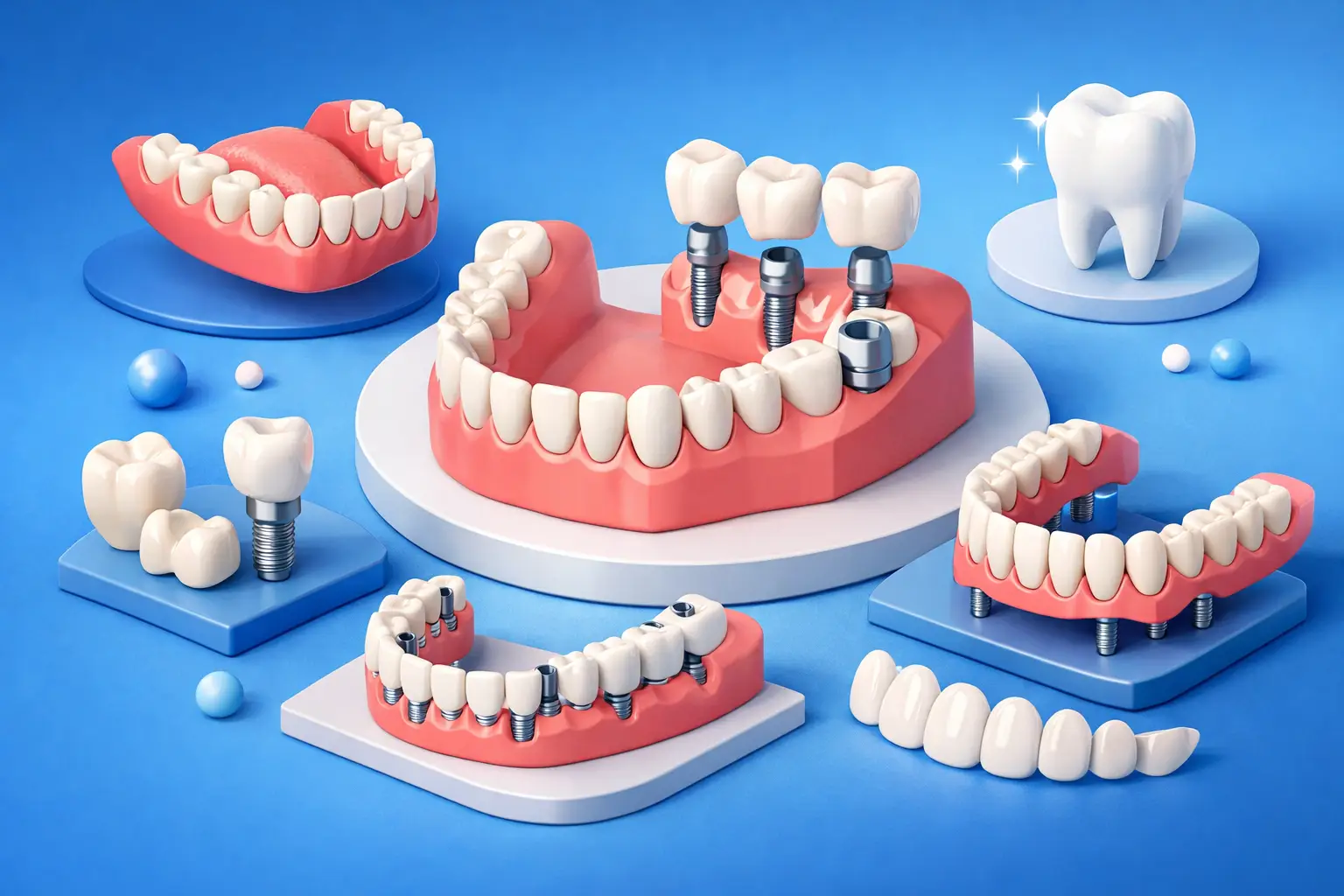
Full-mouth dental implants
If you have multiple missing teeth or failing teeth that cannot be predictably maintained, implant-based treatment is often the most stable long-term option. Implants replace tooth roots and support fixed restorations that feel significantly more secure than removable dentures.
For patients missing all teeth in one or both arches, this often means a full-arch implant restoration. The main advantage is stability. You can bite with more confidence, speak more naturally and avoid the movement that many denture wearers find frustrating.
The trade-off is that implants require suitable bone and careful planning. Some patients need extra procedures, while others may be candidates for advanced solutions designed for reduced bone volume. Healing time also matters. In some cases, a fixed temporary smile can be placed quickly, but the final prosthesis still depends on a proper treatment sequence.
All-on-4 and All-on-6 restorations
These are among the most requested solutions for full-arch rehabilitation. Instead of placing an implant for every missing tooth, four or six implants are used to support a complete upper or lower bridge.
All-on-4 is often attractive when patients want a fixed option with fewer implants and a more efficient treatment plan. All-on-6 may offer additional support and load distribution, especially where bone quality and anatomy allow it. Neither is automatically better in every case. The decision depends on your jaw structure, bite forces, oral habits and restorative goals.
For international patients, this option is popular because it can be highly transformative while still being more cost-effective than replacing each tooth individually. It is also well suited to patients who are tired of unstable dentures or who have many failing teeth and want a more definitive solution.
Zygomatic implants for severe bone loss
Some patients are told they do not have enough upper jaw bone for standard implants. That does not always end the conversation. Zygomatic implants are a more advanced option used in selected cases of severe maxillary bone loss.
These implants anchor into the cheekbone rather than relying only on the upper jaw. That can avoid more extensive grafting in the right patient and make fixed teeth possible where conventional options are limited. This is a specialist-led treatment, not a routine one, so case selection is critical. When indicated, however, it can be life-changing for patients who have struggled to find a fixed full-mouth solution.
Implant-supported dentures
Not every patient wants or needs a fully fixed bridge. Implant-supported dentures sit between conventional dentures and fixed implant restorations. They attach more securely than standard dentures, but they can still be removed for cleaning.
This option can be a good fit if you want improved retention at a lower cost than a fully fixed full-arch bridge. It may also suit patients who prefer a removable design for hygiene reasons. The compromise is that it does not feel quite the same as fixed teeth, and some patients still want a stronger, more natural chewing experience than this option provides.
Crowns, bridges and veneers in full mouth rehabilitation
Not all full mouth cases involve removing all teeth. If you still have enough healthy structure, a full mouth rehabilitation may involve crowns, bridges, veneers and bite correction to rebuild shape, strength and appearance.
This is common in patients with severe tooth wear, old dentistry, fractures or long-term grinding. In these cases, preserving natural teeth can be the better path. The aim is not only to improve the smile but also to restore the vertical dimension, protect remaining tooth tissue and create a balanced bite.
Veneers can play a role when the focus is cosmetic and the underlying teeth are healthy enough. Crowns are usually more appropriate when teeth are heavily damaged or weakened. Bridges may replace selected missing teeth where implants are not the preferred route. The best plan often combines treatments rather than relying on a single technique.
Conventional full dentures
Traditional dentures remain a valid option for some patients, particularly when surgery is not suitable or the budget is limited. Modern dentures can look natural and improve facial support, especially after significant tooth loss.
That said, they come with compromises. Lower dentures in particular may move during eating and speaking, and long-term bone shrinkage can affect fit over time. For patients seeking the lowest entry cost, dentures may be a sensible starting point. For patients prioritising stability and confidence, implant-based alternatives are often more satisfying.
How to choose between the best full mouth options
The right treatment is rarely the most expensive or the fastest advertised option. It is the one that fits your clinical needs and daily life.
If you have several salvageable teeth and healthy gums, preserving and rebuilding your natural dentition may offer the best balance of function and value. If most teeth are failing, repeated repair can become a false economy. In that situation, a planned transition to implant-supported full-arch treatment may be more predictable.
Bone levels matter, but so do expectations. Some patients want a fixed result even if treatment is more complex. Others prefer a lower-cost option that improves comfort now and leaves room for future upgrades. Medical history, smoking, grinding habits and home care standards also influence what will last.
This is where comprehensive planning makes a real difference. At Dentaglobal, full mouth cases are assessed with a focus on long-term function as well as appearance, because a smile that looks good in photos still needs to work at breakfast, at work and years after treatment.
What international patients should consider
If you are travelling abroad for treatment, convenience should never outweigh planning quality. Full mouth dentistry requires accurate diagnosis, clear staging and realistic expectations about how many visits may be needed.
Ask how your records will be assessed before travel, whether temporaries are included, how follow-up is managed and what happens if additional treatment is needed once the case begins. A well-organised clinic should explain timelines clearly and communicate in plain language. This reduces uncertainty and helps you compare options properly rather than simply comparing prices.
For many UK and European patients, treatment in Turkey is attractive because it can make advanced dentistry more accessible financially. The key is choosing a provider with specialist input, digital workflows and structured aftercare, especially for complex implant or rehabilitation cases.
Cost matters, but value matters more
Patients often start by asking which option is cheapest. A better question is which option gives the best value over time. A lower upfront cost can become expensive if the treatment needs frequent repair, replacement or adaptation.
For example, a removable denture may cost less initially than implants, but some patients later spend more trying to solve stability problems they hoped to avoid in the first place. Equally, a full implant solution is not automatically good value if it is chosen without proper indication or maintenance planning.
The strongest treatment plans balance budget with durability, comfort, hygiene and future maintenance. That is especially important in full mouth work, where small planning mistakes affect the whole bite.
What makes a full mouth result successful
Success is not just a whiter smile or straighter teeth. It is being able to eat comfortably, speak naturally, clean effectively and trust that your dentistry is built on sound clinical decisions.
The best full mouth options are the ones that match your anatomy, protect long-term oral health and deliver a result you can maintain. That may be fixed implants, implant-supported dentures, a comprehensive crown and veneer rehabilitation, or a staged plan that begins with stabilising disease before cosmetic work starts.
If you are considering full mouth treatment, the most useful next step is not guessing which option sounds best online. It is getting a proper assessment from a team that can explain what is possible, what is sensible and what will genuinely suit your life. A confident smile should feel dependable, not complicated.