

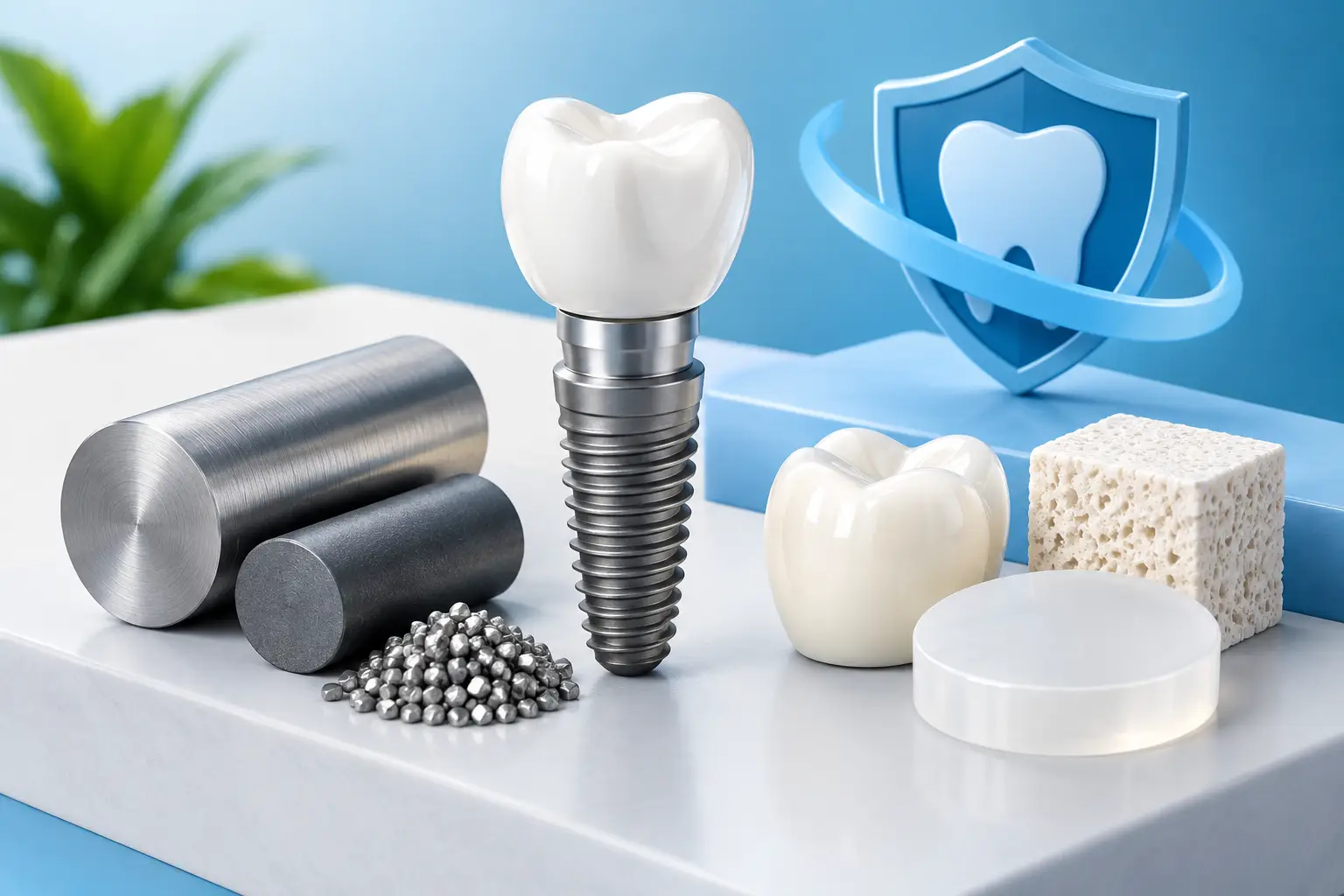
Implant Materials Review for Lasting Results
25 September 2026A dental implant is not one material or one component. It is a system: the implant fixture placed in the jaw, the connector above it and the visible tooth restoration. A useful implant materials review looks at how those parts work together for your bite, bone levels, smile goals and long-term maintenance - not simply which option sounds most premium.
For patients travelling from the UK, material choices can feel especially significant. You want a treatment plan that is clear before you travel, supported by clinical reasoning rather than sales language, and practical to care for when you return home. The right answer is often highly individual.
Implant materials review: the three parts to understand
The implant fixture is the small post placed beneath the gum line. After healing, it supports an abutment, which is the connection between the implant and the final crown, bridge or full-arch restoration. Each part may be made from a different material.
This distinction matters. A patient may be told they are receiving a zirconia crown on a titanium implant, for example. That does not mean the whole implant is zirconia. It describes the visible restoration, while titanium remains the material within the jaw.
A careful treatment plan also considers the implant brand and component system. Established systems are designed with precisely engineered connections, and their parts should be identifiable and available for future maintenance. This is particularly valuable for international patients, who may need routine care closer to home years later.
Titanium implants: the established clinical standard
Titanium and titanium alloys are the most widely used materials for dental implant fixtures. They have a long clinical history and are valued for biocompatibility, strength and their ability to integrate with living bone through a process called osseointegration.
Modern titanium implants are not simply smooth metal screws. Their surfaces are treated or textured to encourage bone cells to attach during healing. The implant design, surgical placement and the condition of your bone remain just as important as the surface itself, but this engineered surface is one reason titanium has such a reliable track record.
For most patients, titanium is an appropriate and predictable choice. It performs well for single missing teeth, multiple implants and demanding full-arch treatments such as All-on-4 or All-on-6. Its strength is especially helpful where bite forces are high, including the back of the mouth or cases involving bruxism, also known as tooth grinding.
Concerns about metal sensitivity are understandable, but a true titanium allergy is considered uncommon. If you have experienced reactions to metals, have a diagnosed allergy or feel strongly about a metal-free option, raise it during your consultation. Your dentist may recommend further assessment rather than assuming that any previous skin reaction will translate directly to an implant response.
Titanium can still show through thin gum tissue in rare aesthetic situations, particularly if gum recession occurs over time. This is one reason material selection should be considered alongside gum thickness, smile line and the position of the implant.
Zirconia implants: a selective alternative
Zirconia implants are made from a high-strength ceramic, usually yttria-stabilised zirconia. Their tooth-coloured appearance makes them attractive to patients seeking a metal-free treatment or those with very thin gum tissue in the aesthetic zone.
Zirconia is highly biocompatible and has promising clinical evidence. However, it does not have the same depth of long-term evidence, broad component availability or flexibility across complex restorations as titanium. The design options may also be more limited, depending on the system used.
Some zirconia implants are one-piece designs, where the implant and abutment are joined together. This can reduce the number of connections, but it gives the dentist less flexibility to adjust the final angle. Two-piece zirconia systems offer more restorative options, yet require careful planning and experienced handling.
For a straightforward front-tooth case with suitable bone, healthy gums and the right bite, zirconia may be worth discussing. For full-mouth rehabilitation, angled implants, limited bone or high bite forces, titanium is often the more versatile clinical option. There is no benefit in choosing a material for appearance if it compromises the restoration design or long-term serviceability.
The abutment affects gum appearance
The abutment sits beneath the crown at the gum line, so it has a significant role in how natural the final tooth looks. Titanium abutments are strong and dependable. In many cases they are an excellent choice, particularly where the gum tissue is thick or the crown is not in a highly visible area.
Zirconia abutments may offer an aesthetic advantage for front teeth with thin or translucent gum tissue because they avoid a grey shade beneath the gum. They are commonly paired with a zirconia crown for a very natural result.
A customised abutment can shape and support the gum more precisely than a standard component. This may improve the emergence profile - the way the crown appears to emerge naturally from the gum. Digital scans and three-dimensional planning help the clinical team select the correct implant position and abutment shape before the final restoration is made.
Choosing the visible crown or bridge material
The visible part of an implant restoration must balance appearance with the forces it will receive. The best material for a single front crown is not always the best material for a complete fixed arch.
Zirconia is popular because it is strong, highly aesthetic and can be made without a metal framework. Modern multilayer zirconia can reproduce variations in translucency and shade, making it suitable for many smile-zone crowns. Stronger, more opaque zirconia may be selected for posterior teeth where durability is the priority.
Lithium disilicate, often known by one well-known trade name, can provide exceptional translucency for carefully selected front-tooth crowns. It is not always the first choice for a heavy bite or long-span bridge. Porcelain fused to metal remains a proven restorative option in some situations, though it can be less translucent and may show a darker edge if gum recession develops.
For full-arch implant bridges, the decision is more complex. Zirconia full arches are durable and aesthetically stable, but they require sufficient restorative space and careful bite design. Acrylic or composite hybrid restorations can be lighter, more easily repaired and sometimes more cost-effective, although they may wear or stain sooner. Your dentist should explain why a particular arch material suits your bite, available space and maintenance expectations.
What matters more than material alone
A premium material cannot compensate for poor diagnosis, uncontrolled gum disease or an implant placed in an unfavourable position. Long-term success depends on detailed planning, skilled surgery, a well-designed restoration and consistent home care.
Before treatment, your team should assess bone volume, sinus position in the upper jaw, gum health, bite forces and medical history. Three-dimensional imaging can show whether bone grafting, sinus lifting or an alternative approach is needed. In cases of severe upper-jaw bone loss, advanced solutions such as zygomatic implants may be considered by appropriately experienced clinicians.
Smoking, untreated diabetes, active periodontal disease and severe grinding can increase risk. They do not always rule out implants, but they may change the timing, material selection, number of implants or type of restoration recommended. An honest plan recognises these factors rather than promising identical outcomes for every patient.
Questions to ask before accepting a treatment plan
Ask which implant system will be used, why it is suitable for your case and whether its components can be obtained in the UK. Confirm what material is proposed for the implant, abutment and final crown or bridge. These are separate decisions and should be documented clearly.
You should also ask whether the treatment includes a temporary restoration, how long healing is expected to take and what happens if grafting is required. For full-arch cases, ask how the bridge will be cleaned, whether it is screw-retained or cemented, and how often professional reviews are recommended.
Screw-retained restorations are often favoured because they can be removed for inspection or repair. Cemented crowns can look excellent in the right circumstances, but excess cement must be managed carefully because it may irritate tissues around an implant.
At Dentaglobal, digital planning and specialist-led assessment support material decisions that are based on your clinical needs and treatment goals. For travelling patients, a clear written plan, radiographs where appropriate and post-treatment guidance are central to making care feel manageable from first consultation to follow-up.
The most reassuring choice is rarely the most heavily advertised material. It is the material combination that fits your anatomy, bite and smile, is supported by sound planning, and can be maintained confidently for years after treatment.