

Guide to Zygomatic Implant Surgery for Full Arches
9 September 2026For people who have been told they do not have enough upper-jaw bone for conventional implants, a guide to zygomatic implant surgery can change the conversation. Zygomatic implants are designed to anchor a fixed full-arch restoration in the cheekbone rather than relying solely on weakened or resorbed maxillary bone. This can make a stable new smile possible without the lengthy grafting pathway that some patients expect.
The procedure is advanced and highly individual. It is not simply a faster version of standard implant treatment, and the right outcome depends on precise diagnostics, an experienced surgical team and a realistic recovery plan. For international patients, it also requires careful coordination before and after travelling.
What are zygomatic implants?
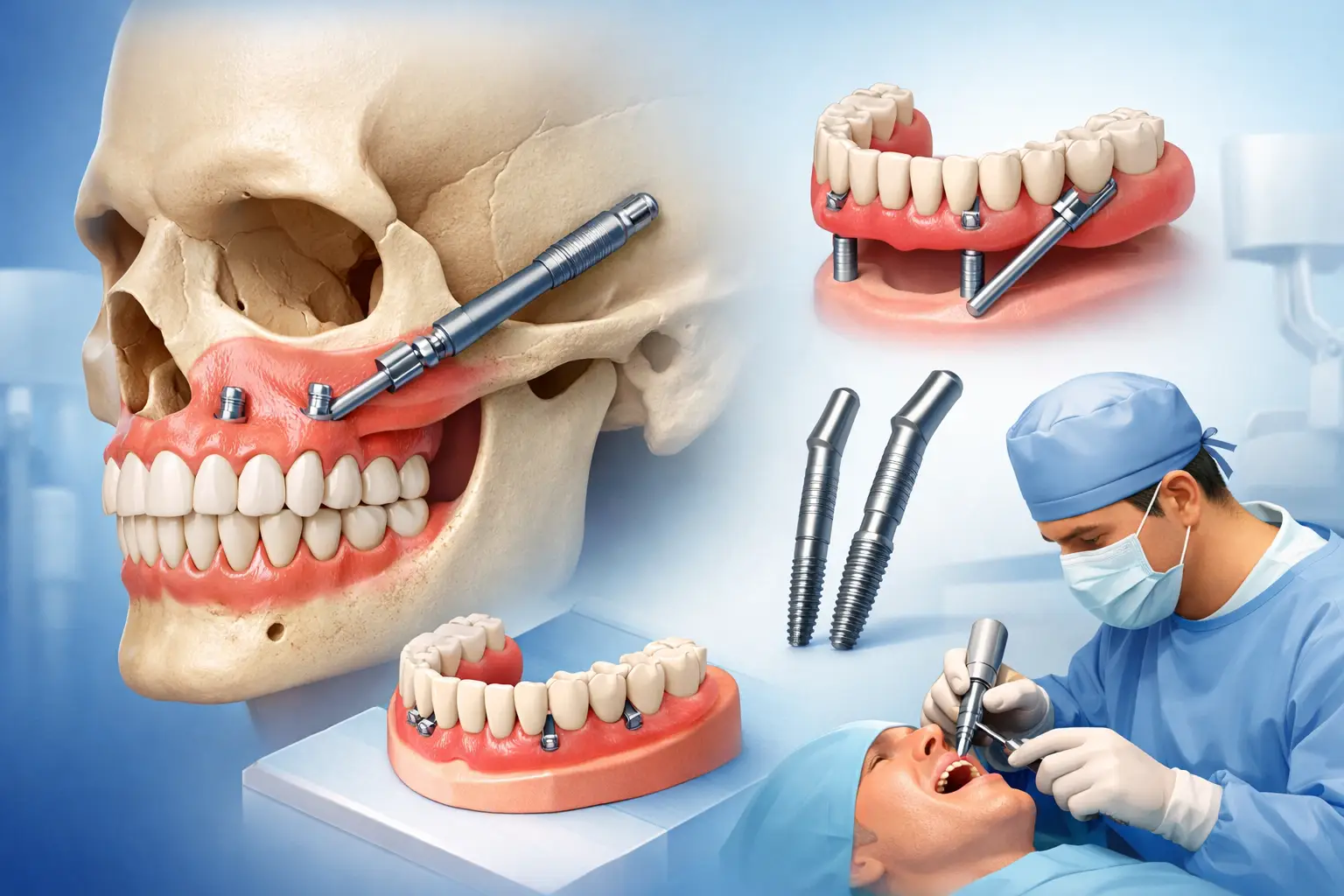
Zygomatic implants are longer dental implants placed into the zygomatic bone, commonly known as the cheekbone. This bone is generally denser and more stable than the posterior upper jaw, where bone loss can be significant after long-term tooth loss, gum disease, denture wear or previous unsuccessful implant treatment.
In a full-arch rehabilitation, zygomatic implants may be combined with conventional implants in the front of the upper jaw. In more severe cases, four zygomatic implants can support a complete upper restoration. The final aim is the same: a fixed bridge that restores appearance, speech, chewing ability and day-to-day confidence.
The main advantage is that treatment can often avoid major sinus-lift procedures or extensive bone grafting. That does not mean every patient can receive teeth immediately, nor does it remove the need for healing. It means the surgical foundation is created in a stronger area of bone.
Who may benefit from zygomatic implant surgery?
Zygomatic implants are typically considered for patients with severe upper-jaw bone loss who want a fixed alternative to a removable denture. They can also be appropriate after failed implants, failed grafts or previous full-arch treatment that no longer has sufficient bone support.
A patient may be a candidate if they have many missing or failing upper teeth, advanced bone resorption in the back of the upper jaw, and healthy enough cheekbone anatomy to support the implants. General health matters as well. Conditions such as uncontrolled diabetes, active periodontal infection, heavy smoking, immune disorders or untreated sinus disease can affect suitability and healing.
This treatment is usually focused on the upper jaw. Lower-jaw bone is different anatomically, so conventional implants, including All-on-4 or All-on-6 treatment, are more commonly used there. A detailed assessment is the only reliable way to decide which approach is clinically appropriate.
Guide to zygomatic implant surgery: the planning stage
The quality of planning is central to the safety and predictability of zygomatic treatment. Because the implants are placed close to the maxillary sinus, orbit and other important facial structures, surgery should never be based on a standard template or a two-dimensional X-ray alone.
At Dentaglobal, assessment for complex implant treatment is structured around specialist review and digital planning. Your clinical team will examine your oral health, bite, facial proportions, remaining teeth and expectations for the final smile. A CBCT scan provides a three-dimensional view of bone volume, sinus anatomy and the safest implant positions.
Your plan should explain whether teeth need to be removed, how many zygomatic and conventional implants are recommended, whether a provisional fixed bridge is suitable, and what will happen after you return home. It should also distinguish clearly between the provisional bridge and the final restoration. The provisional teeth are designed to protect the healing implants while restoring everyday function and appearance. The final bridge is made once healing and bite stability have been reviewed.
For patients travelling from the UK or elsewhere in Europe, sharing recent scans, X-rays and medical information in advance can make the first visit more efficient. However, remote information supports preliminary planning only. The final decision must follow an in-person examination and diagnostic review.
What happens during the procedure?
Zygomatic implant surgery is generally performed under sedation or general anaesthesia, depending on clinical complexity, medical history and the treatment setting. Any failing teeth planned for removal are extracted, infection is cleaned where necessary, and the surgeon prepares implant sites using the digitally planned approach.
The implants pass through the upper jaw and engage the zygomatic bone. Their angle is deliberate: it allows the restorative dentist to position the bridge teeth correctly while gaining anchorage where bone is strongest. Conventional implants may also be placed in the front of the jaw if enough bone is available.
When implant stability is sufficient, a fixed provisional bridge may be fitted soon after surgery. This is commonly described as immediate loading. It can be a major benefit for patients who do not want to leave with a removable denture, but it is not guaranteed in every case. The decision is based on implant stability, bone quality, bite forces and the surgeon's assessment on the day.
Surgery time varies considerably. A single full-arch case with extractions, complex implant placement and provisional teeth requires more time than a straightforward implant procedure. Your team should give you a personalised schedule rather than promising a fixed treatment duration before diagnostics are complete.
Recovery: what patients should expect
Swelling, bruising, tenderness and tiredness are normal in the first days after surgery. As zygomatic implants involve the upper jaw and sinus region, patients can sometimes feel facial pressure or nasal congestion during early healing. Prescribed medication, cold compresses, rest and a soft diet all support a more comfortable recovery.
Most patients need to avoid strenuous exercise, smoking, alcohol and forceful nose blowing during the initial healing period. The provisional bridge should be treated carefully. Even when it feels secure, it is not a licence to bite into hard foods. Soft foods and controlled chewing reduce unnecessary pressure while the implants integrate with the bone.
Your clinician will provide specific instructions for oral hygiene, including how to clean around the bridge and use any recommended rinses or interdental aids. Good cleaning is essential because plaque accumulation around implants can cause inflammation and compromise long-term results.
Travelling patients should plan enough time in Izmir for surgical review and provisional bridge checks before flying home. They should also leave with written aftercare instructions, medication guidance and a clear route for contacting the clinic if concerns arise after returning to the UK.
Risks and trade-offs to understand
Zygomatic implants have a strong clinical role in the right hands, but they are not risk-free. Potential complications include sinus-related symptoms, infection, swelling, temporary altered sensation, implant positioning issues, prosthetic fractures and, less commonly, implant failure. The procedure demands specialist skill because of the anatomy involved.
There is also a financial trade-off. Zygomatic treatment can reduce the time and cost associated with extensive bone grafting, but it is a complex surgery involving advanced planning, longer implants and a full-arch restoration. It may cost more than a conventional implant plan where sufficient bone is already present.
Maintenance is another long-term commitment. A fixed bridge is not maintenance-free. It needs professional hygiene appointments, periodic bite checks and occasional repair or replacement of components over time. Patients who attend regular reviews and maintain excellent home care give their restoration the best conditions for longevity.
Questions worth asking before committing
Before agreeing to treatment, ask who will perform the surgery, how many zygomatic cases the team manages, and what imaging and planning process will be used. Ask whether your bridge will be provisional or final, when the final restoration is expected, and what happens if immediate loading is not advisable.
It is equally sensible to ask about aftercare once you are back home. A dependable provider will be clear about review schedules, hygiene requirements, warranties where applicable and how complications will be assessed. Clear answers are more valuable than broad promises of a quick transformation.
A fixed upper arch can be life-changing when loose dentures, missing teeth or failed implants have made eating and smiling difficult. The right next step is not to rush towards the shortest treatment plan, but to choose a specialist assessment that puts safety, stable function and long-term support first.