

A Full Mouth Restoration Example, Step by Step
2 August 2026A full mouth restoration example is often more useful than a list of procedures because it shows how individual dental problems are connected. A missing molar can alter how the bite closes. Worn front teeth can make a smile look shorter and feel sensitive. Gum inflammation can limit which cosmetic or implant treatments are safe to begin. Full-mouth care addresses the whole picture in a planned order.
Consider a patient in their late 50s who has avoided smiling in photographs for years. They have several missing back teeth, old bridgework that is no longer stable, heavily worn front teeth and recurring gum bleeding. They want to eat comfortably, look natural and avoid a series of disconnected treatments. Their solution is not simply “new teeth”. It is a carefully designed rehabilitation that restores health, function and appearance together.
Full Mouth Restoration Example: The Starting Assessment
The first stage is a detailed clinical assessment. This normally includes an examination of the teeth, gums and bite, digital X-rays and, where implants may be needed, a 3D CBCT scan. Digital photographs and intraoral scans help the clinical team assess tooth shape, smile line, lip support and how much tooth is visible when the patient speaks and smiles.
In this example, the assessment shows advanced wear on the upper and lower front teeth, two missing upper molars, three missing lower molars and a failing bridge. The gums have localised periodontal inflammation, while the jawbone in the upper back area has reduced after years without teeth. The patient also clenches at night, which has contributed to the wear.
These findings matter because a cosmetic plan alone would not last. Placing crowns or veneers over an unstable bite, untreated gum disease or active clenching can lead to discomfort, breakage and disappointing results. The treatment plan must first create a healthy foundation and establish a bite that protects the final restorations.
Building the Treatment Plan in the Right Order
The initial appointment is followed by digital planning. The dentist assesses which teeth can be retained safely, which need root canal treatment or extraction, and where implants would provide the most reliable support. A proposed smile can be previewed digitally, allowing the patient to discuss tooth shade, proportions and the level of change they want.
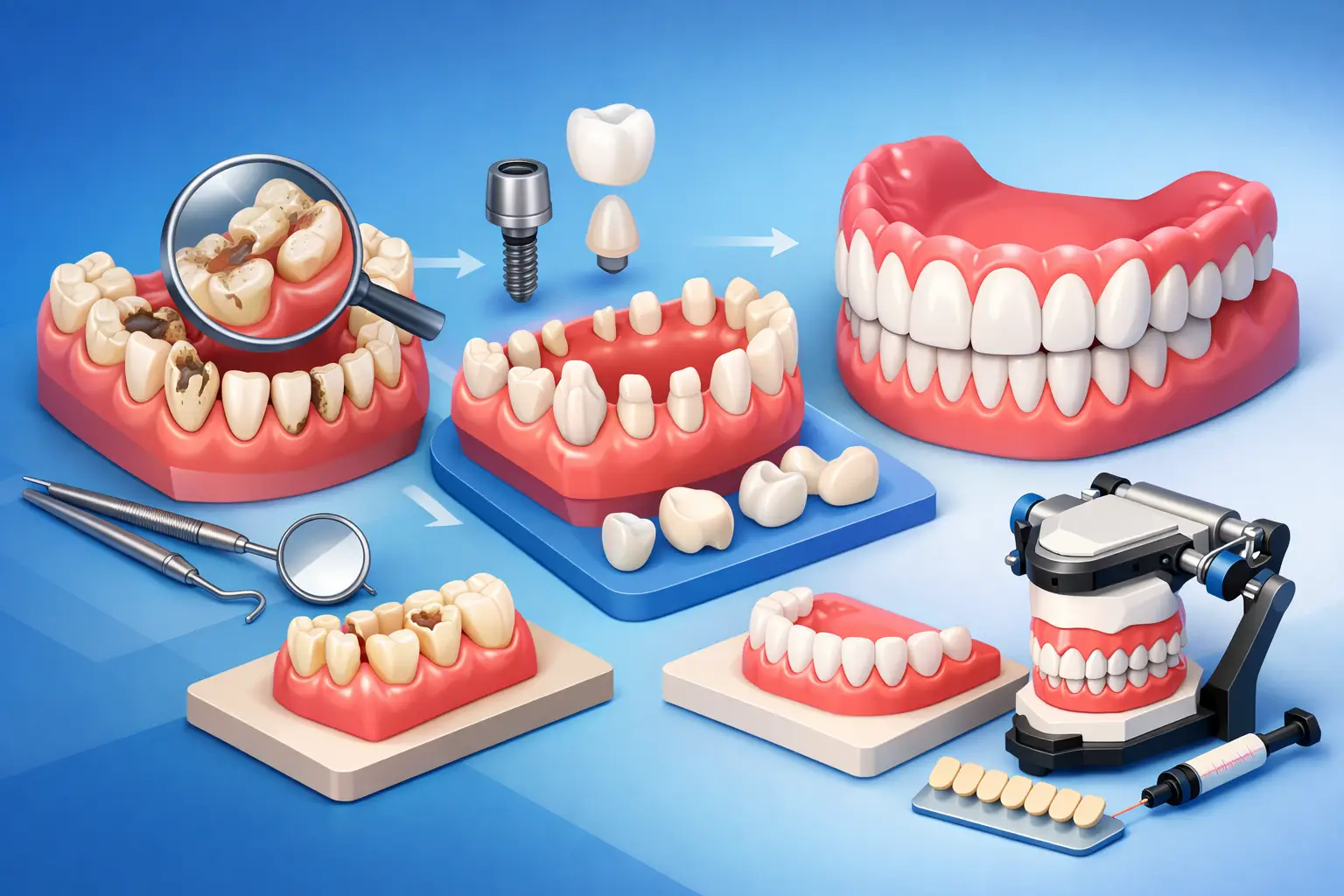
For this patient, two severely damaged teeth cannot be saved and the old bridge needs to be removed. Several remaining teeth have enough healthy structure to retain with crowns after treatment. The plan is organised in stages: periodontal treatment, removal of non-restorable teeth, implant placement in the missing posterior areas, bite adjustment and provisional restorations, followed by the final crowns and implant-supported bridges.
This is an important point for anyone comparing full-mouth treatment options. A full mouth restoration does not automatically mean extracting every tooth and replacing everything with implants. When natural teeth have a good long-term outlook, preserving them can be the more conservative choice. Conversely, when multiple teeth are loose, infected or structurally compromised, a full-arch implant solution such as All-on-4 or All-on-6 may be more appropriate.
The right option depends on bone quality, gum health, bite forces, medical history, the condition of the remaining teeth and the patient’s goals. An honest plan should explain why each treatment is recommended, as well as the alternatives.
Treating Gum Health and Immediate Problems
Before the final smile is created, the patient receives professional periodontal care to reduce inflammation and stabilise the gums. This may involve deep cleaning below the gum line, improved home-care guidance and review appointments. Where infection or decay is present, it is managed before crowns or implants are placed.
The failing bridge is removed, and the unsalvageable teeth are extracted with a plan for temporary replacement where visible. Root canal treatment is completed on one tooth that has a deep infection but can still be retained. At this stage, the patient may wear carefully made provisional crowns or a temporary bridge, so they are not left without a presentable smile during treatment.
Temporary restorations are more than a cosmetic stopgap. They let the dentist test the proposed bite, tooth length and smile design in real life. The patient can comment on comfort, speech and appearance before the final materials are produced. Small adjustments at this stage can prevent much larger compromises later.
Implant Placement and Healing
In the example, implants are placed to replace the missing molars and support the planned bridges. Guided implant surgery may be used where appropriate, using digital planning to determine implant position, angle and depth. This supports precise placement and helps the team plan around available bone and anatomical structures.
Whether implants can receive immediate temporary teeth depends on stability at placement, the location of the implants, bite forces and the overall treatment design. Some patients can have a fixed temporary bridge shortly after surgery. Others need a longer healing period before the implant is loaded. Neither route is automatically better - it is a clinical decision based on safety and predictability.
During healing, the patient follows instructions on oral hygiene, food choices and medication. Mild swelling and tenderness are common after surgery, but significant pain, persistent bleeding or swelling that worsens should always be reviewed promptly. Patients who grind or clench may also receive a protective night guard once the final restorations are fitted.
For international patients, the timetable needs particular care. Implant treatment often requires two visits, with healing time between them. A clinic should clearly explain when it is safe to travel, how long each stay is likely to be, and what remote support is available after the patient returns home. Dentaglobal coordinates this journey around digital planning, in-clinic treatment and post-treatment guidance, so travelling patients know what each stage involves before arranging their trip.
The Final Smile: Crowns, Bridges and Bite Balance
Once the implants have integrated and the gums are stable, the final restorations can be made. In this case, the patient receives individual zirconium crowns on the teeth that were retained and implant-supported bridges in the back of the mouth. Zirconium is often chosen for its strength and natural-looking appearance, particularly where both function and aesthetics are priorities.
The final fitting is not simply about cementing crowns in place. The dentist checks how the teeth meet when the patient bites, moves their jaw side to side and speaks. The aim is to distribute pressure evenly, protect the implants and natural teeth, and create a comfortable bite. Shade, surface texture and tooth shape are reviewed under natural-looking light so the result does not appear flat or artificial.
The patient in this full mouth restoration example now has stable back teeth for chewing, restored front teeth with improved length and colour, and a bite designed to reduce further wear. Their smile looks refreshed rather than exaggerated because it has been designed around their facial features, age and preferences.
What the Timeline May Look Like
A full-mouth case can take from several weeks to several months, and sometimes longer when bone grafting, complex periodontal treatment or extended implant healing is needed. The number of visits also varies. A restorative case using existing teeth may be completed more quickly than an implant-led rehabilitation, while a full-arch implant case can follow a different schedule again.
Patients should be cautious of fixed timelines that are offered before scans, examinations and medical history have been reviewed. Fast treatment can be suitable in selected cases, particularly where immediate temporary restorations are planned, but speed should not replace diagnosis. A well-made restoration is only as dependable as the health and planning beneath it.
Looking After a Full Mouth Restoration
Final crowns and implant bridges need consistent care. Brushing twice daily, cleaning between teeth or around implant bridges with the recommended aids, and attending hygiene reviews are essential. Implants cannot develop decay, but the surrounding gums and bone can become inflamed if plaque is allowed to build up.
Patients with a history of grinding should wear a night guard as advised. Smoking, uncontrolled diabetes and irregular maintenance can affect healing and long-term outcomes. With the right habits and regular professional review, a full-mouth restoration can remain comfortable and functional for many years.
The most reassuring full mouth restoration example is not one that promises the same smile for everyone. It is one where every decision - from saving a tooth to placing an implant - is made around the person who will live, eat and smile with the result every day.