

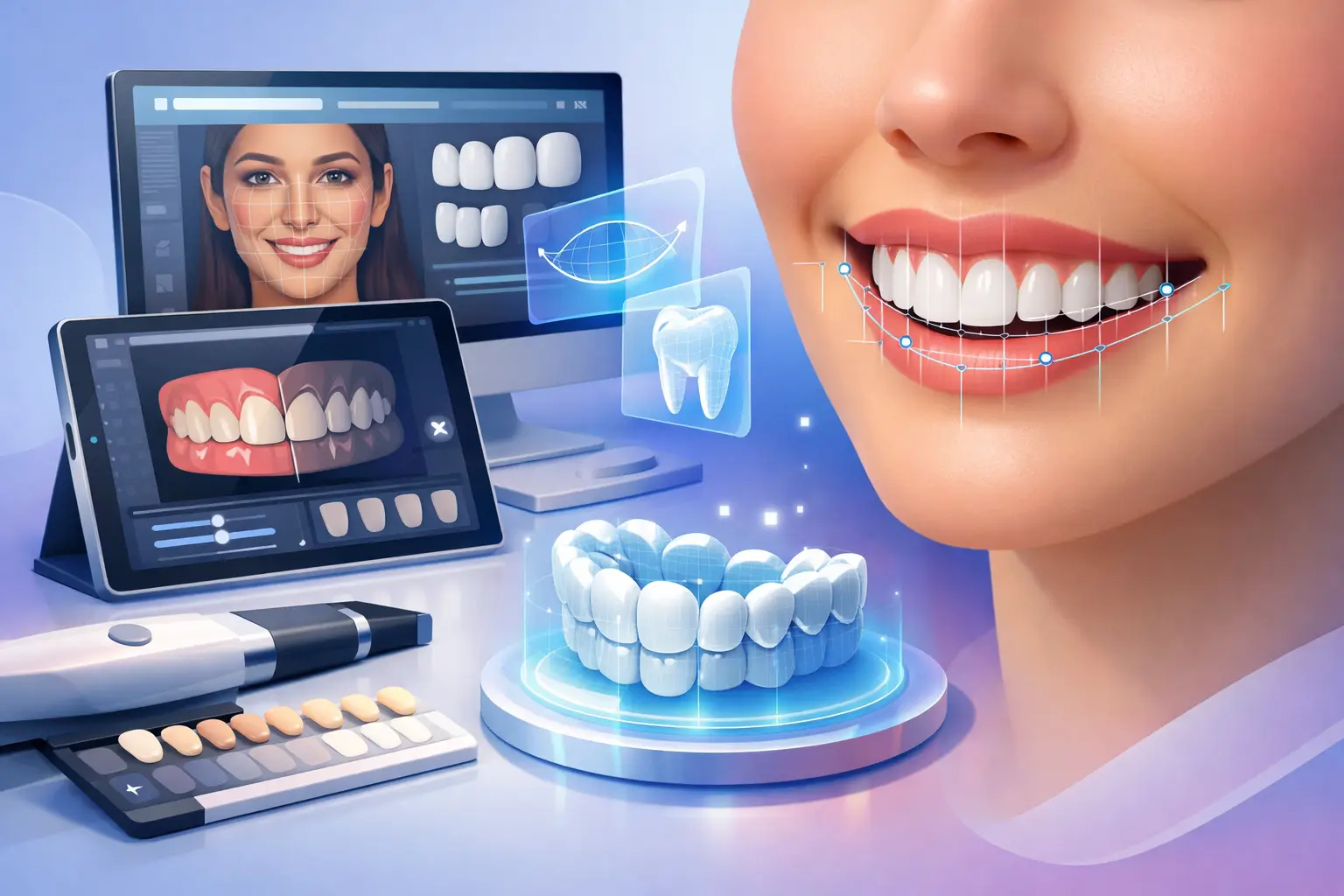
How Digital Smile Design Works for Your Smile
29 July 2026A new smile should not be a surprise revealed only after treatment. Whether you are considering veneers, crowns, implants or a full-mouth restoration, you deserve to see and discuss the proposed result before irreversible work begins. That is how digital smile design works: it combines clinical records, facial analysis and digital planning to create a smile that is designed around you, not selected from a standard template.
For patients travelling abroad for cosmetic or restorative dentistry, this clarity is particularly valuable. It makes remote consultations more meaningful, helps set realistic expectations before travel and gives you a clearer basis for deciding whether a treatment plan feels right.
How digital smile design works step by step
Digital Smile Design, often shortened to DSD, is a planning approach rather than a treatment on its own. It does not replace the dentist's clinical judgement, nor does it automatically mean every patient needs veneers. Instead, it allows the dental team to assess how the teeth, gums, lips and face work together, then plan treatment with greater precision.
1. Collecting accurate records
The process begins with detailed records. These usually include high-quality photographs of your face and smile, close-up images of your teeth, digital scans or impressions, and X-rays or 3D imaging where clinically required. Short videos may also be taken while you speak and smile naturally.
This matters because a smile is not static. A tooth shape that looks attractive in a close-up photograph may look too long, too bright or too prominent once your lip movement and facial proportions are considered. The team also checks practical factors such as bite alignment, tooth wear, gum health and the condition of existing restorations.
For an international patient, records shared before the visit can support an initial discussion. However, a final plan should be confirmed after an in-person examination. Images and scans are useful planning tools, but they cannot fully diagnose gum disease, decay, bite problems or the quality of bone supporting an implant.
2. Analysing facial proportions and smile dynamics
The clinician uses digital software to place reference lines and measurements over photographs and scans. These help assess features such as the centre line of the face, the tilt of the eyes, the curve of the lower lip, gum visibility and the amount of tooth shown at rest and when smiling.
The aim is not mathematical perfection. Few faces are completely symmetrical, and trying to force perfect symmetry can make a smile look artificial. The purpose is to identify proportions that suit your own face and to recognise details that may need attention, such as uneven gum levels, a shifted centre line or teeth that have become short through grinding.
Your preferences matter at this stage too. Some patients want a brighter, more youthful appearance with subtly fuller front teeth. Others prefer a conservative result that preserves character and avoids a very white, uniform look. A good design conversation is specific: it considers tooth shape, length, colour, edge detail and how noticeable you want the final change to be.
3. Building the treatment plan
Once the analysis is complete, the dentist develops a plan that addresses both appearance and oral function. The recommended route depends on what is already present in the mouth.
For a patient with healthy, well-positioned teeth, whitening, composite bonding or minimal-preparation veneers may be appropriate. If teeth are heavily worn, extensively filled or weakened, crowns may offer better protection. Missing teeth may require implants and implant-supported crowns, while gum contouring or periodontal treatment may be needed before cosmetic work can be completed.
Digital smile design is especially useful in complex cases because it links the visible goal to the clinical steps required to achieve it. A patient may initially ask for a set of veneers, but scans and bite analysis could show that orthodontic movement, gum treatment or restorative work is the safer first step. Conversely, a treatment plan should not become more extensive simply because the technology can visualise a dramatic change. The most appropriate option is the one that protects long-term oral health while meeting realistic aesthetic goals.
4. Seeing a digital preview and trial smile
The digital proposal may be shown as an image or simulation, allowing you to discuss the overall direction before treatment starts. It is useful for comparing tooth shapes, proportions and shades, and for making sure the team understands what you like and what you would change.
A preview has limits. It is an informed visual guide, not a promise that every pixel will be reproduced exactly in the mouth. Natural teeth reflect light differently from screens, lips move, and the final shade can be influenced by surrounding teeth and restorative materials. Your dentist should explain these limitations clearly rather than presenting a simulation as a guaranteed final result.
For more certainty, the design can often be transferred into a physical mock-up or trial smile. This temporary model is placed over the teeth so you can see the proposed length and shape in real life. You may be asked to smile, speak and check your bite. This is one of the most valuable parts of the process, because a smile that looks good in an image must also feel comfortable when you say everyday words and close your teeth.
Adjustments can be made before the final restorations are created. For example, you may decide that the front teeth should be slightly shorter, the corners less rounded or the shape more natural. This collaborative stage helps prevent avoidable disappointment later.
5. Producing and fitting the final restorations
After the design is approved, the treatment moves into its clinical phase. Teeth may be prepared conservatively where needed, final digital scans are taken, and the information is sent to the dental laboratory or used with in-house manufacturing systems. Digital scans reduce the need for conventional impression materials and allow the dentist and technician to work from precise measurements.
At the fitting appointment, the dentist checks the fit, bite, contacts between teeth, shade and overall appearance before permanently bonding or securing the restorations. This final verification remains essential. Even the best software cannot replace careful hands-on assessment.
At Dentaglobal, digital planning is used as part of a wider specialist-led approach. The relevant clinician considers the health of your gums, bite and supporting teeth alongside the visible design, particularly when treatment involves implants, crowns or full-mouth rehabilitation.
What digital smile design can and cannot do
Digital planning can make treatment more predictable, but it cannot turn every request into the same result. Existing tooth position, lip support, facial anatomy, gum health and budget all influence the available options. A patient with severe tooth wear may need a more functional rehabilitation than someone seeking a small cosmetic refinement.
It can also improve communication. You can see why a clinician recommends changing gum levels before fitting veneers, why an implant needs time to heal before the final crown, or why a certain shade may look more natural than an ultra-bright alternative. For patients who are anxious about dental treatment, seeing the sequence and intended outcome often makes decisions feel more manageable.
The trade-off is that planning takes time and requires good records. It may add appointments or preparation before treatment, especially in complex cases. That investment is usually worthwhile when the alternative is making major cosmetic decisions from a brief examination or a single photograph.
Why patients choose digital planning before treatment
The biggest benefit is predictability. When treatment involves several teeth, or a combination of procedures such as implants, crowns, gum contouring or veneers, small planning errors can become expensive and difficult to correct later.
Digital planning creates a more controlled starting point. It helps the clinical team assess whether orthodontics are needed before veneers, whether gum asymmetry should be corrected first, or whether existing wear patterns will affect the final shape of the restorations. In other words, it can show when the quickest solution is not the best one.
For international patients there is a second advantage: time in clinic is limited. A structured digital workflow makes consultations more efficient because key records are gathered and reviewed in advance. It does not remove the need for clinical examination, but it streamlines decisions and reduces uncertainty.
Why bite and function matter as much as appearance
One of the biggest misconceptions about cosmetic dentistry is that it is mainly about looks. A smile that looks attractive but disrupts your bite can lead to chipping, jaw discomfort, uneven wear or repeated repairs.
That is why functional checks are built into proper digital smile design. The dentist considers how your upper and lower teeth meet, whether there are signs of clenching or grinding, and whether certain restorations would be under too much pressure. Small details - the length of the front teeth, the contour of the biting edges - affect speech and comfort as well as appearance.
This matters most in larger cases such as full-mouth rehabilitation. The aesthetic goal may be a brighter, more symmetrical smile, but the clinical goal is a stable result that stays comfortable over time.
Is digital smile design right for everyone?
Timing matters. If there is active gum disease, untreated decay, infection or severe bite instability, those issues should be dealt with first. Cosmetic work placed on an unhealthy foundation is more likely to fail.
Realistic expectations matter just as much. Digital smile design can improve colour, proportion, alignment and overall harmony, but it should not erase every natural characteristic of your face. The strongest results are the ones that still look like you - only healthier, fresher and more balanced.
Questions worth asking before you proceed
Ask who will carry out the clinical assessment and whether the proposed smile design includes an evaluation of your bite and gum health. Ask whether you can view a trial smile, what aspects of the plan may change after your in-person examination, and how temporary restorations will be managed if your treatment requires more than one visit.
If you are travelling from the UK, also ask for a clear treatment timeline. Some procedures, particularly implants and gum treatment, require healing periods and may involve a return visit. A reliable plan should distinguish between what can be completed during your stay and what requires further monitoring after you go home.
The most useful outcome of digital smile design is not simply a more attractive preview. It is the confidence of knowing that your new smile has been considered from every angle: how it looks, how it feels, how it functions and what it will require to stay healthy over time.