

Is an Implant Supported Bridge Right for You?
13 July 2026A gap left by several missing teeth can change far more than a smile. It can make meals less enjoyable, affect speech, allow neighbouring teeth to move and place extra pressure on the remaining teeth. An implant supported bridge replaces a run of missing teeth with a fixed restoration anchored to dental implants, rather than relying on natural teeth either side of the gap.
For many patients, it is a stable and natural-looking alternative to a removable denture or a conventional bridge. However, the right solution depends on the condition of your bone, gums, remaining teeth and bite. A careful clinical assessment is what turns an attractive option into a reliable long-term treatment.
What is an implant supported bridge?
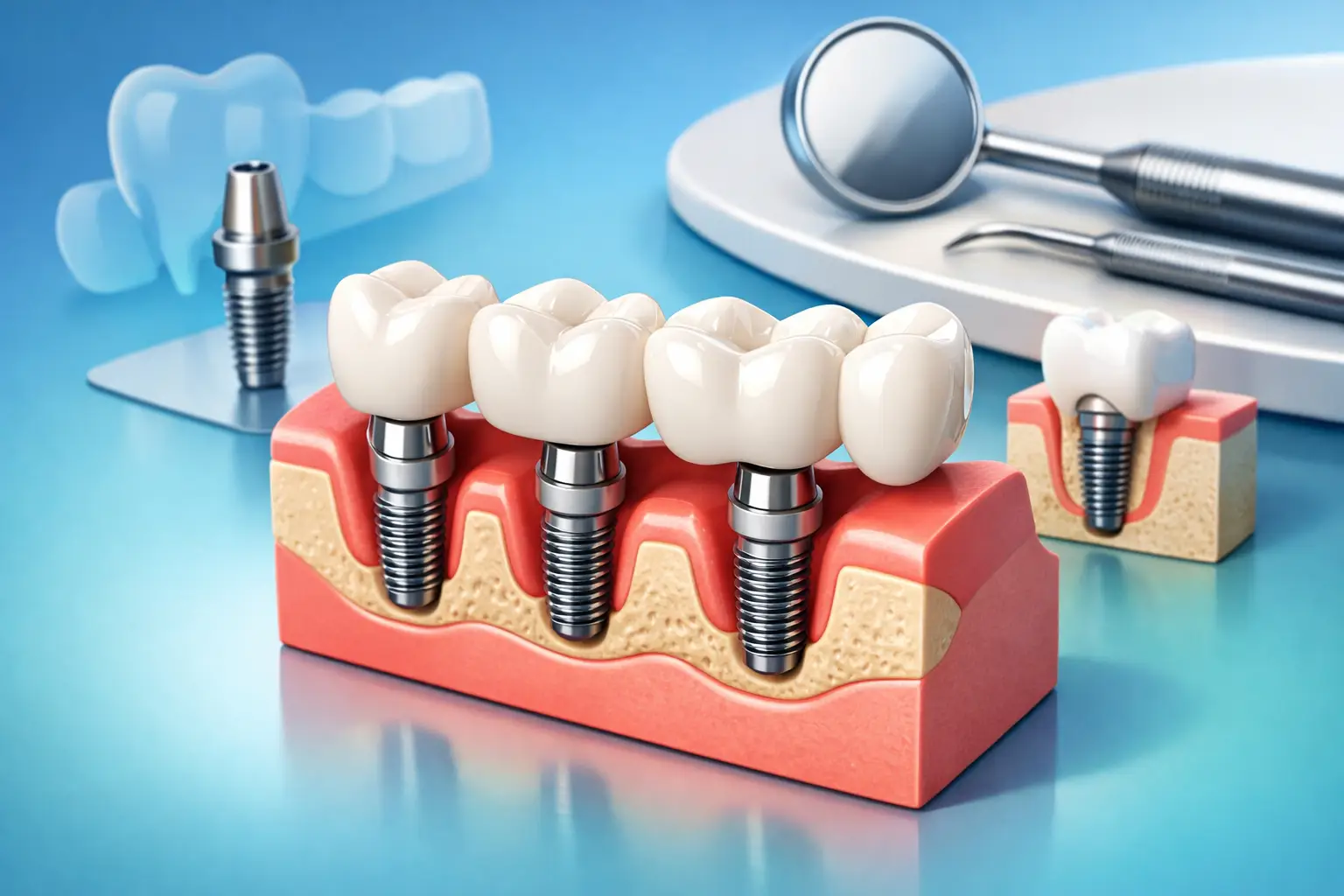
An implant supported bridge is a custom-made set of replacement teeth attached to two or more dental implants. The implants are small titanium fixtures placed in the jawbone to act as artificial tooth roots. Once healing has taken place, a bridge is secured to these implants using screws or a dental cement, depending on the treatment plan.
The number of implants needed is not always the same as the number of missing teeth. For example, two implants may support a three-tooth bridge in a suitable area of the mouth. The exact design is based on the length of the gap, the quality and volume of jawbone, the forces created by your bite and the material selected for the final restoration.
This differs from a conventional dental bridge, which is supported by crowns placed over the healthy teeth beside a gap. With implant support, those adjacent teeth do not usually need to be filed down. It also differs from a single implant crown, where one implant replaces one missing tooth.
Why patients choose this treatment
The main benefit is stability. Because the bridge is fixed to implants, it does not move while speaking or eating in the way a removable denture can. Patients can usually eat a wider range of foods comfortably once treatment is complete, although sensible care still matters.
Implants also help transfer chewing force into the jawbone. When a tooth is lost, the bone in that area can gradually shrink because it no longer receives this stimulation. An implant cannot reverse every change that has already occurred, but it can help preserve bone after placement and support the contours of the face and gumline.
A well-designed bridge can restore the appearance of several teeth with consistent shape, shade and proportion. Modern digital scanning and planning allow the clinical team to assess the proposed result before the final bridge is made. This is particularly valuable for visible areas, where the bridge must work with the lips, gums and neighbouring teeth rather than simply fill a space.
There is also a practical advantage for patients replacing multiple teeth. Instead of placing one implant for every missing tooth, an implant-supported design may provide a fixed result with fewer implants. That said, fewer implants are not automatically better. The safest design is the one that offers appropriate support for your anatomy and bite.
Who may be suitable for an implant supported bridge?
Adults with two or more missing teeth in a row are often candidates, provided their oral health is stable. You may be suitable if you have healthy gums, enough bone for implant placement or are eligible for bone grafting, and are willing to maintain careful oral hygiene.
A detailed examination should include digital imaging, an assessment of your gums and remaining teeth, and a review of your medical history. Conditions such as uncontrolled diabetes, active gum disease or heavy smoking can affect healing and long-term implant health. They do not always rule treatment out, but they may mean treatment needs to be delayed, adapted or supported by a wider health plan.
The condition of the teeth next to the gap matters too. If they are healthy, preserving them can be a strong reason to consider implants. If they already need crowns because of extensive damage or large fillings, a conventional bridge may sometimes be a sensible alternative. Good dentistry is not about recommending the same treatment to every patient. It is about comparing options openly.
The treatment process and timing
Treatment begins with a consultation and diagnostic planning. At Dentaglobal, this planning can be coordinated before international patients travel, using dental photographs, X-rays where available and a clear discussion of goals. A final in-clinic examination and imaging are still essential before any treatment is confirmed.
During the first clinical stage, implants are placed into the jawbone under local anaesthetic. Sedation may be considered for suitable patients who feel particularly anxious. Most people describe pressure and vibration during placement rather than pain, and any post-operative discomfort is usually managed with the instructions and medication provided by the dentist.
The implants then need time to integrate with the bone. This healing period often takes several months, although timing varies by jaw, bone quality, implant stability and whether grafting or extraction has been required. In selected cases, a temporary bridge may be fitted sooner. Immediate teeth are not appropriate for every patient, especially where biting forces or bone conditions could compromise healing.
When the implants are ready, impressions or digital scans are taken for the final bridge. The dentist checks its fit, bite, appearance and ability to clean around it before securing it. Patients travelling from the UK or elsewhere should plan for more than one visit when a healing period is necessary. A reputable treatment plan should explain this from the beginning rather than promise a fixed timescale that may not suit your clinical needs.
Choosing the bridge material
The final bridge may be made from zirconia, porcelain fused to metal or other ceramic-based materials. Each option has advantages. Zirconia is popular for its strength and tooth-coloured appearance, especially in areas exposed to high chewing force. Layered ceramics can offer highly refined translucency in the smile zone, but may require more careful material selection where the bite is heavy.
The best material is not simply the whitest or strongest one. It needs to suit the position of the bridge, your natural teeth, gum display and bite. Shade selection should also be realistic. A very bright bridge can look out of place if adjacent natural teeth are considerably darker, unless cosmetic treatment elsewhere is part of the plan.
Care that protects your investment
An implant supported bridge cannot decay like a natural tooth, but the gums and bone around implants can still become inflamed. Plaque accumulation may lead to peri-implant mucositis and, if left untreated, more serious peri-implant disease that can threaten the supporting bone.
Daily cleaning beneath and around the bridge is therefore essential. Your dentist or hygienist may recommend an interdental brush, floss designed for bridges, a water flosser or a combination of these. The correct technique depends on the shape of the bridge and the spaces around it. Routine professional hygiene appointments help identify inflammation, bite changes and wear before they become larger problems.
Avoid using the bridge to open packaging, bite hard non-food objects or crack ice. If you grind your teeth, a night guard may be recommended to protect the bridge, implants and natural teeth from excessive force.
Questions to ask before committing
Before treatment, ask how many implants are proposed and why, whether grafting is likely, what type of temporary restoration will be used and how long you should expect to stay if you are travelling. You should also ask how the bridge will be retained, how it can be maintained or repaired, and what follow-up support is available when you return home.
Cost is understandably a major consideration, particularly for international patients. Compare treatment plans by clinical detail rather than a headline figure alone. Implant brand, diagnostics, temporary teeth, final bridge material, any grafting and aftercare arrangements can all affect the total. The most useful quote is one that makes these elements clear.
A stable replacement for missing teeth should feel like part of your life, not a daily concern. With thoughtful planning, specialist care and consistent hygiene, an implant-supported bridge can provide a secure foundation for eating, speaking and smiling with greater confidence.