

All on 4 Review: Is It Worth It?
7 July 2026If you are reading an all on 4 review, you are probably not looking for marketing language. You want to know what daily life actually feels like after treatment, whether the results look natural, and whether the investment makes sense. That is exactly where this treatment should be judged - not by promises, but by function, comfort and long-term reliability.
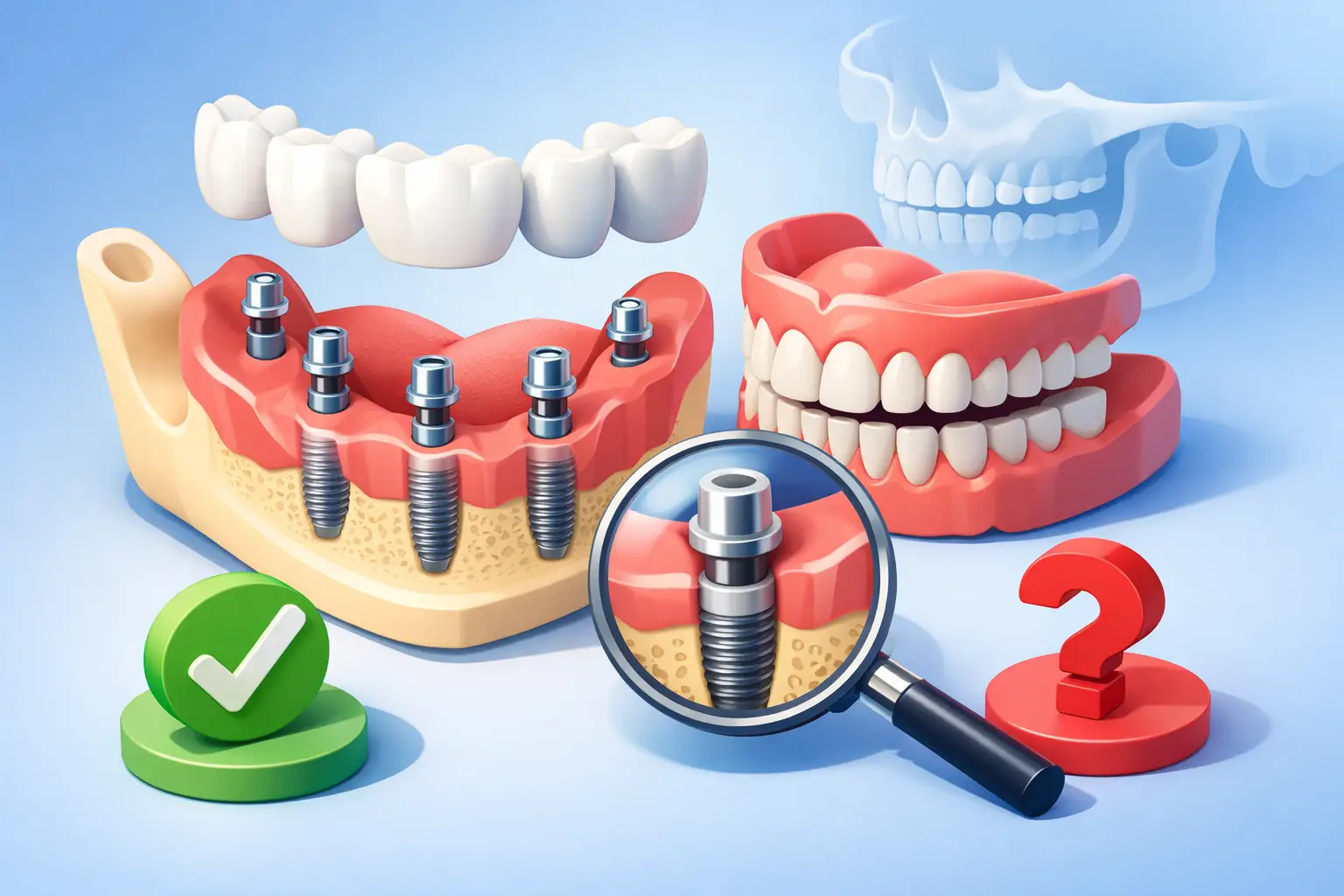
All-on-4 is a full-arch implant solution designed for people with multiple missing teeth, failing teeth, or dentures that no longer feel secure. Instead of placing an implant for every missing tooth, four carefully positioned implants support a fixed full-arch prosthesis. For many patients, that means fewer implants, shorter treatment planning, and a quicker route back to chewing, smiling and speaking with confidence.
All on 4 review: what patients usually care about most
Most patients do not ask first about implant angles or prosthetic frameworks. They ask whether it hurts, how long they will be without teeth, what it costs, and whether it will look obvious. Those are sensible questions.
From a patient point of view, the strongest part of an all-on-4 treatment is that it can replace a full upper or lower arch with a fixed solution that feels far more secure than removable dentures. Many people describe the difference in practical terms rather than cosmetic ones. They can eat more comfortably, speak without worrying about movement, and stop planning their day around denture adhesives or discomfort.
That said, not every all-on-4 experience is identical. The result depends on bone quality, oral health, bite balance, prosthetic design, the skill of the implant team, and how well the patient follows aftercare instructions. A glowing review is usually linked to careful planning, not luck.
What makes All-on-4 appealing
The main reason this treatment attracts so much attention is efficiency. In the right case, four implants can support a full arch without the need for an implant in every position. By tilting the posterior implants, clinicians can often make better use of available bone and reduce the need for additional grafting.
For patients, that has obvious benefits. Treatment can be more affordable than placing a larger number of implants, healing periods may be better managed, and the process is often more straightforward than a traditional tooth-by-tooth rebuild. For international patients, that matters even more. A treatment plan that is clinically sound and logistically efficient is easier to organise around flights, accommodation and time away from work.
Another frequent positive in any all on 4 review is immediacy. Many patients can receive a temporary fixed restoration soon after implant placement. This does not mean the final stage is complete overnight, but it does mean you are not left in limbo with the same instability you started with.
Where expectations need to stay realistic
This is where a good review becomes more useful than a sales page. All-on-4 can be life-changing, but it is still a surgical and restorative treatment with limits.
The first point is sensation. Fixed implant teeth feel much more stable than dentures, but they do not feel identical to natural teeth. You will still need a short adaptation period while your speech, bite awareness and chewing habits adjust.
The second point is diet during healing. Even when temporary teeth are fitted quickly, the implants still need time to integrate with the bone. That means a softer diet for a period recommended by your clinician. Patients who ignore this often create problems for themselves.
The third point is maintenance. Because the prosthesis is fixed, some people assume it is maintenance-free. It is not. You still need excellent cleaning, professional reviews, and regular checks of the prosthesis, gum health and bite. A fixed bridge is highly convenient, but convenience should not be confused with zero upkeep.
All on 4 review: comfort, appearance and function
Comfort is one of the biggest reasons patients choose this treatment. A well-made fixed arch does not rub in the same way a loose denture can. It should feel secure when talking and eating, and many patients notice a major improvement in confidence very quickly.
Appearance matters too, especially for patients who have hidden their smile for years. A well-planned all-on-4 restoration should not just look white and straight. It should suit the face, lip support, smile line and proportions of the individual. The best outcomes come from digital planning and close attention to both function and aesthetics.
Function is where the treatment often proves its value over time. Being able to bite into food more naturally, chew with better stability and speak without fear of movement has a direct effect on quality of life. It is not only about looking younger or more polished. It is about getting back normality.
Still, there is an adjustment period. Some patients notice mild speech changes at first, especially with certain sounds. Others need time to adapt to the new bite. These issues are usually manageable, but they are worth discussing honestly because adaptation is part of the process.
Is All-on-4 worth the money?
For the right candidate, often yes - but value should be measured over years, not days. If you compare all-on-4 with ongoing denture problems, repeated repairs, failing teeth, and the emotional cost of avoiding photos or social situations, the treatment can represent strong long-term value.
Cost is also influenced by where you receive treatment. In countries such as the UK, full-arch implant work can be priced beyond the reach of many patients. That is one reason why dental tourism has grown. Clinics such as Dentaglobal serve international patients who want specialist-led care, digital planning and a structured treatment journey at a more accessible cost.
However, the cheapest option is not automatically the best value. If an all-on-4 price seems unusually low, ask what is included. Diagnostics, temporary teeth, final prosthesis materials, sedation options, follow-up planning and aftercare all affect the true value of the treatment.
Who tends to be a good candidate
This treatment is often well suited to patients with extensive tooth loss, failing teeth, advanced wear, severe dental instability or long-term denture problems. It can also help people who want a fixed alternative to removable full dentures.
But candidacy is not based on frustration alone. Your clinician needs to assess bone volume, gum health, medical history, bite forces and habits such as smoking or teeth grinding. Some cases fit all-on-4 very well. Others may be better treated with all-on-6, grafting, zygomatic implants or a phased approach. A trustworthy clinic will explain the difference rather than forcing every patient into the same plan.
What a trustworthy review should include
A useful all on 4 review should go beyond saying that the patient was happy. It should reflect the quality of planning, the communication before treatment, the clarity around healing, and the support after the patient goes home.
This is especially important for international patients. Good treatment is not only what happens in the surgery. It also includes how quickly questions are answered, how well the clinical team explains each stage, and whether there is a proper follow-up pathway once the patient has returned home.
If you are comparing providers, look for consistency. One excellent testimonial is encouraging, but a reliable clinic should show a pattern of good outcomes, realistic case explanations, and clear patient support systems.
The trade-offs that matter most
Every major dental treatment involves trade-offs. All-on-4 usually reduces complexity compared with replacing each tooth individually, but it is still a major treatment that requires planning and commitment. You may gain speed and efficiency, yet still need patience during healing. You may save money compared with treatment at home, but only if quality and aftercare remain high.
There is also the question of prosthetic materials and final design. Some patients prioritise durability above all else. Others are more focused on aesthetics. The best treatment plan balances both, based on how you bite, what you expect, and what your mouth can support safely.
A fair review should leave room for these nuances. All-on-4 is not a magic fix for every patient, but it is one of the most effective full-arch options when the case is assessed properly and the work is carried out to a high standard.
If you are considering it, the smartest next step is not to ask whether all-on-4 is good in general. It is to ask whether it is right for your mouth, your budget and your long-term expectations. The right answer starts with a careful assessment and a clinic willing to be clear with you from day one.
Curious whether All-on-4 or All-on-6 is the better fit for you? Visit our All-on-4/6 page for pricing, the treatment process and our guarantee.