

Dental Bridge vs Implant: Which Suits You?
3 July 2026Losing a tooth rarely feels like a small issue. You notice it when you chew, when you smile in photos, and sometimes even when you speak. If you are weighing up a dental bridge vs implant, the right choice usually comes down to more than appearance alone. It depends on your bone levels, the condition of the neighbouring teeth, your budget, your timeline, and what you want from the result over the long term.
For many patients, both treatments can restore a confident smile and better function. The question is not which option is universally better, but which one is the better fit for your mouth, your priorities, and your treatment plan.
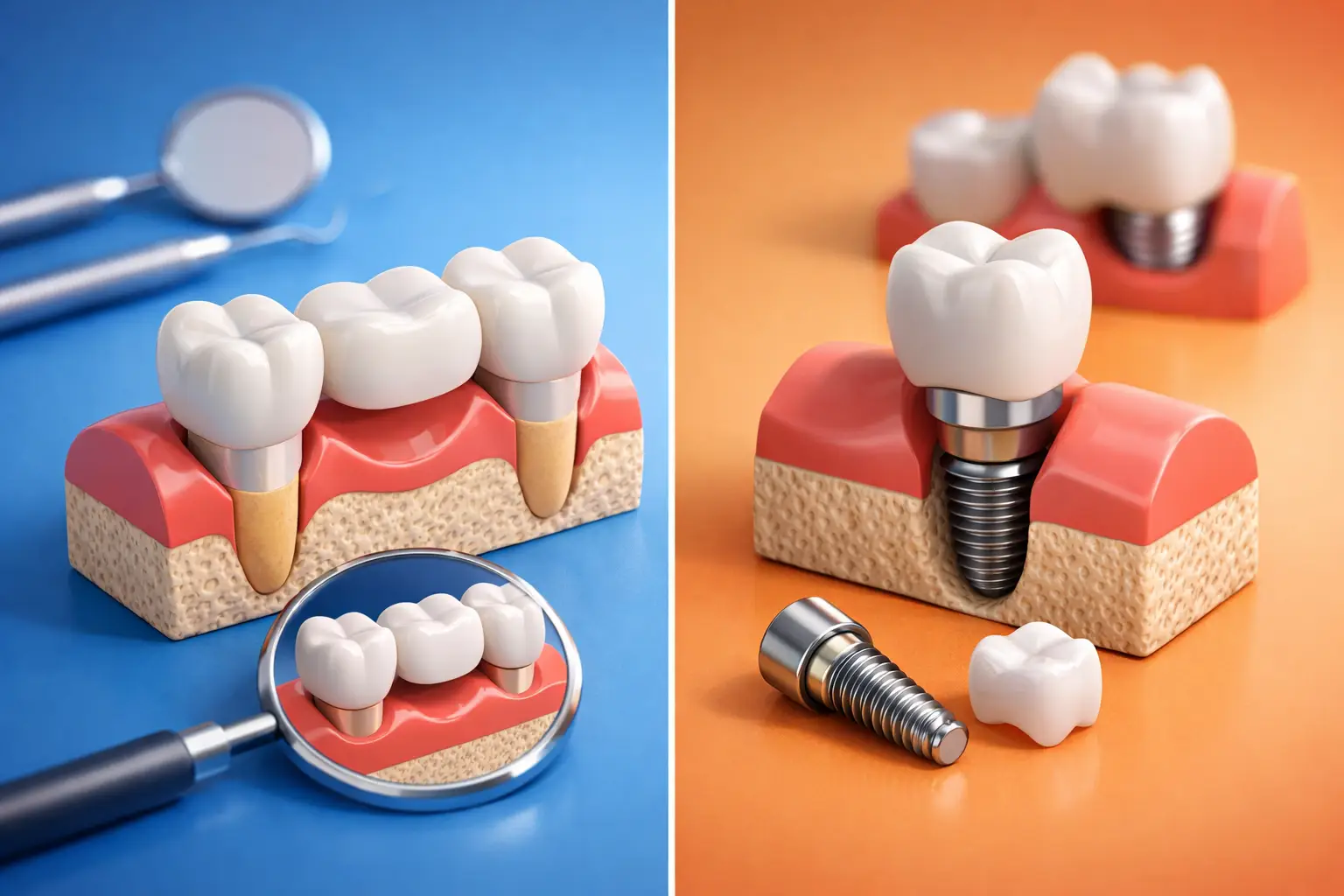
Dental bridge vs implant: the basic difference
A dental bridge replaces a missing tooth by using the teeth on either side as support. Those neighbouring teeth are prepared, and the bridge sits across the gap with an artificial tooth in the middle.
A dental implant replaces the missing tooth at the root level. A titanium implant is placed into the jawbone, allowed to heal and integrate, and then restored with a crown.
That difference matters. A bridge relies on adjacent teeth. An implant stands independently. In practical terms, that affects how much natural tooth structure is preserved, how the bite feels, how the jawbone is supported, and how long the restoration may last.
When a dental bridge makes sense
A bridge can be an effective solution when the teeth next to the gap already need crowns, or when an implant is not suitable due to bone loss, medical factors, or timing. It can also appeal to patients who want a fixed replacement without undergoing implant surgery.
One of the main advantages is speed. In many cases, a bridge can be completed more quickly than an implant-based restoration because there is no healing period for osseointegration. For some patients, especially those arranging treatment around work or international travel, a shorter overall timeline is a genuine benefit.
Bridges can also be more affordable at the start. If budget is the main concern, a bridge may offer a practical way to replace a missing tooth without delaying treatment.
That said, a bridge has trade-offs. The supporting teeth usually need to be reduced, even if they are otherwise healthy. Over time, those teeth carry extra load, and the area beneath the artificial tooth does not stimulate the jawbone in the same way a natural root or implant does. This means bone shrinkage can continue under the missing tooth site.
When a dental implant is the better option
Implants are often considered the more conservative and long-term solution because they replace the missing tooth without depending on neighbouring teeth. If the teeth on either side of the gap are healthy, preserving them is often a major advantage.
An implant also helps maintain the jawbone by providing stimulation through chewing forces. That is not just a technical point. Bone preservation can affect facial support, gum contour, and the long-term stability of the result.
From a day-to-day point of view, many patients say an implant feels closer to a natural tooth. It is cleaned much like an individual tooth, and because it is anchored directly in the bone, it can offer excellent stability.
The main limitations are time, cost, and suitability. Implant treatment usually takes longer because healing is essential, although this varies by case. It may also involve additional procedures such as bone grafting or sinus lift treatment if bone volume is limited. The upfront cost is typically higher than a bridge, even though the long-term value can be very strong.
Cost matters, but so does long-term value
For patients comparing a dental bridge vs implant, cost is often one of the first concerns. That is completely understandable. However, the cheapest starting point is not always the most cost-effective option over ten or fifteen years.
A bridge can have a lower initial fee, but it may need replacement in time, and the supporting teeth may require future treatment. An implant tends to involve a higher initial investment, yet if it is well planned, placed correctly, and properly maintained, it can offer excellent longevity.
This is why a proper consultation matters. Cost should be assessed against the condition of the adjacent teeth, your gum health, bone quality, and your future treatment needs. A decision made only on the first quote can miss the bigger picture.
For international patients in particular, value is about more than price. It is about receiving clear diagnostics, a realistic timeline, quality materials, and post-treatment support you can rely on after returning home.
Treatment time and healing
If you need the quickest route to replacing a tooth, a bridge often wins on timing. Once the supporting teeth are prepared and impressions or digital scans are taken, the final restoration can often be fitted without waiting months for healing.
Implants require more patience. After placement, the implant needs time to integrate with the bone. In some cases, temporary restorations can be used during this period, but the final crown usually comes later. If grafting is needed first, the process may take longer still.
That does not mean implants are inconvenient. It simply means the treatment is staged. With proper planning, even patients travelling from abroad can often structure implant care efficiently, combining diagnostics, surgery, and later restoration visits in a way that works around their schedule.
Durability and maintenance
Both bridges and implants can perform very well when maintained properly, but they require different kinds of care.
A bridge needs careful cleaning beneath the artificial tooth. Patients usually need to use floss threaders or other cleaning aids to keep the area healthy. If plaque builds up around the margins or supporting teeth, decay or gum problems can develop.
An implant also demands excellent oral hygiene. Although implants do not decay, the surrounding tissues can become inflamed if plaque is not controlled. Peri-implant disease is a real risk if maintenance is poor.
In general, implants have a strong reputation for long-term durability. Bridges can also last well, but their lifespan is influenced by the health of the abutment teeth and the stresses placed across the restoration. Neither option is maintenance-free. The better your home care and professional follow-up, the better your outcome.
Appearance and comfort
Most patients want a replacement tooth that looks natural and feels secure. Both treatments can achieve that when they are carefully designed.
A high-quality bridge can blend beautifully with the surrounding teeth, especially when the gums and supporting teeth are healthy. An implant crown can also deliver excellent aesthetics, and because it emerges from the gum more like a natural tooth, it may offer an especially realistic result in some cases.
Comfort depends on planning and fit. If a bridge is bulky or difficult to clean, patients may notice it more. If an implant is placed in a complex site with limited bone or soft tissue challenges, the aesthetic and functional planning becomes even more important. Good dentistry is not just about replacing the tooth, but shaping the result so it works naturally in your smile and bite.
Who may not be suitable for an implant?
Implants are highly successful, but they are not automatically right for everyone. Heavy smoking, uncontrolled diabetes, active gum disease, poor bone volume, or certain medical conditions can complicate treatment. None of these factors automatically rule out implants, but they do affect risk and planning.
Some patients are better suited to a bridge because surgery is not advisable, or because they want to avoid a longer treatment journey. Others may start with preparatory care, such as periodontal treatment or bone augmentation, before implant placement becomes realistic.
This is where specialist-led assessment makes a difference. A scan, full dental examination, and bite analysis can reveal whether an implant is straightforward, complex, or best avoided.
What if more than one tooth is missing?
When multiple teeth are missing, the comparison becomes more nuanced. A bridge may replace more than one tooth if enough support is available, but longer-span bridges are not ideal in every case. Implants may support single crowns, implant bridges, or even full-arch restorations depending on the situation.
For patients with several missing teeth, the most effective option is often a broader restorative plan rather than a single-tooth decision. The right answer depends on the number of missing teeth, distribution of gaps, bone support, bite force, and long-term expectations.
How to decide with confidence
The best decision usually starts with a simple question: what condition are the teeth and bone in now? If the neighbouring teeth are heavily filled or already crowned, a bridge may fit naturally into the wider treatment plan. If the adjacent teeth are healthy and bone levels are favourable, an implant is often the more conservative option.
Then come the practical considerations. How quickly do you want treatment completed? Are you comfortable with a surgical procedure? Are you focused on lower upfront cost, or on preserving bone and neighbouring teeth for the future?
At Dentaglobal, this kind of decision is approached through digital planning, clear case assessment, and realistic discussion of trade-offs. That matters, especially for patients travelling for treatment, because confidence comes from clarity rather than guesswork.
If you are choosing between a bridge and an implant, do not look for a one-size-fits-all answer. The right treatment is the one that restores your smile, protects your oral health, and still makes sense for your life once you leave the clinic.