

What Is Full Mouth Rehabilitation? A Clear Guide
16 August 2026When eating on one side, hiding worn teeth in photographs or managing repeated dental problems becomes normal, it may be time to look beyond one-off repairs. What is full mouth rehabilitation? It is a personalised treatment plan that rebuilds the health, function and appearance of the whole mouth, rather than treating each tooth as an isolated problem.
For some people, this means replacing several missing teeth with implants and fixed bridges. For others, it involves stabilising gum disease, treating infection, rebuilding heavily worn teeth and improving the bite. The right approach depends on what is happening beneath the surface as well as what you can see when you smile.
What Is Full Mouth Rehabilitation?
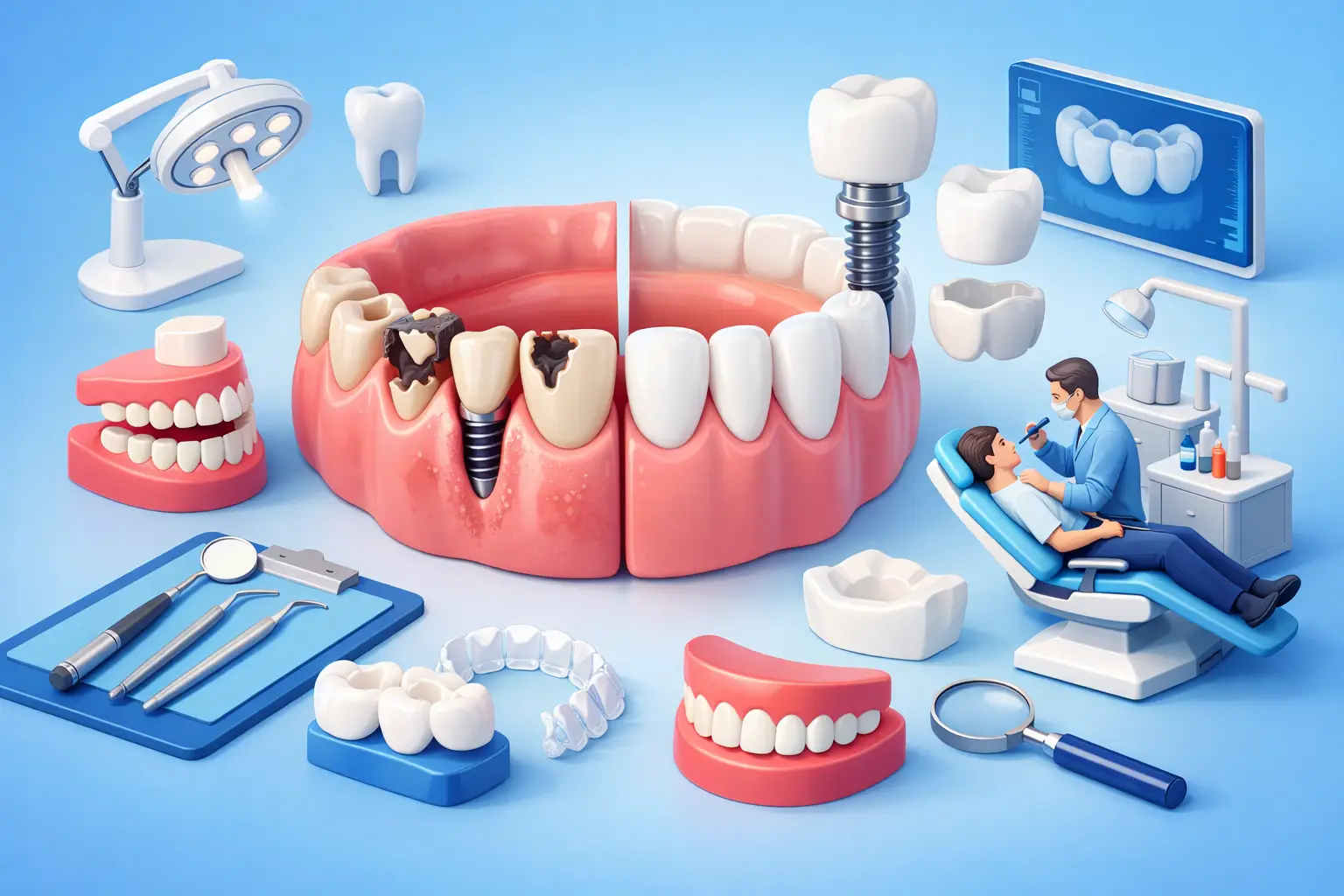
Full mouth rehabilitation, sometimes called full mouth reconstruction, is a coordinated programme of restorative, periodontal, implant and cosmetic dental treatment. Its purpose is to restore a stable bite, comfortable chewing, clear speech and a smile that feels natural to the patient.
It is not a single procedure or a standard set of crowns. A comprehensive plan may include dental implants, crowns, bridges, veneers, root canal treatment, gum care, fillings, orthodontics or removable prosthetics. Each element is selected to solve a defined clinical issue and work reliably with the rest of the mouth.
The difference matters. Replacing a broken crown may be straightforward. But if the teeth around it are worn, the gums are inflamed and the bite is unstable, placing one new crown without addressing those factors can create further problems. Rehabilitation looks at the complete picture before treatment begins.
It is about function as well as appearance
A brighter, more even smile can be an important part of treatment, particularly for patients who have lost confidence in their appearance. However, aesthetics should follow sound oral health planning. Teeth must be positioned and restored so that they meet correctly, gums must be healthy enough to support treatment, and replacement teeth must be designed for daily use.
This balance is especially relevant when several teeth are missing or damaged. A smile can look attractive at first, but if the bite has not been carefully planned, it may feel uncomfortable or place excess pressure on restorations. Digital imaging and bite analysis help the clinical team assess these details before irreversible work is carried out.
Who May Need Full Mouth Rehabilitation?
Patients often seek rehabilitation after years of recurring dental treatment. They may have multiple old fillings and crowns, teeth that have fractured or worn down, or gaps that have changed the way they eat. Others have advanced gum disease, extensive decay, trauma-related damage or long-standing tooth loss.
Teeth grinding can also be a major factor. Persistent grinding may flatten tooth surfaces, cause sensitivity, chip restorations and alter the bite over time. In these cases, simply improving the visible teeth may not be enough. The cause of the wear and the need for a protective night guard should be considered as part of the plan.
Full mouth treatment is not automatically necessary because a person wants a cosmetic change. If the teeth and gums are fundamentally healthy, a more conservative option such as whitening, bonding, veneers or a small number of crowns may be appropriate. A responsible assessment should distinguish between treatment that is desirable and treatment that is clinically needed.
How a Full Mouth Rehabilitation Plan Is Created
A safe result starts with detailed diagnosis. The dentist will review your medical and dental history, assess your gums, teeth, bite and jaw function, and take digital scans and X-rays where required. Photographs and smile analysis may also be used to understand facial proportions, tooth shape and the changes you would like to see.
The findings are then translated into a staged plan. Treating active infection, gum inflammation or painful teeth usually comes first. Once the mouth is stable, the dentist can plan tooth replacement and final restorations with greater predictability.
Planning the bite before final crowns or veneers
Where teeth are severely worn or missing, the relationship between the upper and lower jaw needs careful attention. The dentist may use temporary restorations or a diagnostic mock-up to test a proposed tooth length and bite position. This allows adjustments to comfort, speech and appearance before the final restorations are made.
This stage can feel slower than immediately fitting permanent crowns, but it helps reduce avoidable compromises. It is also an opportunity for the patient to see the proposed direction of their new smile and discuss practical preferences, such as tooth shade and shape.
Treatments that may be combined
There is no fixed menu for rehabilitation. A patient with healthy bone and several missing teeth may benefit from implants supporting individual crowns or bridges. Someone missing most or all teeth may be suitable for a full-arch solution such as All-on-4 or All-on-6, depending on bone quality, anatomy and clinical needs.
Natural teeth that can be predictably saved are often restored with crowns, onlays, fillings or root canal treatment. Zirconium crowns may be considered where strength and natural-looking aesthetics are required. Periodontal treatment can control gum disease and create a healthier foundation, while orthodontic treatment may improve tooth position before restorative work.
In cases of significant bone loss in the upper jaw, advanced options such as zygomatic implants may be evaluated by an experienced implant team. This is not the right solution for everyone, but it can offer an alternative where conventional implants are not feasible without extensive grafting.
How Long Does Treatment Take?
The timeline depends on the complexity of your treatment and how your mouth responds to each stage. A relatively straightforward restoration plan may be completed over a short number of visits. Implant-based rehabilitation often requires a healing period after implant placement before final teeth can be fitted, although temporary teeth may be possible in suitable cases.
For international patients, timing needs to be planned around travel as carefully as the clinical work itself. A remote consultation and review of available X-rays or photographs can provide an initial direction, but the final plan should only be confirmed after an in-person examination. Some treatments require more than one visit to Turkey, particularly when implant healing is involved.
At Dentaglobal, digital planning and multilingual patient coordination can help make the process clearer for patients travelling from the UK and Europe. Clear communication about the expected number of visits, temporary restorations, aftercare and return arrangements is essential before booking travel.
Benefits, Limits and Long-Term Care
A well-planned full mouth rehabilitation can improve everyday comfort in meaningful ways. Patients may chew a wider range of foods, speak with more confidence, reduce recurring pain and feel less self-conscious about their smile. Restoring missing teeth can also help support facial structure and prevent remaining teeth from drifting into gaps.
However, complex dentistry has trade-offs. It may involve several appointments, temporary restorations, healing time and a financial commitment. Existing teeth sometimes need preparation for crowns, and implants require enough healthy bone and good oral hygiene to succeed. Smoking, uncontrolled diabetes and untreated gum disease can affect outcomes and may need to be addressed first.
Long-term success does not end when the final teeth are fitted. Crowns, bridges and implants need daily cleaning, routine professional checks and maintenance. Patients who grind their teeth may need a night guard. Even high-quality restorations can chip, loosen or wear over time, so a follow-up plan is part of responsible treatment, not an optional extra.
Questions to Ask Before Starting
Before committing to treatment, ask what problems the plan is solving and whether there are more conservative alternatives. You should understand which teeth can be saved, why any extraction is recommended, what temporary solution will be used and how the bite will be tested.
It is also sensible to ask about the materials proposed, the expected treatment stages, likely maintenance needs and what support is available after you return home. A good clinic will explain the reasoning in plain language and give you time to consider your options rather than pressuring you into a rapid decision.
The best full mouth rehabilitation is not the most extensive one. It is the plan that restores health and function with the right level of treatment for your needs, supported by careful planning and committed aftercare.