


How All on 4 Works for Full-Arch Teeth
12 April 2026Losing most or all of your teeth changes more than your smile. It affects how you eat, how clearly you speak, and how confident you feel in everyday situations. That is why many patients ask how all on 4 works before making a decision. They want to know not only what the treatment is, but whether it is stable, safe, comfortable, and worth travelling for.
All-on-4 is a full-arch implant treatment designed to replace an entire upper or lower set of teeth using four dental implants as the main support. Instead of placing one implant for every missing tooth, the system uses strategic implant positions to hold a fixed bridge. For the right patient, this can mean fewer implants, less invasive treatment than some traditional approaches, and a faster route to a secure new smile.
What All-on-4 actually means
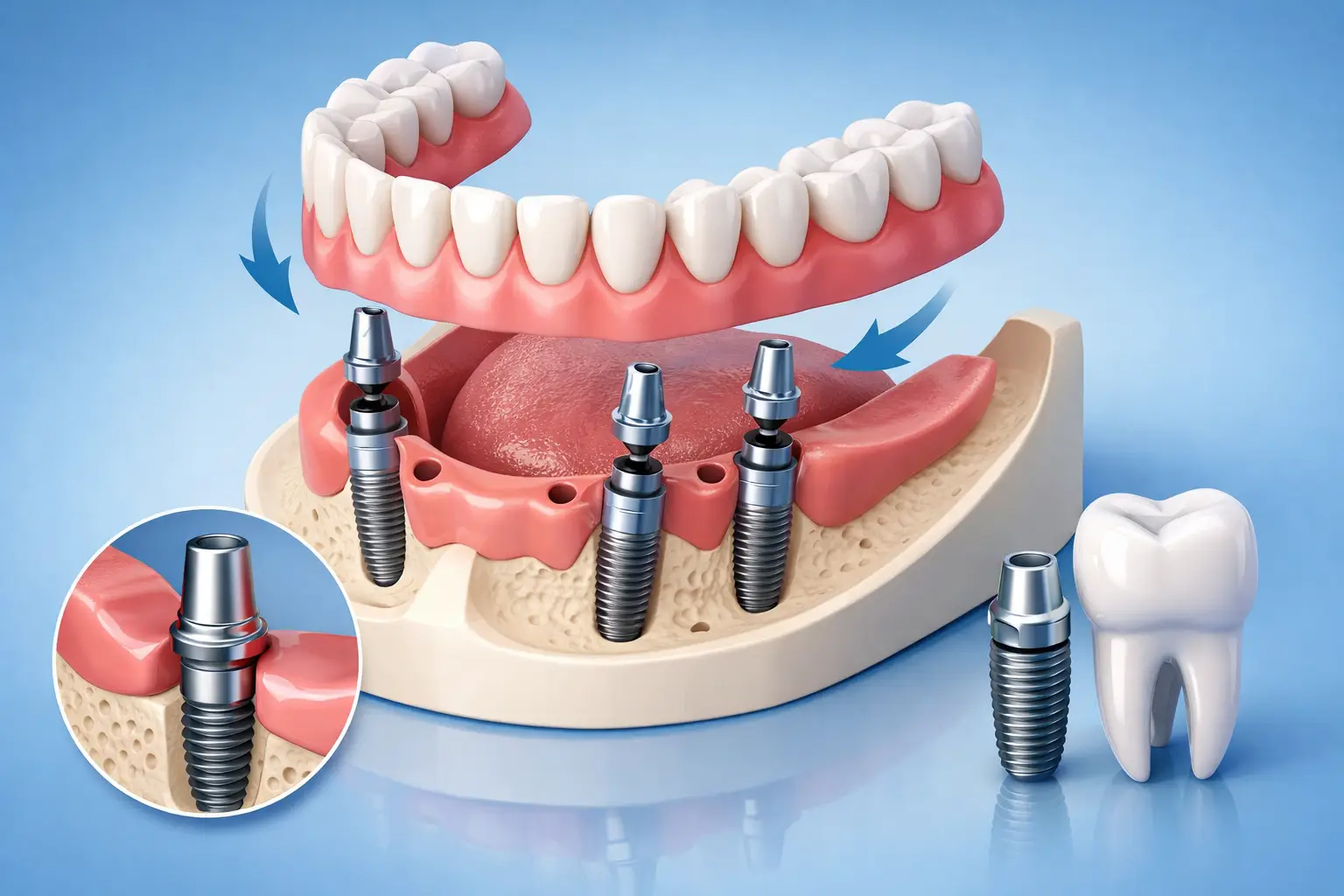
The name is quite literal. A full arch of prosthetic teeth is supported by four implants placed into the jawbone. In most cases, the two front implants are positioned vertically, while the two implants at the back are angled. That angled placement is one of the key reasons the treatment works so well.
By tilting the rear implants, the dentist can often use the stronger available bone in the front and middle parts of the jaw while avoiding structures such as the sinus in the upper jaw or the nerve canal in the lower jaw. This can reduce the need for bone grafting in selected cases. It also creates a broader support base for the bridge, which improves stability and bite function.
This is not a removable denture that clicks in and out. All-on-4 is a fixed solution. The bridge is attached to the implants, so it stays in place and feels much closer to natural teeth than a conventional denture.
How all on 4 works in practice
To understand how all on 4 works, it helps to think of it as a structural solution rather than a tooth-by-tooth replacement. The implants act like anchors in the jaw. Once placed, they integrate with the bone through a healing process called osseointegration. The full-arch bridge is then attached to those anchors to restore appearance and function.
The treatment usually begins with detailed planning. Digital scans, panoramic imaging, photographs, and an examination of your gums, bite, and bone levels help the clinical team decide whether you are a suitable candidate. This stage matters because All-on-4 depends on careful implant positioning, not guesswork.
If damaged or failing teeth are still present, they may need to be removed first. In many cases, implants can be placed on the same day as extractions. A temporary fixed bridge is often fitted shortly afterwards, so you do not have to spend your healing period without teeth. This is one of the biggest reasons patients consider the treatment, especially if they are travelling from abroad and want a shorter, more efficient treatment journey.
Over the next few months, the implants heal and bond with the jawbone. During that time, the temporary teeth allow you to smile and function while the tissues settle. Once healing is complete, the final bridge is made and fitted. This definitive set is designed with greater strength, better aesthetics, and a more refined bite.
Why only four implants can be enough
Patients often assume that replacing a full row of teeth must require eight or ten implants. In some situations, more implants are used, and treatments such as All-on-6 may be recommended. But four implants can be enough because the bridge distributes bite forces across the whole arch rather than loading each implant in isolation.
The design works because of three factors: implant placement, bone quality, and bridge engineering. The front implants typically sit in dense bone. The angled rear implants increase contact with available bone and extend the support area. Together, they create a stable framework for the prosthetic arch.
That said, more is not always better, and fewer is not always suitable. If a patient has very poor bone density, a strong grinding habit, or a complex bite pattern, a clinician may advise a different treatment plan. This is why a proper assessment is essential.
Who is a good candidate?
All-on-4 is usually considered for adults who have lost most of their teeth, have multiple failing teeth, or are frustrated with loose dentures. It can be especially appealing for patients who want a fixed option without extensive grafting procedures.
A good candidate generally needs adequate bone volume in key parts of the jaw, healthy enough gums for implant treatment, and a medical history that supports healing. Smoking, uncontrolled diabetes, severe gum disease, and certain medications do not always rule treatment out, but they can affect risk and planning.
For some patients, the biggest question is age. In reality, suitability matters more than age itself. Many people in their fifties, sixties, or seventies are excellent candidates if their general health and bone condition are favourable.
The treatment stages you can expect
The process is usually straightforward, although each case is individual. Consultation and diagnostics come first. This is where the team assesses your oral health, scans your mouth, reviews X-rays or 3D imaging, and plans implant positions.
Next comes the surgical phase. Any teeth that cannot be saved are removed, the four implants are placed, and a temporary fixed bridge may be fitted on the same day or shortly after. Some swelling and tenderness are normal after surgery, but most patients describe the discomfort as manageable with proper medication and aftercare.
The healing period follows. This often takes around three to six months, depending on the jaw, bone quality, and the individual healing response. During this stage, you will usually follow a softer diet to protect the implants while they integrate.
After healing, the final prosthesis is made. This stage includes bite checks, measurements, shade selection, and fit adjustments so the final result looks natural and functions properly.
What does recovery feel like?
Most patients are pleasantly surprised that recovery is easier than expected. You can expect mild bleeding in the first day, facial swelling for a few days, and a gradual improvement over the first week. The more significant adjustment is often functional rather than painful. Eating habits change temporarily, and speaking may feel slightly different until your tongue and lips adapt to the new teeth.
Following instructions matters. Good oral hygiene, the right diet, and avoiding unnecessary pressure on the temporary bridge all support successful healing. If you are travelling for treatment, choosing a clinic with a structured follow-up process can make a real difference once you return home.
Benefits and realistic trade-offs
The main advantages are clear. All-on-4 offers a fixed full-arch solution, improved chewing ability, better denture stability, and a more confident smile. It can also reduce the need for grafting in selected patients and shorten overall treatment time.
But it is still a surgical and prosthetic treatment, so it comes with responsibilities. You will need regular maintenance, professional reviews, and careful cleaning around the bridge. The temporary teeth are not the same as the final result, so patience is part of the process. And while the bridge is fixed, it is not identical to natural teeth in sensation because implants do not have the same ligament structure as real tooth roots.
Cost is another consideration. Although All-on-4 is often more cost-effective than replacing every tooth with individual implants, it is still a significant investment. For many international patients, this is one reason they compare treatment options abroad, particularly when they want specialist-led care, digital planning, and a predictable treatment schedule.
How all on 4 works compared with dentures
Conventional dentures rest on the gums. All-on-4 is anchored into the jawbone. That difference affects almost everything - stability, bite force, confidence, and long-term comfort.
Dentures can move during eating or speaking, and over time they may become looser as bone resorption continues. Implant-supported full-arch teeth are more secure and generally feel more stable in daily life. They also help stimulate the jawbone, which may reduce the rate of bone loss compared with unsupported dentures.
Still, dentures remain a valid option for some people, especially if surgery is not appropriate or budget is the main limiting factor. The right treatment depends on anatomy, health, expectations, and priorities.
A note for patients considering treatment abroad
If you are looking at this treatment in Turkey, efficiency should never come at the expense of planning. The strongest outcomes come from accurate diagnostics, clear communication, and a clinic that explains each stage properly. A well-managed international process should cover consultation, imaging, treatment timing, temporary restoration, and post-treatment support once you are back in the UK.
At Dentaglobal, this type of planning is central to the patient journey because full-arch treatment is not simply about placing implants. It is about making the whole process predictable, comfortable, and clinically sound from first assessment to final review.
If you have been living with failing teeth or loose dentures, asking how all on 4 works is the right place to start. The better question after that is whether it works for your mouth, your health, and your expectations - because the best full-arch treatment is the one planned around you.