


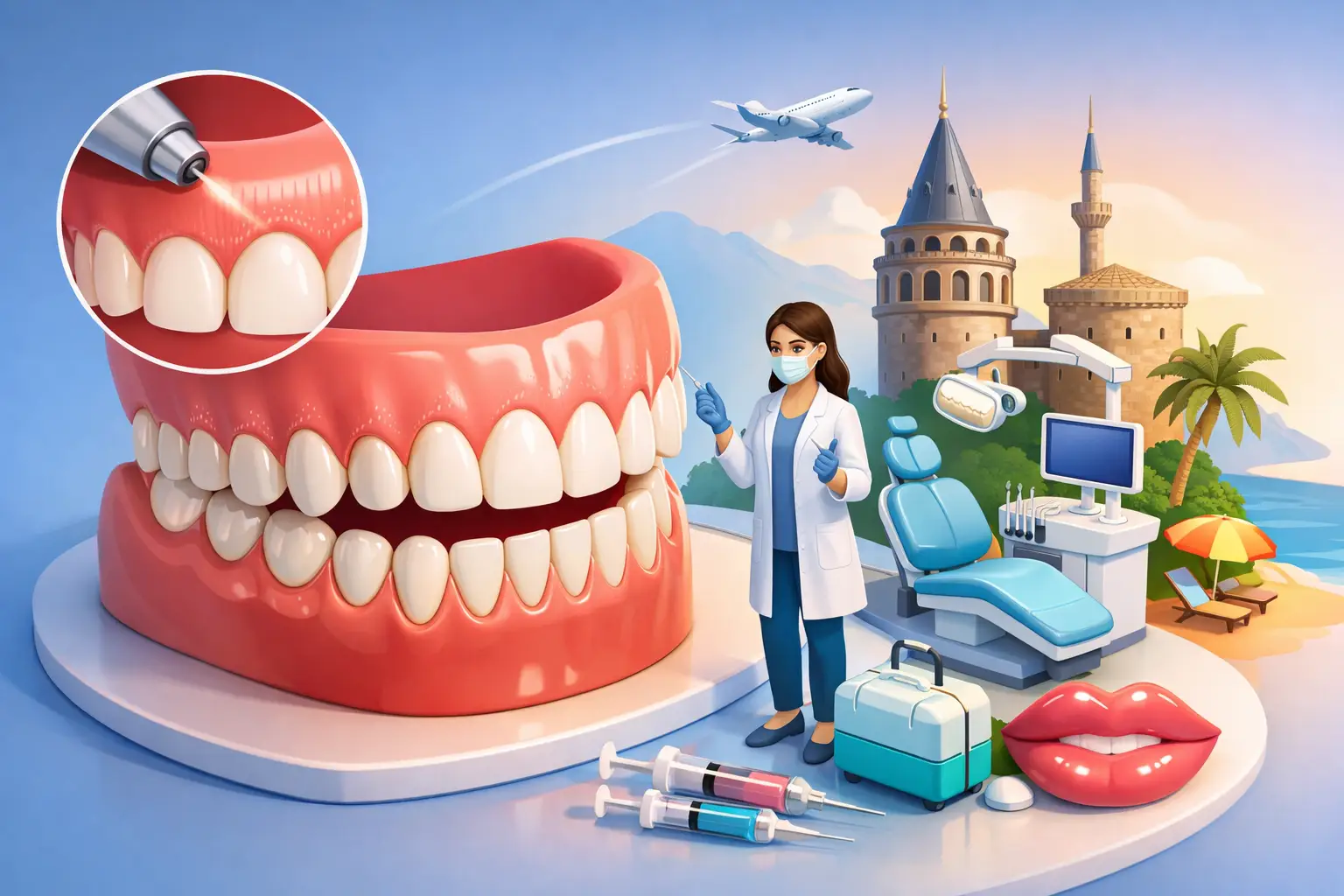
Gummy Smile Treatment Turkey: What to Expect
29 March 2026A smile can look healthy, bright and still feel out of balance if too much gum shows when you laugh or speak. For many patients, that is the real reason they start researching gummy smile treatment Turkey - not because anything is medically wrong, but because they want a more even, confident smile without paying high private fees at home.
The first thing to know is that a gummy smile is not one single problem with one single fix. The amount of visible gum can be linked to tooth shape, gum position, lip movement, jaw structure, or a combination of all three. That is why a proper assessment matters more than promises of a quick cosmetic solution.
What is a gummy smile?
A gummy smile usually means an excessive amount of upper gum tissue is visible when smiling. There is no perfect number that applies to every patient, because smile aesthetics are personal and facial features vary. Still, when the gums dominate the smile rather than frame the teeth, many people feel their teeth look short or their smile looks less balanced than they want.
Some patients have always had this appearance. Others notice it more with age, after orthodontic changes, or when comparing photos of themselves. In most cases, the concern is cosmetic, but the underlying cause still needs to be identified carefully before treatment begins.
Why the right diagnosis matters in gummy smile treatment Turkey
When patients travel abroad for dental care, speed is attractive. But with gummy smile treatment Turkey, accuracy is more important than speed. Two people can have a similar-looking gummy smile and need completely different treatment plans.
If the issue is mainly excess gum tissue, a soft tissue contouring procedure may be enough. If the upper lip lifts too high, lip repositioning or muscle-modulating treatment may be considered. If teeth appear short because of wear or anatomy, veneers or crowns may be part of the solution. If the jaw position plays a major role, treatment becomes more complex and may involve orthodontic or surgical planning.
This is where digital imaging and specialist-led assessment make a difference. A treatment plan should be based on your facial proportions, gum health, tooth size, bite, and the way your smile moves naturally - not just a close-up photo of your front teeth.
Common treatment options
Gum contouring and gingivectomy
This is often the most straightforward option when excess gum tissue is covering too much of the teeth. The gum line is reshaped so that more of the natural tooth surface is visible. For the right patient, this can create a cleaner, more proportional smile with relatively minimal downtime.
That said, not everyone is suitable. If the issue is not excess tissue but tooth wear, lip position or jaw structure, gum contouring alone can leave the result looking incomplete.
Crown lengthening
Crown lengthening goes a step further than simple gum reshaping. It may involve adjusting soft tissue and, in some cases, the supporting bone around the teeth to expose more tooth structure safely. This can be useful when teeth genuinely look too short or when restorative treatment is planned afterwards.
Because it is more involved, it requires careful planning. The benefit is a more stable, biologically sound result when the anatomy demands it.
Lip repositioning
Some gummy smiles happen because the upper lip rises very high during smiling. In these cases, the issue is not the teeth or gum level alone. Lip repositioning aims to reduce the upward pull so less gum shows when smiling.
This can be effective for selected cases, but it is not ideal for everyone. The amount of correction needed, the muscle activity involved, and the patient’s smile dynamics all affect suitability.
Anti-wrinkle injections for lip elevation
For patients with a hyperactive upper lip, injections can sometimes reduce the lift of the lip and soften gum exposure. This approach is less invasive than surgery and can work well for mild to moderate cases.
The trade-off is that results are temporary and require maintenance. For patients travelling from abroad, that is an important practical point. A treatment that needs regular repeat visits may not be the best fit if you want a longer-lasting solution.
Veneers or crowns as part of smile design
Sometimes the gummy appearance is made worse because teeth are small, worn down or poorly proportioned. In that situation, restoring the visible size and shape of the teeth can improve the smile line significantly.
This is where cosmetic dentistry and gum treatment often overlap. The most natural result usually comes from treating the whole smile rather than focusing on the gums in isolation.
Why patients choose Turkey for treatment
Turkey has become a leading destination for cosmetic and restorative dentistry because patients can access advanced treatment planning, experienced clinicians and modern clinics at a lower cost than in many parts of the UK and Europe. For smile-focused procedures, that matters, especially when treatment needs more than one discipline.
Another reason is efficiency. Many international patients want clear communication, a defined schedule and support before, during and after treatment. When a clinic is set up for dental tourism, the process is usually more organised, from remote consultation through to in-clinic care and aftercare guidance.
Affordability should not be the only reason to travel, though. The real value comes from combining cost efficiency with proper diagnostics, specialist input and realistic treatment planning.
What to expect from the treatment journey
Most patients begin with photographs, dental history and a description of what they dislike about their smile. This early stage helps identify whether the issue is likely to be gum-related, tooth-related or more complex. In some cases, additional scans or clinical examination are needed before the final plan is confirmed.
At the clinic, the assessment should look beyond the gum line itself. The dentist should evaluate periodontal health, tooth proportions, smile line, lip movement and bite. If your treatment is purely cosmetic but your gums are inflamed or your oral hygiene needs improvement first, the plan may need to be staged.
Treatment time depends on the method used. Minor gum reshaping can often be completed quickly, while combined treatment involving restorations or healing phases may require a longer timeline or more than one visit. For international patients, this is one of the key planning points to discuss in advance.
Recovery and aftercare
Recovery is usually manageable, but it varies by procedure. After gum contouring, some tenderness, sensitivity or swelling is normal for a short period. Patients are usually advised to follow a softer diet briefly, avoid irritating foods, and keep the area clean according to clinical instructions.
If treatment involves more extensive periodontal work or restorative dentistry afterwards, the aftercare period becomes more important. Healing must be respected before the final cosmetic result can be judged. Rushing this stage can compromise both comfort and appearance.
For patients returning home soon after treatment, good aftercare communication matters. You should know what is normal, what is not, and when to contact the clinic for support.
How to choose a clinic for gummy smile treatment in Turkey
A good clinic will explain why your gummy smile happens before recommending how to treat it. That sounds simple, but it is often the difference between tailored care and a generic cosmetic package.
Look for a provider that can assess periodontal, cosmetic and restorative factors together. Before-and-after photos can be useful, but they should never replace a diagnosis. You also want clarity on who will carry out the procedure, what technology is used for planning, how long the results are expected to last, and what follow-up support is available once you are back in the UK.
If your case is straightforward, treatment may be simple. If it is not, the right clinic should say so. Honest planning is a sign of quality, not hesitation.
At Dentaglobal, this approach is built around detailed assessment, digital planning and a structured international patient process, so patients can make decisions with a clearer picture of treatment, timing and expected results.
Is gummy smile treatment worth it?
For the right patient, yes - especially when the visible gum display affects confidence in photos, social settings or everyday conversation. The change can be subtle from a clinical point of view but significant from the patient’s point of view.
What makes it worthwhile is not simply showing less gum. It is creating a smile that looks more balanced, still natural, and appropriate to your face. The best results do not look overdone or artificial. They simply look like your smile, improved.
If you are considering treatment abroad, take the time to understand the cause before focusing on the price. A well-planned procedure can make a lasting difference, and the right clinic will help you choose the treatment that fits your smile rather than forcing your smile to fit a trend.