


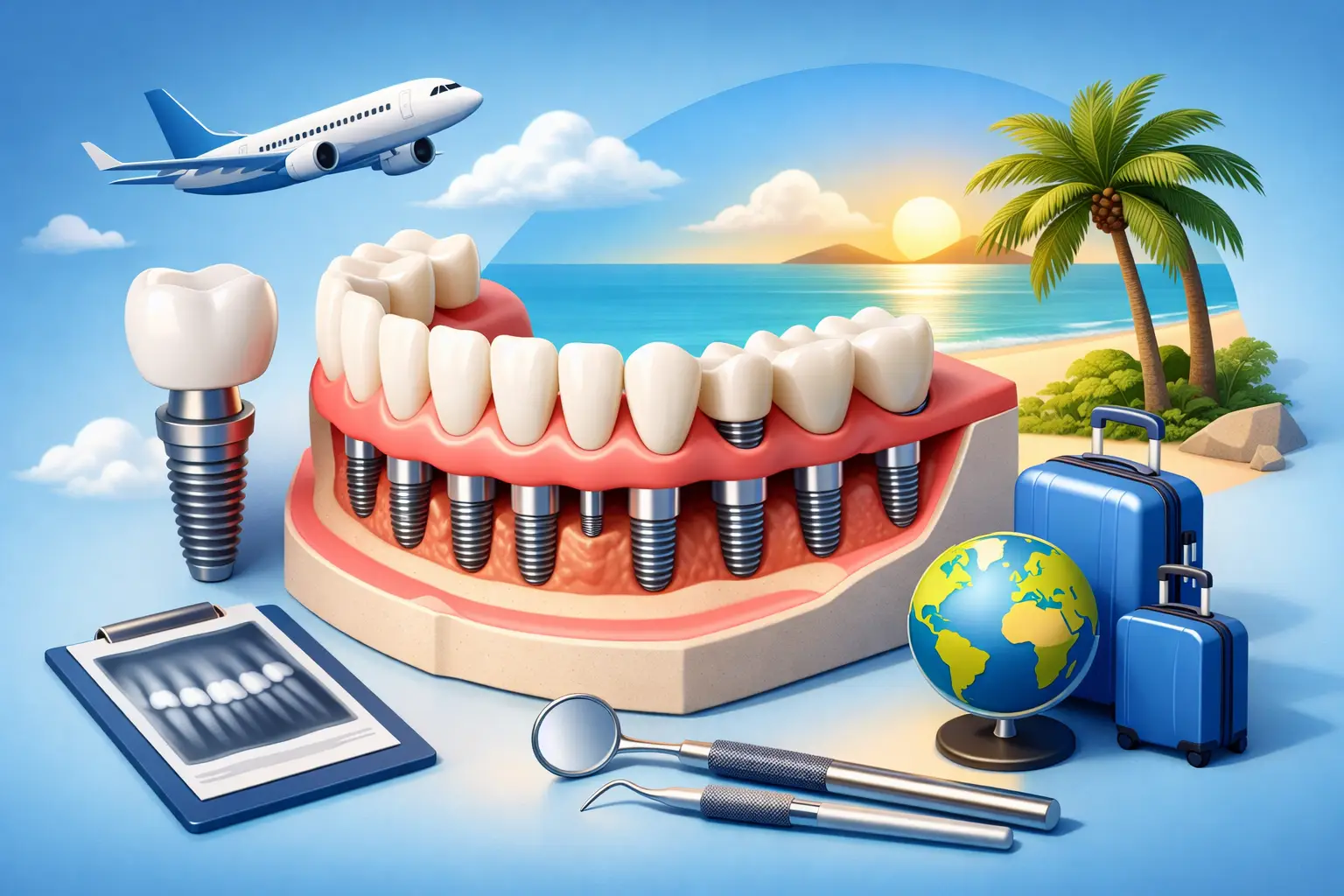
Full Mouth Dental Implants Abroad Guide
26 March 2026Losing most or all of your teeth changes everyday life in ways people rarely talk about openly. Eating becomes cautious, smiling can feel forced, and even speaking with confidence may take more effort than it should. For many patients, full mouth dental implants abroad become part of the conversation when treatment at home feels financially out of reach or the waiting time is simply too long.
That decision deserves more than a quick price comparison. Full-mouth implant treatment is a major clinical procedure, and travelling for it only works well when the treatment plan, the clinic standards and the aftercare are all properly considered. Done well, it can restore function, appearance and comfort at a more accessible cost. Done badly, it can create a second problem where there was already a difficult first one.
Why patients consider full mouth dental implants abroad
The main reason is usually cost, but price is not the whole story. In the UK, full-mouth rehabilitation with implants can be prohibitively expensive, especially when bone grafting, extractions, temporary teeth and final restorations are included. Patients often delay treatment for years because they assume there is no realistic route forward.
Treatment abroad can change that. In well-established dental tourism destinations, patients may access specialist-led implant care, digital planning and modern restorative options for significantly lower fees. For many, that makes treatment possible sooner rather than later.
There is also a practical benefit. Clinics experienced in international care tend to streamline the patient journey. Consultations are handled efficiently, treatment plans are prepared in advance, and timelines are built around short stays. That level of coordination matters when you are arranging time off work, flights and accommodation alongside a complex dental procedure.
What full-mouth implant treatment actually involves
“Full mouth dental implants” is not one single treatment. It is an umbrella term that can describe different solutions depending on bone levels, oral health, number of missing teeth and the type of final result required.
Some patients are suitable for All-on-4 or All-on-6 full-arch systems, where a fixed full bridge is supported by four or six implants per jaw. Others need a larger number of implants, staged treatment, sinus lift procedures or bone grafting before a final restoration can be placed. In more complex cases, advanced options such as zygomatic implants may be considered when upper jaw bone is severely reduced.
This is why any clinic offering full mouth dental implants abroad should begin with diagnostics, not promises. A proper assessment usually includes panoramic imaging, sometimes 3D scans, a review of gum health, existing teeth, bite position and general medical history. If a clinic gives you a final quote without properly reviewing your case, that is a sign to slow down.
Full mouth dental implants abroad - what affects the cost?
Patients often ask for one number, but the real answer depends on what your mouth needs. The final cost may be influenced by the number of implants, whether one or both jaws are treated, the need for extractions, temporary prosthetics, bone grafting, sedation and the material used for the final teeth.
There is also a difference between low headline prices and complete treatment pricing. A quote may look attractive at first glance, then increase once scans, surgical guides, anaesthesia, temporary teeth or follow-up visits are added. That is why transparency matters more than the cheapest figure.
A reliable clinic should explain what is included, what may change after examination and which stages are fixed in price. Patients do best when they can compare complete treatment plans rather than marketing offers.
Choosing the right clinic matters more than choosing the lowest quote
Implant dentistry is technique-sensitive. The skill of the surgeon, the restorative planning, the quality of the laboratory work and the follow-up system all affect the outcome. A clinic that handles international implant cases regularly will usually have a clearer process and a better understanding of how to manage time-sensitive treatment for overseas patients.
Look at the clinical side first. Who places the implants? Who designs the final teeth? Is treatment led by experienced dentists with implant and restorative expertise? Does the clinic use digital imaging and structured planning? Can they explain why a specific implant approach suits your case rather than giving every patient the same package?
Then look at communication. You should be able to ask practical questions and receive direct answers in clear English. If messages are vague before treatment, support is unlikely to improve after you arrive.
For patients comparing options in Turkey, clinics such as Dentaglobal focus not only on treatment itself but also on the wider international patient journey, which can make a meaningful difference when care involves multiple stages and travel planning.
What the treatment journey usually looks like
Most full-mouth implant cases are not completed in a single afternoon, whatever an advert may suggest. Even when immediate temporary teeth are possible, the full process still needs planning, surgery, healing and final restoration.
The first stage is usually remote assessment. You send scans or photographs, share your medical history and receive an initial plan. Once you arrive at the clinic, that plan should be confirmed with proper diagnostics before treatment starts.
If teeth need to be removed, extractions are carried out first, often in the same appointment as implant placement where suitable. Some patients receive immediate fixed temporary teeth, while others may need a different provisional option depending on bone stability and healing conditions.
After surgery, implants need time to integrate with the bone. The healing period varies, but several months is common. Once integration is complete, the final bridge or prosthetic is made and fitted. In straightforward cases this means two main visits. In more complex cases, the schedule may be longer.
This is where honest planning matters. A good clinic will tell you what can realistically be achieved during each trip and what cannot.
Risks, trade-offs and questions worth asking
Any surgical treatment carries risk, and implant dentistry is no exception. Infection, implant failure, healing complications and bite issues can happen even in experienced hands. Travelling abroad does not create those risks, but it can make them harder to manage if planning is poor.
That does not mean you should avoid treatment overseas. It means you should ask better questions. How is aftercare handled once you return home? What happens if adjustments are needed? How many return visits are expected? What type of guarantee is provided, and what conditions apply?
It also helps to discuss whether the fastest option is truly the best one for your case. Immediate loading can be excellent for the right patient, but not every mouth is suited to it. If a clinic insists that one method works for everyone, that is not a sign of efficiency. It is usually a sign of over-simplification.
Preparing for treatment abroad
Patients often focus on the surgery and forget the details around it. Preparation makes the whole experience easier. You will need enough time in your schedule, a clear understanding of post-operative instructions and realistic expectations about swelling, tenderness and temporary dietary restrictions.
It is also sensible to budget for the whole trip, not just the dental fee. Flights, accommodation, local transport and time away from work all form part of the decision. The right treatment abroad can still represent excellent value, but only when viewed as a complete journey rather than an isolated price.
If you have medical conditions or take regular medication, make sure these are discussed in advance. Implant treatment should be planned around your health, not rushed around your flight dates.
When treatment abroad is a good fit
Full mouth dental implants abroad can be an excellent option for patients who want high-quality care at a more manageable cost, provided they choose a clinic with proper diagnostics, clear communication and a reliable aftercare pathway. It tends to work particularly well for people who are comfortable travelling, can commit to the required timeline and want a structured process from consultation through to final fit.
It may be less suitable if your case is medically complex and requires highly localised long-term monitoring, or if you are unable to travel more than once. That is not a failure of treatment abroad. It is simply a reminder that the best decision is the one that fits your clinical needs and your life.
A new smile should not come with uncertainty you could have avoided. If you are considering treatment overseas, take the time to look beyond the headline price, ask detailed questions and choose a team that treats planning and aftercare as seriously as the implants themselves. The right clinic will not pressure you to move quickly - it will help you move forward with confidence.