


Digital Dentistry Turkey for Better Treatment
4 April 2026A crown that feels too high, an implant plan that needs revising, or weeks spent waiting for a laboratory update can turn dental treatment into a longer and more stressful process than it needs to be. That is one reason digital dentistry Turkey has become such a strong draw for patients comparing care abroad. It changes how treatment is planned, delivered and checked, which matters even more when you are arranging dentistry around flights, hotel stays and time away from work.
For international patients, technology is not just a nice extra. It helps create a treatment journey that is clearer, more predictable and often more efficient. For local patients, it can mean better communication, more accurate diagnosis and a smoother experience from consultation through to final fit.
What digital dentistry in Turkey actually means
Digital dentistry in Turkey refers to the use of advanced imaging, computer-guided planning, digital scanning and modern production methods throughout dental care. Instead of relying heavily on traditional impressions, manual measurements and slower analogue workflows, clinics can use detailed digital records to plan treatments with greater precision.
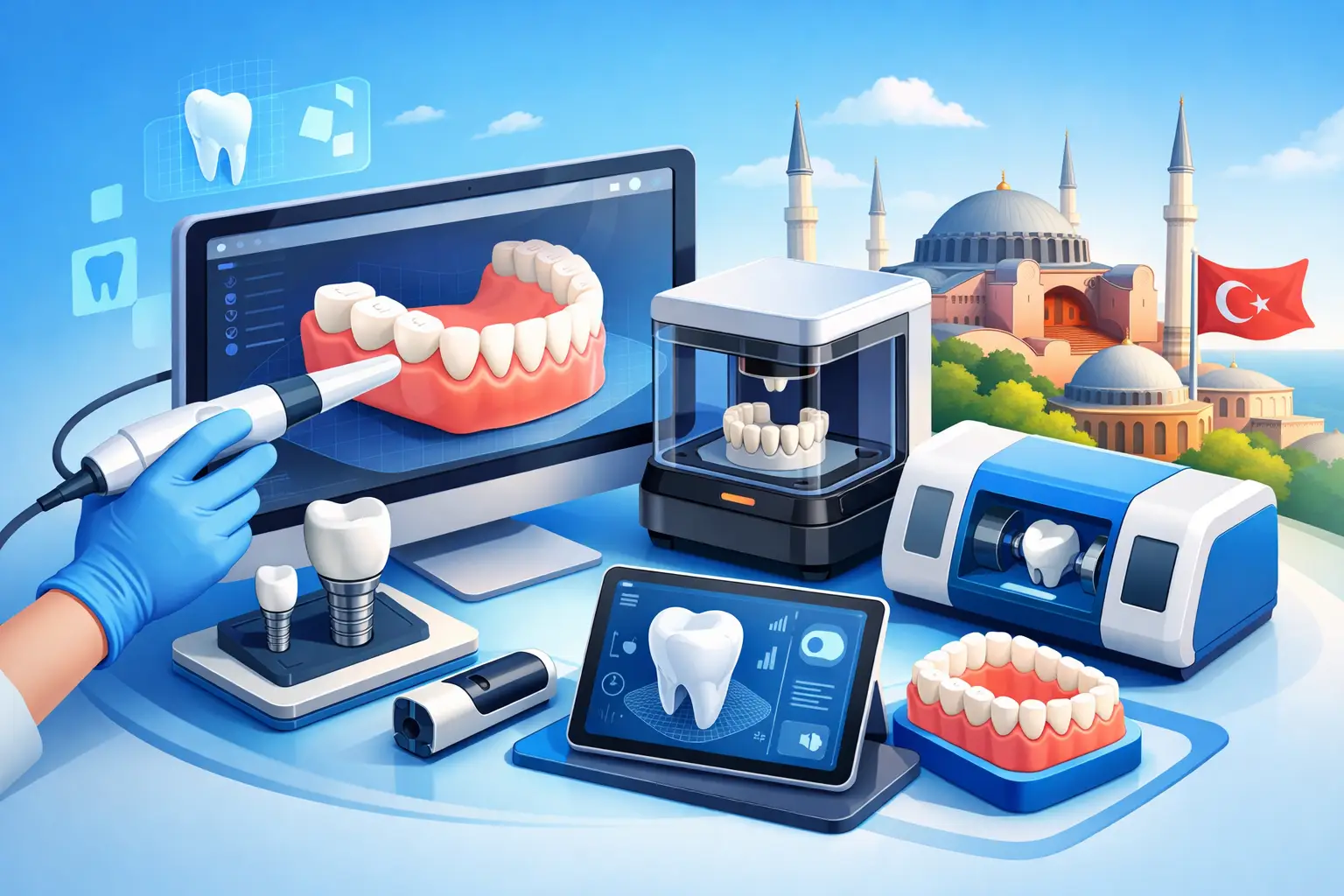
In practical terms, this may include 3D dental tomography, intraoral scanners, digital smile design, computer-aided implant planning and CAD/CAM-supported restorations. These tools can support a wide range of treatments, from a single crown to a full-mouth rehabilitation.
That does not mean every case becomes instant or fully automated. Dentistry still depends on clinical judgement, experience and careful execution. The technology improves the process, but it does not replace the skill of the dentist or specialist.
Why patients look for digital dentistry Turkey options
Most patients are not searching for technology for its own sake. They want fewer surprises, better fit, shorter treatment times where possible and more confidence before they commit. Digital workflows help answer those concerns in a practical way.
If you are travelling from the UK or elsewhere in Europe, the main advantage is often clarity. A digital scan or 3D image can give the clinical team a more detailed view of your teeth, bone and bite before treatment begins. That can be especially valuable for implants, bone loss, complex restorative cases or cosmetic work where appearance matters as much as function.
There is also the question of efficiency. Traditional impressions can be uncomfortable and sometimes less predictable. Digital scans are usually quicker, cleaner and easier to repeat if needed. For patients with a tight treatment window, that can make the process less stressful.
Cost remains part of the conversation too. Turkey continues to attract patients because treatment can be more affordable than in many Western European countries. When a clinic combines that value with specialist-led planning and modern equipment, the appeal becomes stronger.
How digital technology improves treatment planning
The biggest gains often happen before treatment starts. Good planning reduces the chance of avoidable problems later.
With 3D imaging, a dentist can assess bone levels, root positions, sinus anatomy and other structures in far more detail than a standard 2D image allows. For implant patients, this helps determine whether standard implants are suitable, whether grafting may be required, or whether more advanced solutions such as zygomatic implants should be considered.
Digital smile planning can also help patients visualise cosmetic treatment more clearly. If you are considering veneers, crowns or a broader smile makeover, it is easier to discuss tooth shape, proportions and overall balance when the plan is built around digital records rather than verbal descriptions alone.
This is also where honest communication matters. Digital planning can improve predictability, but it cannot promise perfection in every case. Gum condition, bone quality, healing response and long-term habits such as grinding or smoking all influence the final result.
Where digital dentistry makes the biggest difference
Some treatments benefit more obviously than others. Implant dentistry is one of the clearest examples.
When implants are planned digitally, placement can be more precise because the dentist is working from a detailed map of the mouth and jaw. That can support both function and aesthetics, especially in visible areas or full-arch cases such as All-on-4 and All-on-6. Better planning can also help with the position of the final bridge or crown, not just the implant itself.
For crowns, bridges and veneers, digital impressions can improve comfort and fit. Patients who have had traditional moulds often appreciate the difference immediately. There is no tray full of impression material, and the scan can often be reviewed on screen straight away.
Orthodontics also benefits from digital monitoring and planning, particularly when tooth movement needs to be assessed accurately over time. For full-mouth rehabilitation, digital records help keep multiple stages aligned, which is important when both function and appearance are being rebuilt together.
Digital does not mean one-size-fits-all
A modern clinic should not push the same workflow on every patient just because it has the equipment. The right approach depends on your dental condition, time frame and treatment goals.
Some patients need urgent restorative work. Others are focused on cosmetic improvement. Some have severe bone loss or longstanding oral health issues that require a phased plan rather than a quick turnaround. In those cases, digital systems are useful, but they work best when combined with specialist assessment and realistic treatment sequencing.
This is particularly relevant in dental tourism. Many patients hope to complete treatment in one trip, but that is not always clinically appropriate. Implants, for example, may require a healing period before final restorations are placed. A trustworthy clinic should explain where immediate treatment is possible and where patience leads to a safer result.
What to look for in a clinic offering digital dentistry in Turkey
Technology alone should never be the deciding factor. A scanner or tomography machine is only as valuable as the team using it.
Look for a clinic that explains its process clearly, from consultation to follow-up. You should understand who is planning your treatment, what diagnostics are used, how many visits are likely, and what happens if adjustments are needed after you return home. This is especially important for complex implant and cosmetic cases.
It also helps to choose a provider that can coordinate the wider patient journey well. International treatment is not only about the dental chair. Clear communication, multilingual support, appointment planning and post-treatment guidance all make a difference when you are abroad for care.
At Dentaglobal, digital workflows are part of a broader treatment model built around specialist care, accurate planning and support for international patients from first contact to aftercare. That combination matters more than technology in isolation.
The patient experience is changing for the better
One of the less obvious benefits of digital dentistry is how much easier it can make decision-making. Patients often feel more confident when they can see scans, images and treatment proposals in a visual format. It turns an abstract explanation into something more concrete.
That reassurance matters if you are nervous about treatment or worried about making the wrong choice abroad. A well-structured digital process can reduce uncertainty because it gives you a clearer picture of what is happening and why.
It can also support better long-term records. If future maintenance or additional treatment is needed, digital files provide a more organised clinical history. For patients who live overseas, that continuity can be particularly useful.
Is digital dentistry in Turkey worth it?
For many patients, yes - but the real value lies in how the technology is used. Digital systems can improve diagnosis, comfort, precision and planning. They can support faster workflows in suitable cases and help clinics manage complex treatment with greater consistency. Those are meaningful advantages when you are investing in your smile and your oral health.
Still, the best outcome comes from balance. You want modern equipment, but you also want experienced clinicians, honest advice and a treatment plan that suits your case rather than a sales pitch. If a clinic can offer advanced digital dentistry in Turkey while staying transparent about timelines, limitations and aftercare, you are in a much stronger position to move forward with confidence.
A good treatment journey should feel clear from the start. When technology and clinical judgement work together properly, patients do not just get a more modern process - they get care that feels better organised, better explained and better suited to real life.