

Dental Bone Graft Recovery and Healing Times
8 August 2026A dental bone graft is not usually the part of implant treatment patients look forward to, yet it can be the step that makes a stable, natural-looking result possible. Dental bone graft recovery requires patience because the aim is not simply for the gum to close. The graft must gradually integrate with your own bone, creating the support needed for a future implant or restoring areas affected by gum disease, infection or tooth loss.
For patients travelling from the UK to İzmir, clear timing matters just as much as clinical technique. A specialist-led plan should explain what happens in the first few days, when you can fly home, and whether your implant can be placed at the same visit or needs a separate appointment after healing.
What happens during dental bone graft recovery?
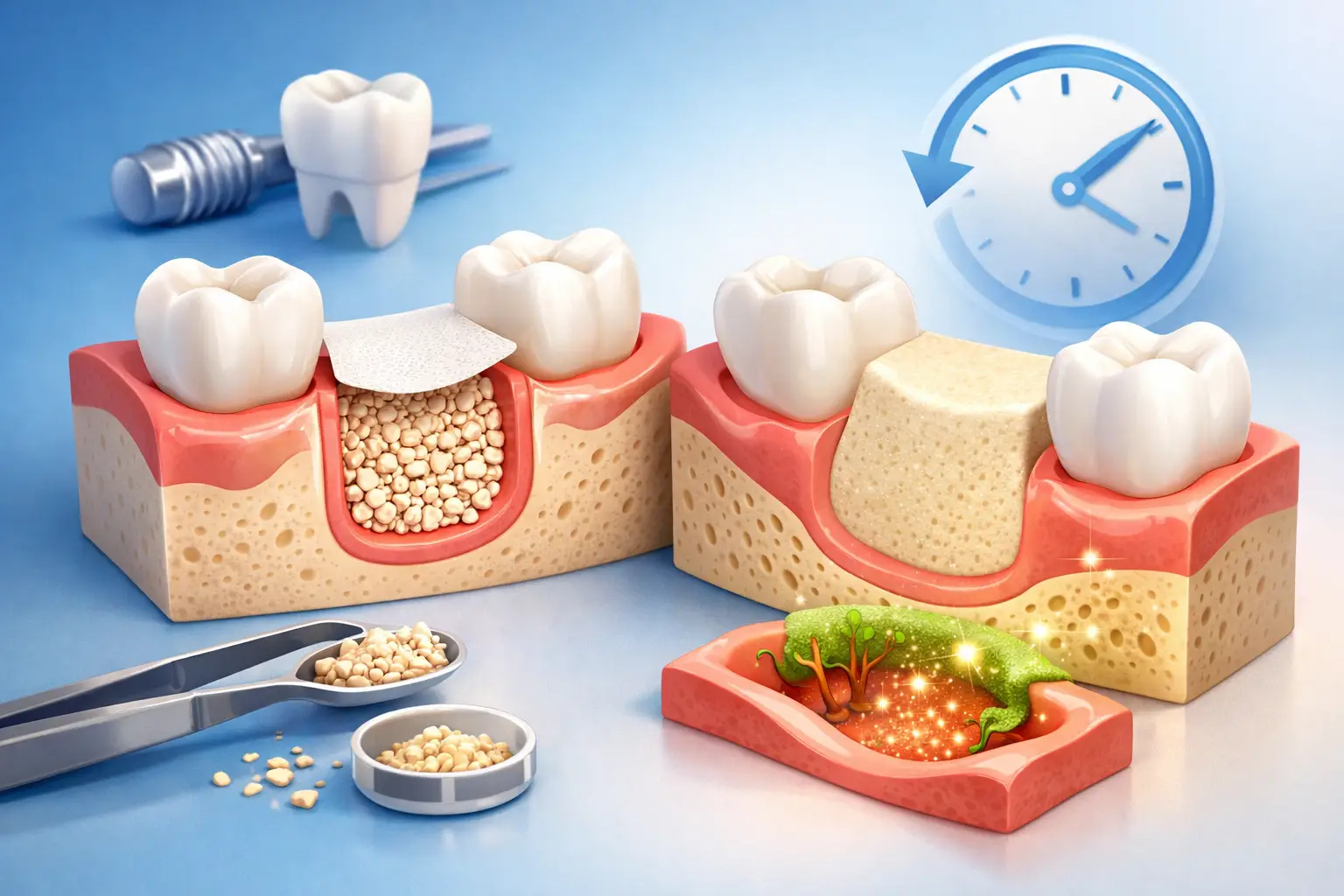
A bone graft adds or preserves bone in an area where the jaw has lost volume. This may be done after an extraction, around a damaged tooth, beneath the sinus in the upper jaw, or before implant placement. Depending on your individual needs, the material may be processed donor bone, animal-derived mineral, synthetic material, or bone collected from another area. Your clinician may also use a protective membrane and stitches to keep the graft stable while healing begins.
During recovery, your body forms new blood vessels around the graft and gradually replaces or incorporates the material with living bone. This biological process takes longer than the visible healing of the gum. You may feel comfortable within days or weeks, but the bone beneath the surface can require several months before it is ready to support an implant.
The exact schedule depends on the size and location of the graft, your bone quality, whether an extraction or sinus lift was performed, and factors such as smoking, diabetes and gum health. Smaller socket-preservation grafts often heal more quickly than larger augmentation procedures.
The first 72 hours: protecting the graft
Some swelling, tenderness and minor bruising are normal after surgery. Swelling often reaches its peak at around 48 to 72 hours, then begins to settle. If you have received sedation, arrange for someone to accompany you afterwards and follow the post-operative instructions provided by your dental team.
For the first day, rest with your head slightly elevated and use a cold pack on the outside of the face in short intervals. Avoid vigorous rinsing, spitting, using a straw or touching the surgical site with your fingers or tongue. These actions can disturb the blood clot and the graft particles before the area has stabilised.
Take prescribed or recommended pain relief exactly as directed. If antibiotics have been prescribed, complete the course unless your clinician tells you otherwise. Do not take additional medicines or supplements without checking first, especially if you use blood-thinning medication or have a relevant medical condition.
A small amount of blood-stained saliva is common. Bite gently on gauze if instructed to do so. Persistent heavy bleeding, however, is not something to manage alone - contact your dental team promptly.
Eating and drinking after a graft
Choose cool or lukewarm, soft foods for the first few days. Yoghurt, scrambled egg, mashed vegetables, soup that is not hot, pasta and smoothies eaten with a spoon are often comfortable options. Chew on the opposite side of your mouth where possible.
Avoid hard, sharp or crumbly foods such as nuts, crisps, seeded bread and popcorn, as particles can irritate the site. Very hot food and drink may increase bleeding in the early stage. Alcohol should also be avoided while taking certain medicines and during the initial healing period.
Hydration supports recovery, but do not use a straw. The suction can place unwanted pressure on the wound.
Keeping the area clean without disrupting healing
Good oral hygiene lowers the risk of infection, but it needs to be gentle. Brush the rest of your teeth as normal, taking care not to strike the surgical site. Your clinician will tell you when and how to clean closer to the graft, which may include a soft toothbrush or a prescribed mouth rinse after the first day.
Do not assume that a stronger rinse or more frequent brushing is better. Aggressive cleaning can cause bleeding and dislodge healing tissue. Follow the instructions for your procedure rather than using a generic routine.
If you notice tiny, sand-like graft particles in your mouth, do not panic. A small amount may occasionally appear, particularly after certain graft procedures. Contact your clinic for advice, especially if this is accompanied by increasing pain, swelling or bleeding.
Dental bone graft recovery timelines
Most patients can return to quiet daily activities within one to three days, although bruising and mild swelling can last for up to two weeks. Stitches may dissolve on their own or be removed at a follow-up appointment, depending on the type used.
The gum commonly appears healed within two to four weeks. This does not mean the graft has completed its work. Bone maturation often takes around three to six months, and more extensive grafting can take longer. Your clinician may use digital imaging to assess whether the volume and density are suitable before placing an implant.
In some cases, an implant can be placed at the same time as a graft. This can reduce the overall treatment timeline, but it is only appropriate when the implant can achieve sufficient initial stability and the site is free from active infection. When the missing tooth area has significant bone loss, staged treatment is often the safer choice. It means another visit, but it can provide a more predictable foundation for the final restoration.
Travelling after treatment in Turkey
For international patients, treatment planning should account for both recovery and travel. Straightforward grafting may allow travel after a short local recovery period, subject to your clinician's assessment. If your procedure includes a sinus lift, larger graft or multiple surgical sites, a longer stay may be advised.
Air travel itself is not always a problem after oral surgery, but pressure changes can be uncomfortable after sinus-related treatment. Your dentist will provide personalised guidance based on the procedure performed and your medical history. Before returning to the UK, make sure you have your written aftercare instructions, medicine guidance and a clear way to contact the clinic if you have concerns.
At Dentaglobal, implant treatment plans are structured around clinical healing requirements as well as the practical needs of international patients. That means setting realistic expectations from the start rather than promising a rushed result that compromises stability.
Habits that can slow healing
Smoking and vaping are among the most significant avoidable risks. Nicotine reduces blood flow to the tissues and can interfere with bone healing, increasing the likelihood of infection and graft failure. Stopping before surgery and remaining nicotine-free throughout healing gives the graft a stronger chance of success.
Heavy exercise should be postponed for the period advised by your clinician, commonly several days. Increased blood pressure can worsen swelling or bleeding. It is also wise to avoid pulling your lip or cheek to inspect the area repeatedly. The site may look unfamiliar while it heals, but unnecessary handling does not help.
Good long-term gum care matters too. A graft may rebuild lost support, but untreated periodontal disease can continue to damage the surrounding bone. Regular professional reviews and effective home cleaning protect both your natural teeth and any future implant.
When to contact your dental team
Discomfort should gradually improve after the first few days. Contact your clinic if pain becomes severe or worsens after initially easing, swelling continues to increase after day three, or you develop fever, pus, a foul taste or persistent numbness.
You should also seek prompt advice if the graft site opens, bleeding does not stop with the instructions you were given, or a large amount of graft material comes away. For sinus graft procedures, report persistent nosebleeds, fluid passing between your mouth and nose, or symptoms of sinus infection.
These signs do not automatically mean the graft has failed, but early assessment gives your dental team the best opportunity to protect healing.
A recovery plan is part of the treatment
The success of a bone graft is measured months after surgery, when there is sufficient healthy bone for the next stage of care. Give the site time, follow your personalised aftercare instructions and keep scheduled reviews, even if you feel well. A carefully protected healing period is what turns grafting from an extra procedure into a dependable foundation for your new smile.