

Bridge Replacement with Implants: Is It Right?
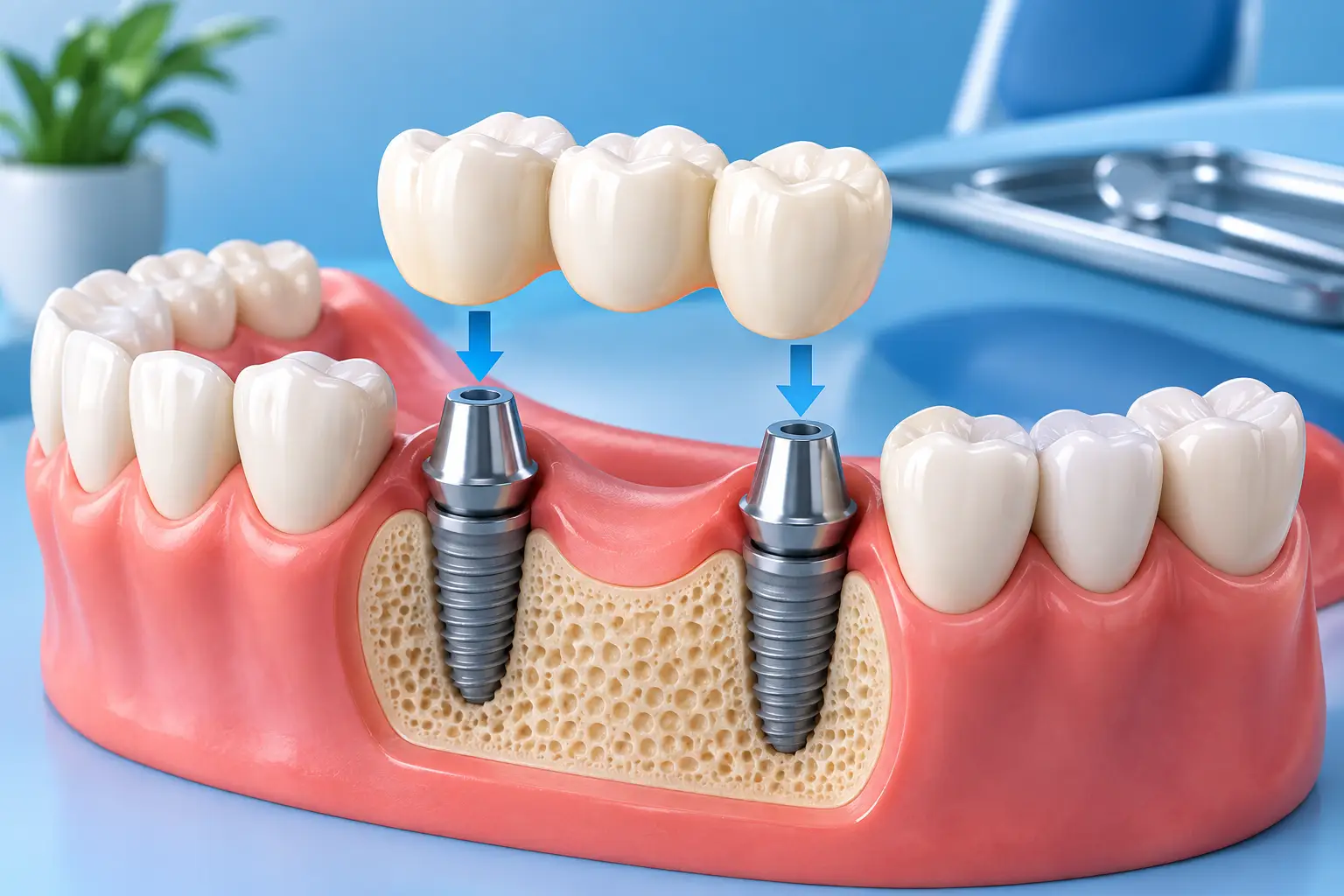
19 September 2026A bridge can restore the look of a missing tooth, but it may also rely on the teeth either side for support. If those teeth are healthy, bridge replacement with implants can be a more conservative long-term option: the replacement tooth is supported by an implant in the jaw rather than by crowns fitted over neighbouring teeth.
That does not make implants the right answer in every case. The condition of the bridge, the health of the supporting teeth, the amount of available bone and your wider treatment goals all matter. A detailed clinical assessment is the only reliable way to decide which solution will serve your smile best.
Why replace a dental bridge with implants?
A conventional bridge is fixed in place by crowns on the teeth beside a gap. It is a well-established treatment and can be an excellent choice when those teeth already need crowns or have large fillings. However, preparing healthy teeth to carry a bridge means removing some natural enamel, and the supporting teeth take on extra load over time.
An implant is a small titanium post placed in the jawbone to replace the root of a missing tooth. Once it has integrated with the bone, it can support a single crown or, where several teeth are missing, an implant-supported bridge. The adjacent natural teeth do not need to be filed down for the restoration.
For many patients, the key benefits are preserving neighbouring teeth, improving stability and helping to maintain jawbone in the area of the missing tooth. Bone naturally loses volume after a tooth is removed because it no longer receives chewing forces through a root. An implant can help stimulate that area, although it cannot always reverse bone that has already been lost.
When bridge replacement with implants makes sense
Replacing a bridge with implants is often considered when the bridge is loose, fractured, repeatedly decaying around its edges or no longer looks natural. It may also be appropriate if one of the supporting teeth has failed and the bridge can no longer be relied upon.
The most favourable situation is often a missing tooth bordered by sound, healthy teeth. Rather than crowning those teeth to make another bridge, a single implant and crown may restore the gap independently. Where two or more adjacent teeth are missing, an implant-supported bridge may use fewer implants than replacement teeth. For example, two implants can sometimes support a three-unit bridge, depending on the bite, bone quality and position in the mouth.
There are situations where a new conventional bridge remains the practical option. A patient may have insufficient bone for implants without grafting, a health condition that affects healing, or a preference for a shorter treatment timeline. If the existing supporting teeth already require crowns, a bridge can also be clinically sensible and cost-effective. Good treatment planning is not about recommending the same solution to everyone. It is about matching the restoration to your oral health, expectations and budget.
What happens during treatment?
Your dentist begins by examining the bridge, gums, bite and supporting teeth. Digital X-rays and 3D imaging may be used to assess bone height, width and the location of important structures such as nerves and sinus cavities. This planning stage is particularly important when an old bridge has been in place for many years, as hidden decay, inflammation or bone loss may only become visible after assessment.
Removing the old bridge and treating the site
The old bridge is carefully removed. If a supporting tooth is damaged but can be retained, it may need root canal treatment, a new crown or periodontal care. If it cannot be saved, it may be removed and included in the implant plan.
Any infection must be resolved before implant placement. In some cases, the dentist can place an implant shortly after extraction. In others, healing first is safer, especially where there is active infection or limited bone. If bone volume is inadequate, a bone graft or sinus lift may be advised. This adds time to treatment, but can provide a stronger foundation for the implant.
Implant placement and healing
Implant surgery is generally carried out under local anaesthetic. Many patients describe pressure rather than pain during the procedure. Sedation may be available for patients who feel particularly anxious, subject to their clinical suitability.
After placement, the implant needs time to integrate with the jawbone. This commonly takes several months, although the exact healing period depends on the location, bone quality, medical history and whether grafting was required. A temporary tooth may be provided where appropriate, particularly in visible areas, so you are not left with an obvious gap.
Your final crown or implant bridge
Once healing is confirmed, digital scans are taken to design the final restoration. The crown or bridge should be planned around your natural tooth shape, smile line and bite, not simply selected from a standard shade chart. Materials such as zirconia or ceramic can provide a strong, natural-looking result, but the right material depends on whether the restoration is at the front or back of the mouth and how heavily you bite.
The final restoration is secured to the implant or implants. It is designed to be fixed, so it does not move during eating or speaking. Although it feels close to a natural tooth, an implant does not have the same sensory ligament as a natural root. Careful bite adjustment is therefore essential to prevent excessive forces.
How long does the process take?
Bridge replacement with implants usually involves more than one appointment and cannot always be completed in a single visit. A straightforward implant case may allow the surgical phase to be completed during an initial trip, followed by healing and a return visit for the permanent crown. More complex cases involving extractions, gum treatment or grafting require a longer staged plan.
For international patients, a clear schedule before travelling is essential. You should know what will be completed during each visit, whether a temporary restoration is planned and when it is safe to fly after surgery. A clinic should also provide practical aftercare instructions and a clear point of contact once you have returned home.
At Dentaglobal, digital diagnostics and specialist-led planning are used to coordinate each stage clearly, helping patients understand their expected timeline before treatment begins.
Cost: what are you paying for?
An implant-supported restoration usually costs more initially than a conventional bridge because it includes surgery, the implant component, abutment, final crown or bridge, imaging and clinical planning. Bone grafting, extractions and temporary restorations may be additional elements.
The initial price should not be the only comparison. A lower-cost bridge may need replacement if its supporting teeth develop decay, fracture or gum problems. Conversely, implants require excellent hygiene and regular reviews, and they can develop inflammation if plaque is allowed to build up around them. Neither option is maintenance-free.
Ask for a written treatment plan that explains exactly what is included, the likely number of visits, restoration material, any potential grafting costs and the clinic's aftercare arrangements. For patients travelling from the UK, it is also sensible to factor in flights, accommodation and the possibility of a return visit when comparing options.
Caring for implants after replacing a bridge
Implants can last for many years when they are carefully planned and consistently maintained. Brush twice daily with a soft toothbrush, clean between teeth using the method recommended by your dentist and attend professional hygiene appointments. An implant bridge needs particular attention underneath the restoration, where plaque can accumulate if it is not cleaned properly.
Smoking increases the risk of healing complications and gum disease around implants. Teeth grinding can also place heavy forces on a crown or bridge, so a night guard may be recommended. Regular reviews allow your dentist to check the gums, bite and restoration before small concerns become larger problems.
The best replacement is the one that protects your remaining teeth, functions comfortably and remains realistic for your health and lifestyle. If an ageing bridge is causing concern, a focused implant assessment can give you a clear, individual answer rather than a one-size-fits-all recommendation.