

Best Options for Replacing Molars Explained
21 September 2026A missing molar can change more than the appearance of a smile. Because molars absorb most of the force used for chewing, losing one may make meals uncomfortable, encourage chewing on one side and place extra pressure on neighbouring teeth. Over time, the teeth around the gap can drift, while the opposing tooth may grow downwards into the space.
The best options for replacing molars depend on where the gap is, how healthy the surrounding teeth and gums are, how much bone is available and what matters most to you: a fixed result, treatment speed, cost or avoiding surgery. A careful examination and digital scan are the right starting point, particularly when treatment is being planned around travel.
Why replacing a molar deserves attention
Molars are not usually visible when you smile, so it can be tempting to postpone treatment. Yet they are central to bite stability. When a back tooth is lost, the remaining teeth must manage forces they were not designed to carry alone. This can contribute to tooth wear, movement and difficulty cleaning between teeth.
Replacement is not always urgent in every clinical situation. For example, a wisdom tooth that has been removed may not need replacing, and some people adapt well to a missing second molar. The decision is more significant when a first molar is missing, when several back teeth are absent or when chewing function has already changed.
Best options for replacing molars: the main choices
Dental implant with a crown
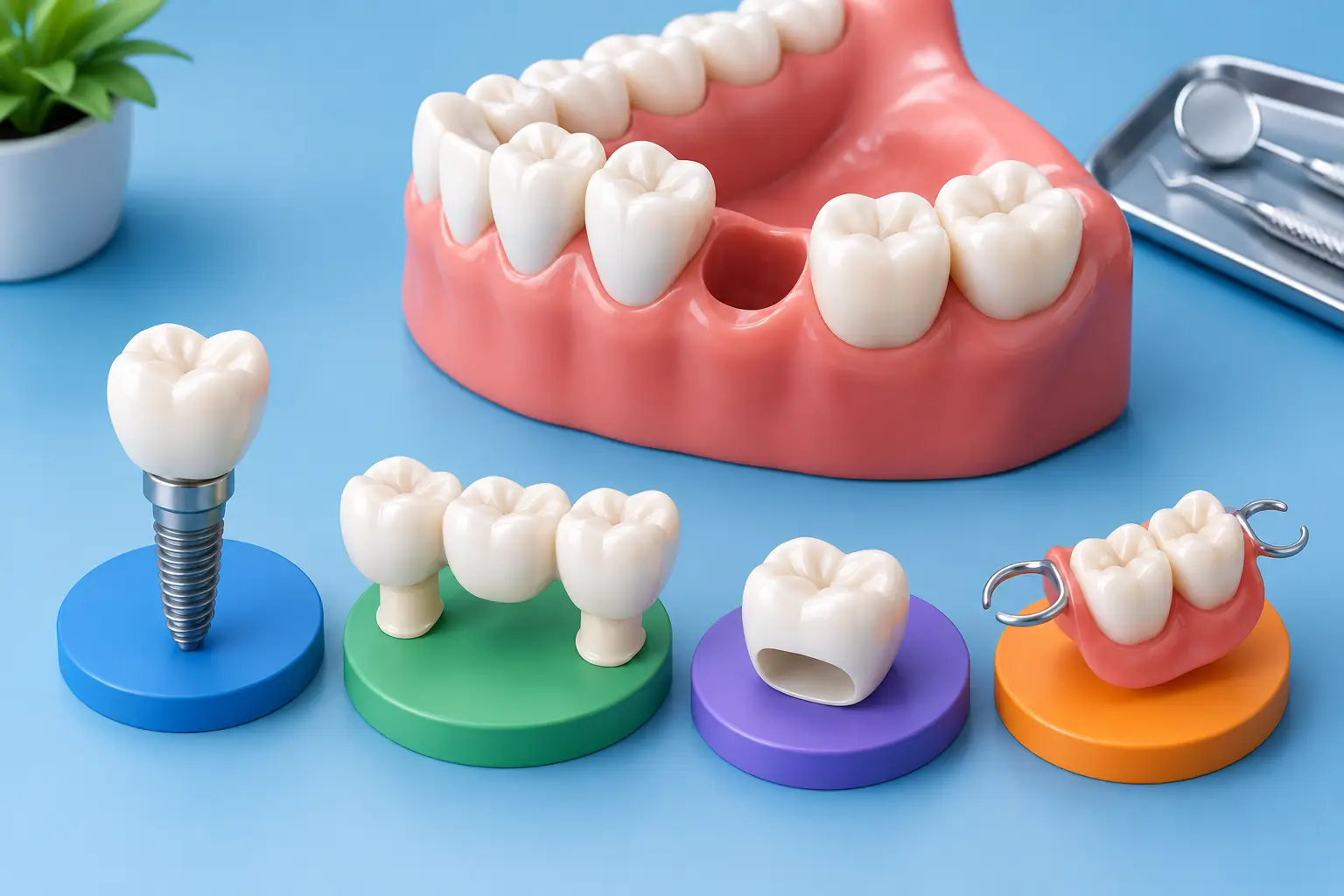
For many suitable patients, a single dental implant is the closest replacement for a natural molar. A small titanium implant is placed in the jawbone, where it integrates with the bone and supports a custom crown. The final restoration is designed to match the shape, shade and bite of surrounding teeth.
The major advantage is independence. An implant replaces the missing tooth without grinding down the teeth on either side of the gap. It can also help preserve bone in the area, because it transfers chewing forces into the jaw in a way that removable options do not.
Implant treatment requires healthy gums, sufficient bone and good oral hygiene. If bone has reduced after a tooth has been missing for some time, grafting may be advised before or alongside implant placement. Healing times vary, and while some cases can use a temporary tooth quickly, the final crown is normally fitted only when the implant is stable enough. Smoking, uncontrolled diabetes, active gum disease and teeth grinding may affect planning and long-term success.
For international patients, a staged plan is often the most reliable approach: implant placement during one visit, healing at home, then a return visit for the definitive crown. In selected cases, digital planning may allow a more streamlined timetable, but treatment should never be rushed at the expense of predictable healing.
Fixed dental bridge
A conventional bridge fills the molar gap with an artificial tooth supported by crowns on the adjacent teeth. It is a fixed option, meaning it stays in place rather than being removed for cleaning. A bridge can be a practical choice where the neighbouring teeth already have large fillings, crowns or damage and would benefit from protection anyway.
Treatment is generally faster than implant treatment because it does not rely on bone healing. Once the supporting teeth are prepared, a temporary bridge may be worn while the final bridge is made. Modern ceramic and zirconium restorations can provide strength and a natural appearance, particularly when the bite is carefully designed.
The trade-off is that healthy adjacent teeth must be reshaped to support the bridge. Cleaning also requires more attention, as special brushes or floss threaders are needed beneath the artificial tooth. Bridges can last for many years with good care, but decay or gum disease around a supporting tooth may compromise the whole restoration.
An adhesive bridge, sometimes called a Maryland bridge, requires less alteration to nearby teeth. However, it is usually less suitable for molars because the heavy chewing forces at the back of the mouth can cause it to loosen. It may occasionally be considered as a temporary solution rather than a permanent molar replacement.
Removable partial denture
A removable partial denture replaces one or more missing teeth on an appliance that is taken out for cleaning. It can be made from acrylic, metal or flexible materials. This option is often more affordable initially than a bridge or implant, and it can replace multiple missing molars without surgical treatment.
A partial denture may be particularly useful when several teeth are absent, when a patient needs an interim solution during implant healing or when medical factors make surgery unsuitable. It also gives the dentist a way to restore chewing function while a longer-term plan is considered.
Comfort and stability vary. Some patients adjust quickly, while others find that a removable appliance feels bulky or moves during meals. Dentures do not prevent bone reduction beneath the missing tooth area, and they need regular review because the mouth changes over time. They are a valid treatment option, but they rarely feel as fixed or as natural under pressure as a well-planned implant-supported crown or bridge.
Implant-supported bridge for several missing molars
When two or more molars are missing side by side, placing one implant for every tooth is not always necessary. In many cases, two strategically placed implants can support a fixed bridge that replaces several teeth. This approach avoids the removable feel of a denture while limiting the number of implants required.
The design must be based on bone quality, the length of the gap, bite forces and access for cleaning. A bridge that is too long or poorly positioned can be difficult to maintain, so digital imaging and bite analysis are especially valuable. For patients missing many teeth, implant-supported bridges may form part of a wider full-arch rehabilitation plan.
How to choose the right treatment
The right decision is not simply about choosing the most advanced procedure. An implant may be the preferred long-term option for a single missing molar with healthy bone and gums. A bridge may be more sensible when neighbouring teeth already need crowns. A partial denture may offer a useful, lower-cost solution for several missing teeth or during a transition period.
Your dentist should assess the cause of tooth loss before recommending replacement. If decay, infection or periodontal disease led to the missing tooth, those issues need to be controlled first. Placing a high-quality restoration without managing gum health or bite problems risks repeating the same cycle.
A thorough treatment plan should explain the condition of adjacent teeth, the amount of available bone, whether grafting is needed, the expected number of appointments, provisional options and the maintenance required afterwards. For patients travelling from the UK or elsewhere in Europe, it should also set realistic expectations about how many visits are needed and what follow-up support will look like after returning home.
Cost, longevity and day-to-day care
Up-front price is only one part of value. A removable denture usually has the lowest initial cost, but it may need adjustments, relining or replacement over time. A bridge usually costs more initially, while its future depends partly on the health of the supporting teeth. An implant can involve the highest starting investment, especially if grafting is required, yet it does not place load on neighbouring teeth and can provide a highly durable solution with consistent maintenance.
No restoration is maintenance-free. Brush carefully around crowns and bridges, clean between teeth every day and attend professional hygiene appointments. Implant crowns need the same attention, with particular care around the gum line. If you clench or grind your teeth, a night guard may help protect both natural teeth and restorations.
A treatment plan built around your mouth
At Dentaglobal, molar replacement planning is based on clinical examination, digital imaging and your practical needs, not a one-size-fits-all recommendation. The aim is to restore comfortable chewing, protect the wider bite and give you clarity about each stage of care.
The most helpful next step is a consultation before the gap affects more of your mouth. With the right diagnosis and a treatment plan you understand, replacing a molar can become a straightforward investment in eating comfortably and protecting the teeth you still have.