

Guide to Same Day Crowns: What to Expect
27 September 2026A chipped front tooth before a wedding, a cracked molar that hurts when you chew, or an old crown that has suddenly failed can make waiting two weeks for a restoration feel like a long time. This guide to same day crowns explains how a digitally designed crown may restore a tooth in a single appointment, what the process involves, and when a conventional laboratory-made crown remains the better choice.
What is a same day crown?
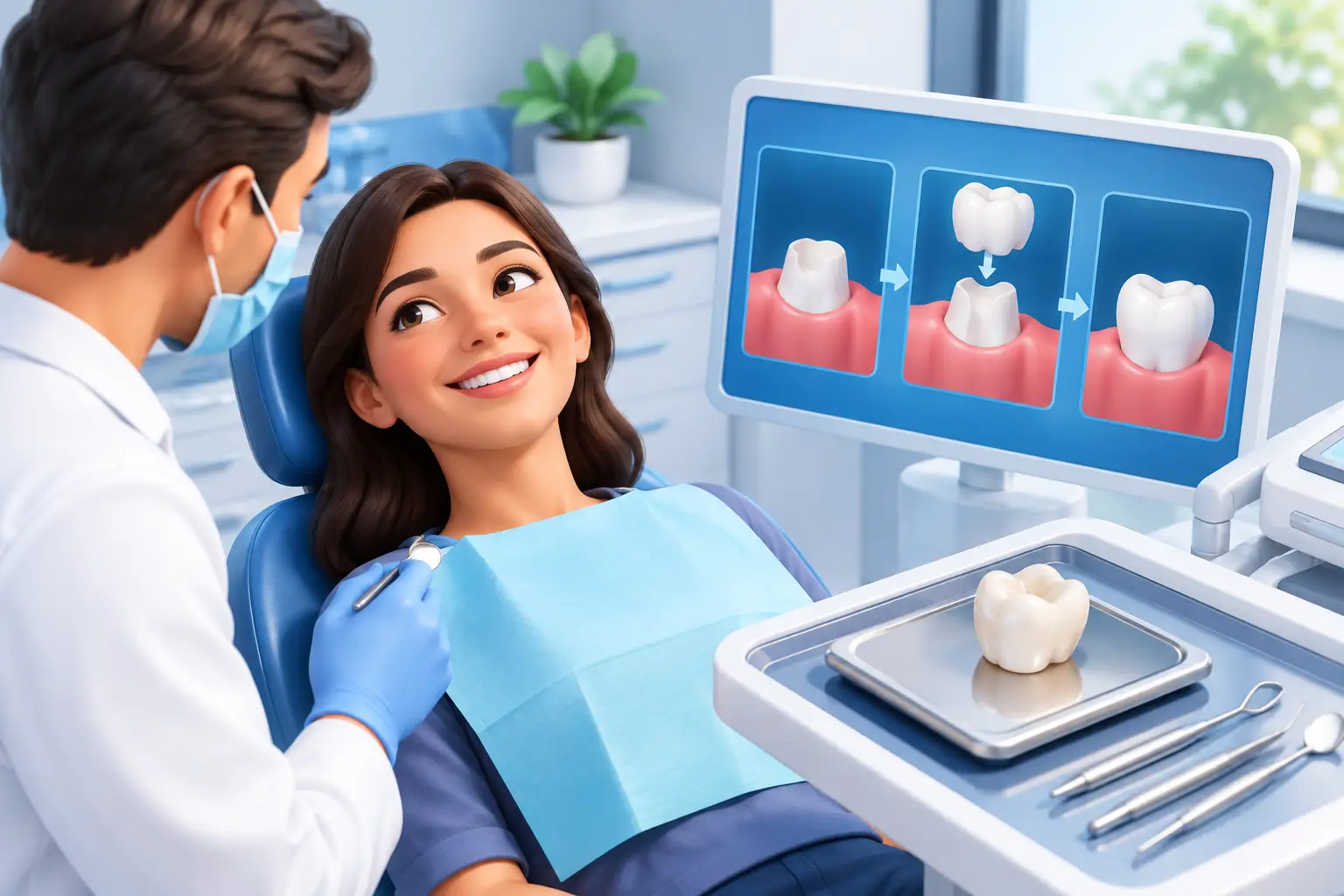
A same day crown is a custom restoration planned, designed and produced at the dental clinic during one visit. Rather than taking physical impressions, placing a temporary crown and waiting for an external laboratory, the dentist uses a digital scan of your teeth. Computer-aided design software creates the crown, and an in-clinic milling machine shapes it from a ceramic block.
Once the crown has been milled, it is tried in, adjusted for fit and bite, then bonded or cemented to the prepared tooth. The appointment commonly takes a few hours, although the exact timing depends on the tooth, the material selected and whether additional treatment is needed.
For patients travelling for dental care, this approach can reduce the number of appointments needed for a single-tooth restoration. It does not mean every crown, every material or every dental situation can be completed in one day. A responsible treatment plan starts with an examination, not a promise based on a photograph alone.
Who can benefit from a same day crown?
Same day crowns are often suitable when a tooth has enough healthy structure to support a crown and the surrounding gums are stable. They can be considered for teeth that are cracked, heavily filled, worn, discoloured, broken or weakened after root canal treatment. They are also useful when an older crown needs replacing and the tooth beneath it is healthy enough to restore.
Back teeth are frequent candidates because a digitally milled ceramic crown can provide reliable chewing strength while preserving the natural shape of the tooth. Front teeth can also be treated this way, but aesthetic demands are higher. Where an exact match of translucency, surface texture and shade is essential, a layered laboratory crown may offer more customisation.
A crown is not automatically the first answer for every damaged tooth. A small chip may only need composite bonding, while a tooth with decay extending below the gum line, active infection or significant mobility may need periodontal treatment, root canal therapy, orthodontic planning or extraction before a final restoration can be considered.
When one visit may not be appropriate
Some cases need more time for clinical reasons. If a tooth requires root canal treatment, the dentist may need to control infection and assess symptoms before fitting the final crown. If gum tissue is inflamed or there is extensive decay beneath an existing restoration, treatment may be staged to protect long-term results.
Complex bite problems, multiple adjacent crowns and highly visible cosmetic work can also benefit from laboratory craftsmanship and additional shade appointments. The goal is not simply to finish quickly. It is to produce a crown that fits accurately, looks natural and functions comfortably for years.
The same day crown process, step by step
Your visit begins with a clinical examination and usually digital X-rays. These help the dentist assess the roots, bone, existing fillings and any hidden decay. If a same day crown is suitable, the tooth and surrounding area are numbed before the damaged sections and old restoration material are carefully removed.
The dentist then reshapes the tooth to create sufficient room for the crown. This preparation is deliberately conservative where possible, but a crown still requires a reduction of tooth structure. For that reason, preserving a healthy tooth with a smaller restoration is preferable when clinically appropriate.
Digital scan and crown design
An intraoral scanner records detailed images of the prepared tooth, neighbouring teeth and opposing bite. This is generally more comfortable than traditional impression material and allows the dental team to inspect the scan immediately. If an area is unclear, it can be rescanned straight away rather than discovered later at a laboratory.
The dentist designs the crown digitally, considering contact points, gum contour, tooth anatomy and how your upper and lower teeth meet. The proposed design is a starting point, not a substitute for clinical judgement. Fine adjustments are made at the chairside to ensure the crown feels right when you bite and chew.
Milling, fitting and bonding
The approved design is milled from a ceramic block in the clinic. Depending on the chosen material, the crown may be polished, glazed or heat-treated before it is fitted. The dentist checks its margins, shade, contacts and bite, making refinements where required.
When the fit is confirmed, the crown is bonded or cemented into place. You can normally eat once the numbness has worn off, although it is sensible to avoid very hard or sticky foods for the rest of the day. Your tongue may notice the new shape at first, but a correctly adjusted crown should not feel high, painful or obstructive.
Materials and appearance: what affects the result?
Modern same day crowns are commonly made from high-quality ceramic. The best option depends on where the tooth sits, how much force it receives, the colour of the underlying tooth and your aesthetic priorities.
Lithium disilicate ceramics can offer a lifelike appearance, making them a popular consideration for visible teeth where light transmission matters. Stronger ceramics may be preferred for molars or for people who place heavy pressure on their teeth. Zirconia is widely valued for strength, although the ideal type and finishing method depend on the individual case and available digital workflow.
Shade selection matters as much as the crown material. Teeth are not one flat colour: they can be darker near the gum line, brighter at the edge and naturally translucent in places. For a single front crown, your dentist may recommend a laboratory-made option if a highly detailed shade match is needed. This is a trade-off worth discussing openly, especially if the tooth sits beside untouched natural teeth.
Benefits and limitations to weigh up
The most obvious benefit is convenience. One appointment can avoid a temporary crown, a second injection and the risk of a temporary coming loose while you wait. Digital scans also provide a precise record of your bite and can make the workflow more predictable.
Same day treatment can be particularly practical for international patients with limited time in İzmir. At Dentaglobal, digital planning and specialist assessment are used to determine whether a single-visit restoration is appropriate within the wider treatment schedule.
However, speed should never outweigh diagnosis. A crown can fail prematurely if decay, gum disease, clenching or an unstable bite is left unaddressed. Same day crowns also require suitable equipment, material options and experienced clinical planning. Not every clinic will use the same system, and not every system produces the same result.
Cost can vary according to the crown material, tooth location, the need for root canal treatment or build-up work, and whether the old crown is difficult to remove. Ask for a written treatment plan that separates the crown fee from any necessary supporting procedures. For travellers, it is also sensible to ask how reviews, adjustments and post-treatment support are managed after you return home.
Caring for a crown after treatment
A crown protects the tooth, but it cannot prevent decay at the edge where the crown meets your natural tooth. Brush twice daily with fluoride toothpaste, clean between teeth every day and attend routine dental examinations and hygiene visits. Good gum health is central to the longevity of any crown.
Avoid using crowned teeth to open packaging, bite nails or crack hard objects. If you clench or grind your teeth, a custom night guard may help protect both the crown and your natural enamel. Contact your dentist if you develop persistent sensitivity, pain when biting, a loose feeling, a chipped edge or floss that repeatedly catches around the crown.
Before choosing a same day crown, ask whether the proposed material suits your bite, how much natural tooth can be preserved, and what follow-up is available. The right crown should fit your timetable, but more importantly, it should fit your tooth, your smile and your long-term oral health.