

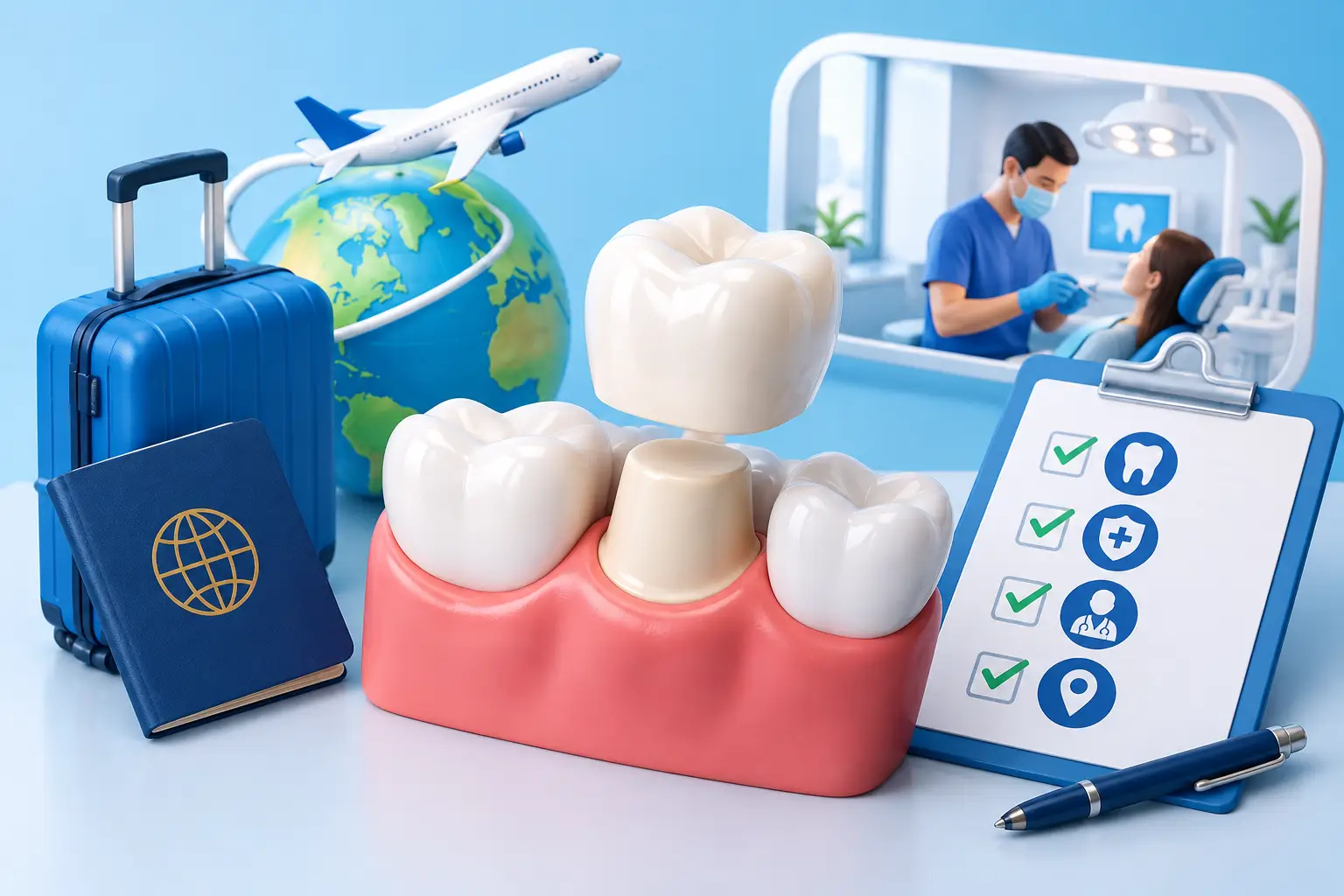
Dental Crowns Abroad: What to Check First
15 September 2026A crown should make a damaged tooth feel dependable again, not become another source of uncertainty. For patients considering dental crowns abroad, the decision is rarely just about price. It is about whether the diagnosis is sound, the material suits your bite and appearance, and the clinic has planned enough time to achieve a precise fit before you fly home.
A well-made crown can protect a weakened, heavily filled, root-treated or fractured tooth for many years. A poorly planned one can cause sensitivity, bite discomfort, gum irritation or an unnatural appearance. The difference is found in the clinical detail behind the treatment, not simply in the country where it takes place.
When Is a Dental Crown the Right Treatment?
A dental crown covers the visible part of a tooth above the gum line. It is usually recommended when there is not enough healthy tooth structure left for a filling to provide reliable protection. This may follow extensive decay, a large old filling, trauma, wear from grinding, or root canal treatment.
Crowns can also form part of a bridge, covering the teeth that support a replacement tooth, or be fitted onto an implant to replace a missing tooth. In cosmetic cases, a crown may improve the shape, shade or alignment of a tooth, but it should never be used as a default solution when a more conservative option would preserve more natural enamel.
That distinction matters. Veneers, bonding, whitening, orthodontics and replacement fillings may be more suitable where the tooth is otherwise healthy. A responsible treatment plan begins with the question, “What does this tooth need?” rather than “Which treatment looks fastest?”
Why Dental Crowns Abroad Appeal to UK Patients
The cost of private restorative dentistry in the UK can make a full treatment plan difficult to manage, especially where several crowns, bridgework or implant restorations are required. Travelling abroad may give patients access to modern materials, specialist teams and digital treatment planning at a more accessible overall cost.
Turkey is a popular option because many clinics combine dentistry with coordinated support for international visitors. This can include multilingual communication, assistance with appointment scheduling and a clear plan for the time needed in the clinic. For patients with demanding work or family commitments, having consultations and treatment arranged efficiently can be as valuable as the savings themselves.
However, affordability should not lead to rushed decisions. Flights, accommodation, local transfers, time away from work and the possibility of a return visit all form part of the real cost. The best value is a crown that fits accurately, supports healthy gums and functions comfortably over time.
Choosing Crown Materials for Your Smile and Bite
There is no single “best” crown material. The appropriate choice depends on the tooth’s location, the amount of space available, your bite forces, gum health, existing teeth and cosmetic expectations.
Zirconia crowns
Zirconia is widely chosen for its strength and natural tooth-like appearance. Modern multilayer zirconia can offer attractive translucency as well as durability, making it suitable for many front and back teeth. It is particularly useful where a patient clenches or grinds, although the final choice still depends on the individual bite and preparation.
Lithium disilicate ceramic crowns
Lithium disilicate is valued for its light transmission and aesthetic qualities. It can be an excellent option for visible front teeth where shade matching and a lifelike finish are priorities. It may not be the best answer for every heavy-bite case, so your dentist should explain why it is, or is not, suitable.
Porcelain-fused-to-metal crowns
These crowns have a metal substructure beneath porcelain. They have a long clinical history and can be strong, but the metal edge may become visible if gums recede over time. For this reason, many patients now prefer metal-free options in the smile zone.
The discussion should cover more than a material name. Ask how the crown will be shaped, how its shade will be selected, whether it will match neighbouring teeth and how the dentist will protect the opposing teeth from excessive wear.
What Good Treatment Planning Looks Like
Before crown treatment begins, the dentist should assess the tooth and the tissues around it. This commonly includes a clinical examination, photographs, X-rays and, where appropriate, a digital scan. The purpose is to identify decay, cracks, infection, gum disease, bite problems and the quality of any existing root canal treatment.
For overseas patients, an initial remote assessment can help establish what may be needed, but it is not a final diagnosis. Photographs and panoramic X-rays are useful starting points, yet the definitive plan should follow an in-person examination. A professional clinic will explain that the proposed treatment can change if findings in the mouth differ from the information provided remotely.
Digital impressions can improve precision and allow the dental team to design the crown with close attention to contacts, bite and appearance. At Dentaglobal, specialist-led planning and digital dentistry are used to support a structured approach, from assessment through to fitting and follow-up guidance.
If a tooth requires root canal treatment, gum treatment, a build-up or removal of an old crown first, this should be included in both the clinical plan and the expected timetable. A crown is only as reliable as the foundation beneath it.
How Long Does Crown Treatment Take Abroad?
A straightforward crown may often be completed over several appointments within a few days, but the right schedule depends on the case. The tooth may need preparation and a temporary crown first, followed by laboratory fabrication, a fitting appointment and final adjustments. Complex cosmetic work or multiple crowns usually needs more planning time.
Patients should avoid booking a return flight immediately after their expected final fitting. It is sensible to allow a buffer for bite adjustments, shade checks or unforeseen clinical needs. If the gums are inflamed, if root canal treatment is required, or if the bite needs to be stabilised, a second visit may be the safer course.
The fitting appointment is not a formality. Your dentist should check that the crown sits accurately at the margins, contacts neighbouring teeth correctly and does not feel high when you bite or slide your jaw. Small refinements at this stage can prevent significant discomfort later.
Questions to Ask Before Booking Dental Crowns Abroad
You do not need dental training to assess whether a clinic communicates clearly. Ask who will carry out your examination and treatment, what diagnostics are included, which crown material is recommended and why, and whether the quoted price covers temporary crowns, scans, X-rays, laboratory work and fitting.
It is also sensible to ask how complications are handled. Crown treatment can reveal deeper decay, a crack below the gum line or infection that was not visible at first. A trustworthy provider will discuss these possibilities openly rather than presenting every case as identical.
Request clear information about post-treatment support, written care instructions and the clinic’s policy if an adjustment is needed after you return home. No clinician can promise that a natural tooth will never develop a future problem, but you should understand what support is available and what is covered by any stated guarantee.
Be cautious of treatment proposals based solely on a single photograph, pressure to make an immediate payment, or claims that every tooth needs a crown. Good dentistry is individual, and an ethical plan preserves healthy tooth tissue whenever possible.
Preparing for Your Trip and Recovery
Bring any recent dental records, X-rays and details of medicines or medical conditions. If you grind your teeth, tell the dentist before treatment starts. A night guard may be recommended to protect crowns and natural teeth from excessive pressure.
After fitting, mild sensitivity is possible, particularly if the tooth was heavily prepared or had deep decay. Your bite should feel balanced, although it may take a short time to adjust to the new shape. Persistent pain, pressure when biting, swelling or a crown that feels loose should be reported promptly rather than tolerated.
Daily care remains straightforward but essential: brush carefully at the gum line, clean between teeth, attend regular examinations and avoid using your teeth to open packaging or bite very hard objects. Crowns do not decay, but the tooth and gum around them still can.
A Crown Should Feel Like Part of You
The most successful crown is not the one that looks impressive only in a photograph. It is the one that allows you to eat, speak and smile without thinking about the tooth at all. When you choose a clinic that puts diagnosis, material selection, precision and aftercare ahead of shortcuts, travelling for treatment can be a confident step towards a healthier, more comfortable smile.