

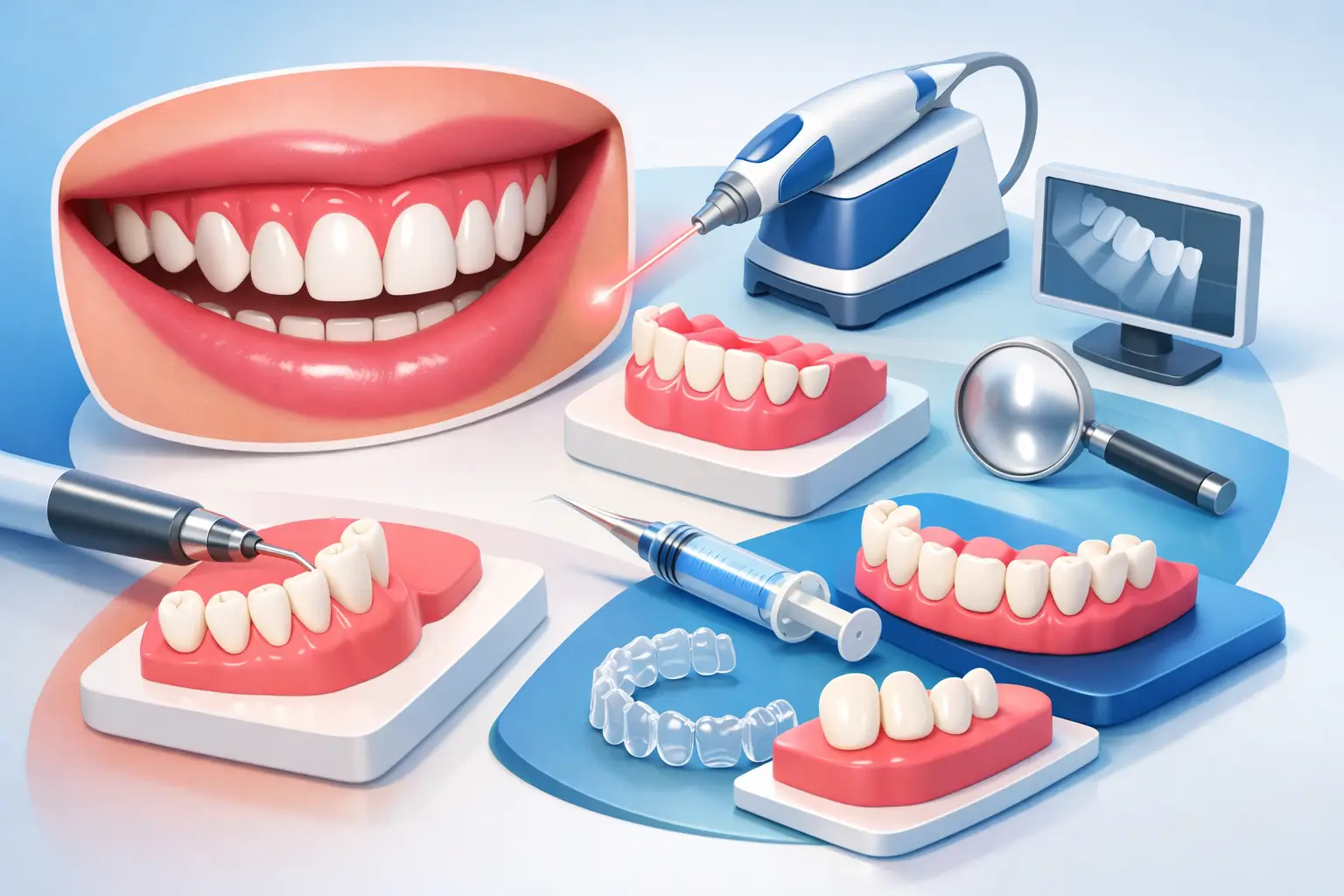
A Guide to Gummy Smile Correction Options
13 September 2026A smile can show more gum tissue than you would like even when your teeth are healthy and well aligned. This guide to gummy smile correction explains why that happens, which treatments may help, and why an individual clinical assessment matters before choosing a solution. The goal is not to remove gum tissue simply because it is visible. It is to create a natural-looking balance between the lips, gums and teeth while protecting your long-term oral health.
What is considered a gummy smile?
A gummy smile, also called excessive gingival display, describes a smile in which a noticeable amount of upper gum is visible. There is no single measurement that applies to every person. Facial proportions, lip shape, tooth size and personal preference all affect what looks balanced.
For some people, the appearance is mild and only visible when they laugh broadly. For others, it can be a consistent concern in photographs, social situations or professional settings. A gummy smile is usually cosmetic, but it may also indicate an underlying bite, gum or jaw-position issue that should be assessed by a dentist.
The correct treatment depends entirely on the cause. That is why promising a particular procedure from a photograph alone is rarely responsible dentistry.
Why does a gummy smile happen?
Several factors can contribute, and more than one may be present at the same time. A detailed examination helps identify whether the issue sits in the gums, teeth, lips, jaw or bite.
Excess gum tissue or altered tooth eruption
Sometimes the teeth have erupted normally, but are still partly covered by gum tissue. This can make otherwise healthy teeth appear short or square. In other cases, the gum line has not moved to its ideal position during development, a condition often described as altered passive eruption.
When the tooth proportions are good beneath the gum line, reshaping the gums can expose more of the natural tooth surface and improve the smile's visual balance.
A short upper lip or highly active lip muscles
Some upper lips naturally lift higher when smiling. This can reveal more gum tissue despite normal tooth and gum proportions. Lip movement must be assessed carefully, as treatments designed for the gums will not necessarily address this cause.
Tooth wear and short-looking teeth
Grinding, erosion or general wear can shorten the biting edges of teeth over time. As teeth become smaller, the gums may appear more prominent. Restoring worn teeth with carefully planned bonding, veneers or crowns can sometimes be part of a wider smile correction plan.
Jaw and bite position
In some cases, the upper jaw has developed vertically more than expected, causing a larger area of gum to show. This may occur alongside a bite discrepancy. Orthodontic treatment can help in selected cases, while more pronounced skeletal concerns may require assessment by an orthodontist and maxillofacial surgeon.
Guide to gummy smile correction: the treatment options
There is no universal best treatment. A predictable result comes from matching the procedure to the diagnosis, rather than choosing the quickest-looking option.
Gum contouring and crown lengthening
Gum contouring removes and reshapes a small amount of excess gum tissue. It may be completed using precise surgical techniques or laser-supported methods, depending on the clinical case. It is most suitable when teeth look short because excess gum tissue is covering the enamel.
Crown lengthening is more comprehensive. Along with adjusting the gum line, the dentist may need to reshape a small amount of supporting bone to establish a stable result. This is particularly relevant when the gum line would otherwise grow back or when restorations are planned.
Recovery is usually manageable, with temporary sensitivity and tenderness possible during the early healing period. Your dentist will advise on brushing, food choices and follow-up appointments. Although the initial cosmetic change can be seen quickly, gums need time to settle fully before final veneers or crowns are made.
Orthodontic treatment
Braces or clear aligners can move teeth and, in some cases, help reduce gum display by improving their position within the bite. Orthodontics may be recommended if the teeth are crowded, protruding, unevenly positioned or contributing to the overall proportions of the smile.
This approach takes longer than gum reshaping, but it treats the dental alignment rather than masking it. Some patients benefit from orthodontics before gum contouring or restorative treatment, especially where a comprehensive smile transformation is planned.
Anti-wrinkle injections for lip movement
For a high or hyperactive upper lip, carefully placed anti-wrinkle injections can temporarily reduce how far the lip lifts during smiling. Results are not permanent, and repeat treatment is required to maintain the effect.
This can be a useful conservative option for suitable patients, but it is not a substitute for treating periodontal disease, an unstable gum line or significant jaw-related causes. It should only be carried out by a qualified clinician who understands facial anatomy and dental smile aesthetics.
Lip repositioning
Lip repositioning is a surgical technique that limits the upper lip's upward movement by adjusting the tissue inside the lip. It may suit some patients with excessive lip elevation who want a longer-lasting option than injections.
The procedure has clear limitations. It does not correct short teeth, excess gum tissue caused by altered eruption or a jaw-position issue. Careful case selection is essential, as healing, scar formation and the possibility of changes over time need to be discussed openly.
Veneers, bonding and crowns
Restorative dentistry may improve the apparent proportions of teeth where wear, small tooth size, uneven edges or old restorations contribute to the smile. Composite bonding can be a conservative choice for minor changes. Veneers and crowns can deliver more extensive aesthetic alteration where clinically justified.
These treatments should not be used to compensate for untreated gum disease or poor bite planning. Healthy gums, stable tooth structure and an appropriate bite are the foundation for restorations that look natural and last well.
Orthognathic surgery
When excessive gum display is mainly caused by the position of the upper jaw, jaw surgery may be the most definitive treatment. It is generally reserved for more significant skeletal cases and is planned jointly by specialist clinicians.
This is a major procedure with a longer recovery period, so the decision involves more than appearance. Bite function, facial balance, general health and personal treatment goals all need consideration.
How your treatment plan should be created
A reliable plan starts with a consultation that looks beyond the visible gums. The dentist should assess your gum health, tooth length, smile line, lip mobility, bite, facial proportions and any previous dental work. Digital photography, X-rays and intraoral scans can support accurate planning and help you see why a particular option has been recommended.
For patients travelling for treatment, sharing clear photographs and recent dental X-rays before travel can help create an initial plan. However, the final recommendation should only be confirmed after an in-clinic examination. A responsible clinic will explain whether your desired result can be achieved safely within your available treatment timeframe.
At Dentaglobal, treatment planning can combine specialist assessment with digital dentistry so that gum correction, orthodontics and restorative work are coordinated rather than treated as separate cosmetic steps. This is particularly valuable where gums need to heal before final veneers or crowns are fitted.
Questions to ask before committing to treatment
You should leave a consultation understanding the cause of your gummy smile and the expected role of each proposed procedure. Ask whether your gums are healthy, whether bone reshaping is needed, how long healing will take and when final restorations, if any, can be placed.
It is also sensible to ask what could change the result over time. Gum tissue can respond differently from one patient to another, teeth may continue to wear if grinding is not controlled, and temporary lip treatments will require maintenance. If you clench or grind your teeth, a protective night guard may be recommended after restorative treatment.
Before-and-after images can be useful when they show patients with comparable tooth shape, gum display and treatment needs. They should support a clinical conversation, not replace one. The most convincing plan is one that explains the diagnosis clearly and sets realistic expectations.
Preparing for treatment and recovery
Good periodontal health is essential. If bleeding gums, plaque build-up or inflammation are present, hygiene treatment may be needed first. Proceeding with elective cosmetic work on inflamed gums can compromise both healing and appearance.
After gum procedures, follow the aftercare instructions closely. You may be asked to use a gentle brushing technique, avoid hard or spicy foods for a short period and attend review appointments. If you are travelling home after treatment, arrange your itinerary around the recommended review schedule and ensure you have a clear post-treatment contact process.
A more balanced smile should still look like your smile. The best gummy smile correction respects your facial features, protects healthy tissue and follows a plan that is appropriate for your diagnosis, not a one-size-fits-all cosmetic trend.