

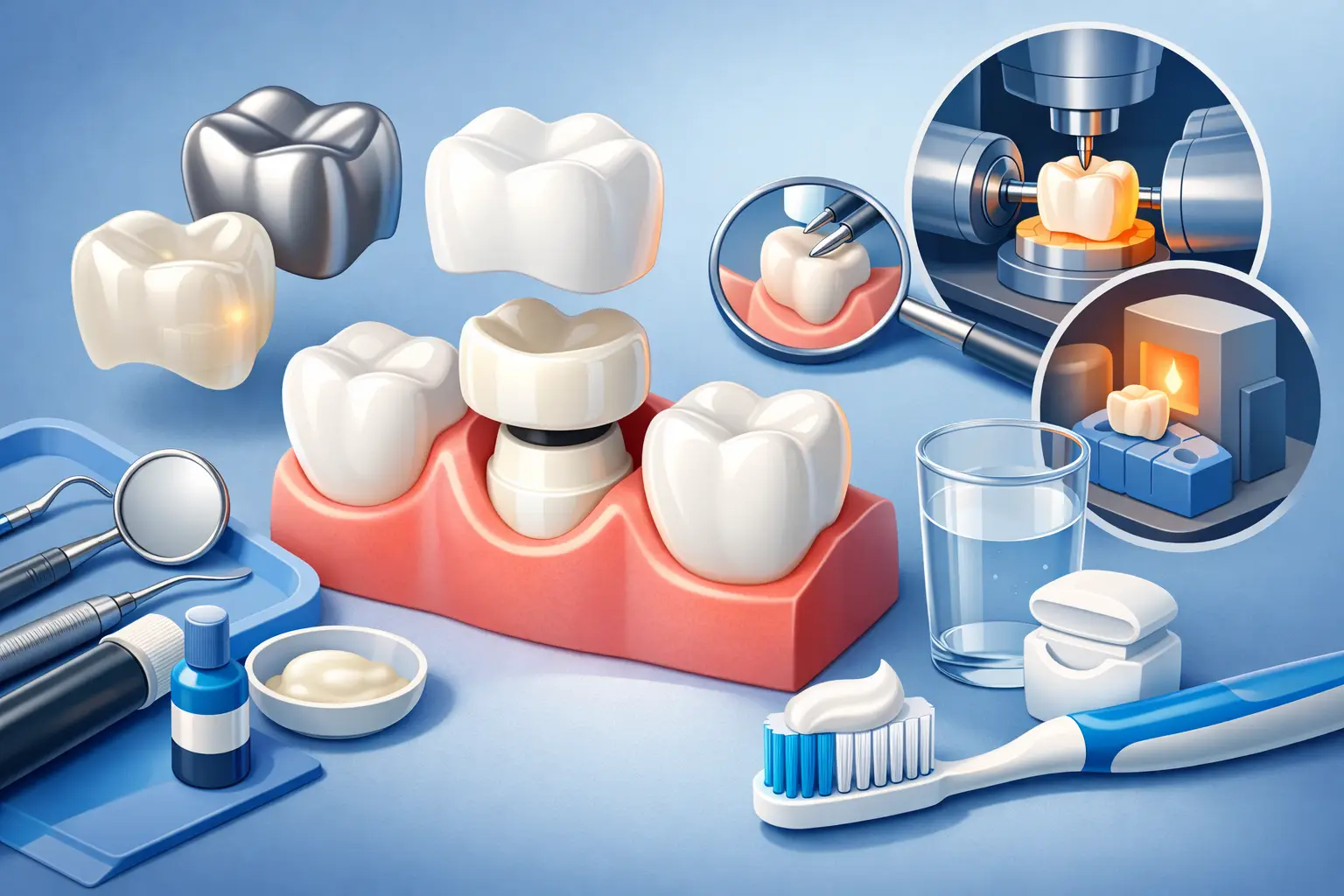
Dental Crowns: Materials, Process and Aftercare
3 September 2026A tooth can look intact while quietly becoming weaker with every bite. Large fillings, cracks, root canal treatment and worn enamel can leave too little healthy structure to rely on. Dental crowns are designed for this situation: they cover and protect the remaining tooth while restoring its shape, strength and appearance.
For patients considering treatment abroad, the decision is not only about choosing a crown material. It is about understanding whether a crown is genuinely needed, how it will fit within your bite, how many visits the treatment requires and what support will be available when you return home. A clear plan makes the process more predictable and helps protect the long-term result.
What are dental crowns used for?
A dental crown is a custom-made restoration that fits over a prepared natural tooth, or attaches to a dental implant. It is often described as a cap, but a high-quality crown is much more precise than that. It must meet the gumline accurately, support comfortable chewing and blend with neighbouring teeth.
Crowns are commonly recommended when a tooth has been weakened by extensive decay or a large old filling, has fractured, has undergone root canal treatment, or is severely worn. They can also be used to improve the appearance of a tooth with a significant shape or colour concern. On implants, crowns replace individual missing teeth without involving the teeth on either side.
A crown is not automatically the first choice for every imperfect tooth. Minor chips may be repaired with composite bonding, while some cosmetic concerns are better suited to veneers. The right option depends on how much healthy tooth structure remains, the position of the tooth, bite forces and your expectations for appearance. Preparing a tooth for a crown is irreversible, so a responsible treatment plan should always be based on clinical examination and imaging rather than photographs alone.
Choosing the right crown material
The most suitable material depends on the location of the tooth, the strength required, the shade of your natural teeth and the desired finish. There is no single material that is best for every patient.
Zirconium crowns
Zirconium crowns are a popular option for both front and back teeth because they combine strength with a tooth-coloured appearance. Modern multilayer zirconium can offer more natural translucency than earlier versions, making it suitable for visible areas when carefully selected and designed. It is particularly useful where bite forces are high.
The trade-off is that opacity and translucency vary between zirconium types. For a very natural front tooth result, the dental team must select the correct shade, thickness and level of translucency rather than treating every zirconium crown as identical.
Ceramic and porcelain options
All-ceramic crowns can create excellent light reflection and natural-looking detail, especially for front teeth. Depending on the ceramic used, they may be ideal where aesthetics are the main priority. Some ceramic materials are less suitable for patients who clench or grind heavily, particularly on molars, so bite assessment matters.
Porcelain-fused-to-metal crowns have a metal substructure beneath porcelain. They have a long clinical history and can be durable, but the metal may sometimes create a darker edge near the gum over time. For many patients seeking a highly natural cosmetic result, metal-free materials are preferred.
Implant crowns
A crown on an implant is planned differently from one on a natural tooth. The implant position, gum contour, neighbouring teeth and cleaning access all influence the final design. In some cases, a screw-retained crown is chosen because it can be removed by the dentist if future maintenance is needed. In others, a cement-retained design may be appropriate. Your clinician should explain why a particular approach is recommended.
The dental crown process step by step
Treatment begins with a detailed consultation. The dentist assesses the tooth, gums, bite and surrounding restorations, often using digital X-rays and intraoral scans. If decay, infection or gum disease is present, these issues need to be addressed before a final crown is placed. A crown cannot compensate for an unhealthy foundation.
Next, the tooth is prepared. This involves carefully reshaping the outer surface to make room for the chosen material. If the tooth is heavily damaged, it may first need a build-up to create a stable core. Local anaesthetic is used, and patients should feel pressure and vibration rather than pain.
A digital scan or impression records the prepared tooth and neighbouring bite. Digital dentistry can improve planning accuracy and allows the dental laboratory to design the crown with precise contours. A temporary crown may be fitted while the final restoration is being made, especially where the tooth is visible or has been extensively prepared.
At the fitting appointment, the dentist checks the crown’s margins, contact points, shade and bite before securing it. This stage should not be rushed. Even a beautiful crown can cause discomfort if it is slightly high in the bite. Minor adjustment after fitting is sometimes needed as your mouth adapts, but persistent pain, pressure or difficulty chewing should be reviewed promptly.
How long do dental crowns last?
With good planning and care, crowns can last many years. Their lifespan is influenced by material choice, the health of the supporting tooth or implant, oral hygiene, diet, grinding habits and regular dental reviews. The crown itself cannot decay, but the natural tooth at its edge can still develop decay if plaque builds up around the margin.
Patients who clench or grind their teeth may benefit from a custom night guard. This protects both crowns and natural enamel from excessive force while sleeping. Avoiding habits such as biting ice, opening packaging with teeth or repeatedly chewing hard objects also reduces the risk of chips and fractures.
Daily care is straightforward: brush twice daily with fluoride toothpaste, clean between teeth every day and attend routine hygiene appointments. For crowns connected in a bridge or placed on implants, the clinician may recommend specific interdental brushes or flossing techniques to clean beneath and around the restoration.
Cost, quality and travelling for treatment
The cost of dental crowns varies according to the material, number of teeth involved, preparation required and whether further treatment is needed first. A low headline price does not show the whole picture. It is worth asking what is included in the plan, such as consultations, X-rays, temporary crowns, laboratory work, bite adjustments and follow-up guidance.
For international patients, treatment timing is equally important. Some crown cases can be completed during one trip, while more complex situations - particularly those involving implants, root canal treatment or gum care - may require staged visits. Implant crowns are normally fitted after a healing period, not immediately after implant placement in every case.
At Dentaglobal, digital planning and specialist assessment support a structured treatment journey for patients travelling to İzmir. Before booking, share clear information about your dental history, current symptoms, medications and any previous X-rays where available. A remote discussion can provide an initial indication, but the final recommendation should follow an in-person examination.
Questions to ask before choosing a crown
A good consultation should leave you confident about both the treatment and the alternatives. Ask why a crown is recommended instead of a filling, veneer or onlay; which material suits your tooth and bite; how much natural tooth needs to be prepared; and what aftercare will be available.
You should also ask whether there are signs of tooth grinding, gum inflammation or infection that could affect the result. These are not minor details. Addressing them before treatment often determines whether a crown remains comfortable and stable over time.
A well-made crown should not feel like a compromise. When the tooth is correctly assessed, the material is chosen for your needs and the bite is carefully checked, it can restore confidence in eating, speaking and smiling - while helping you keep a vulnerable tooth in service for years to come.