

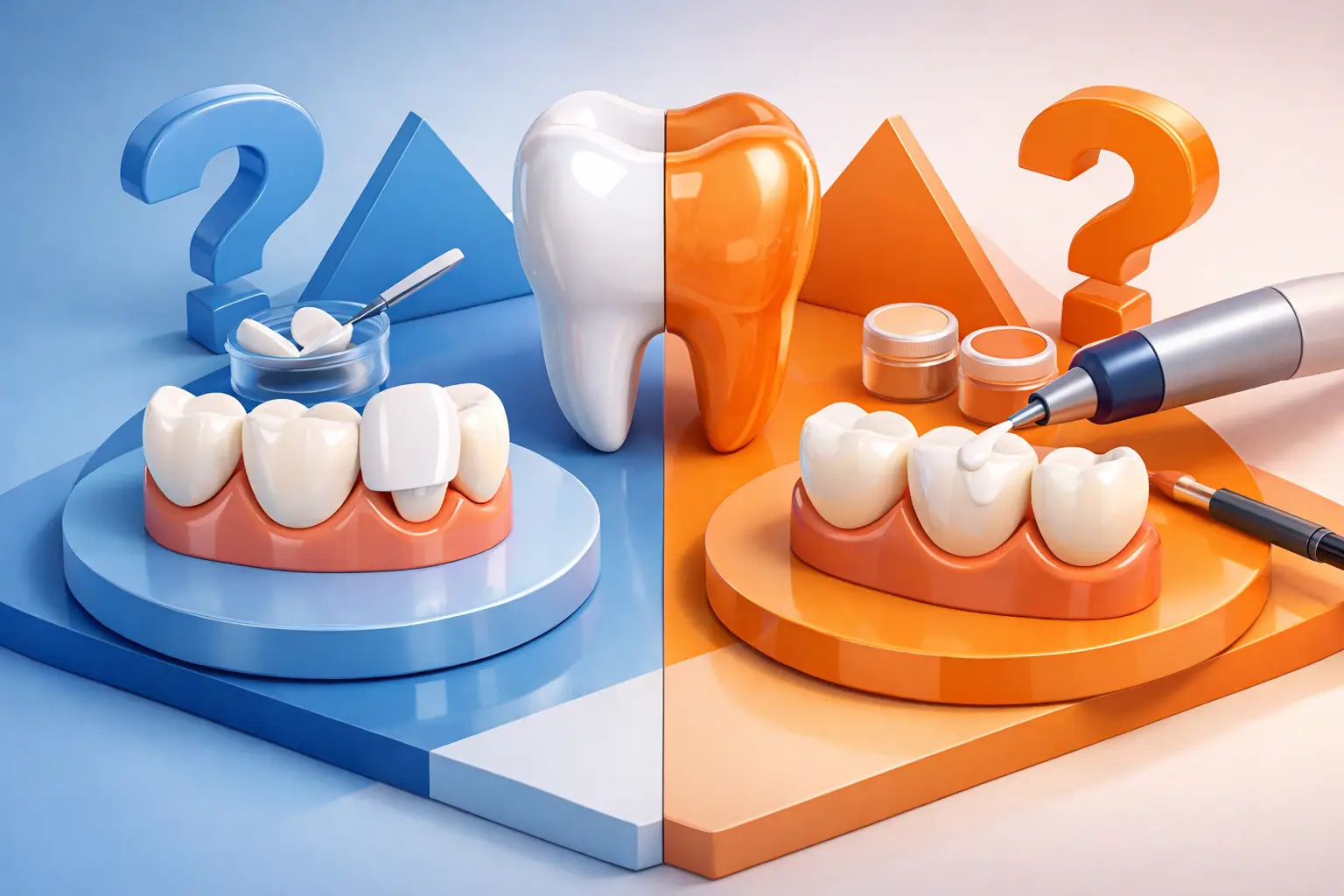
Veneers vs Composite Bonding: Which Is Right?
14 August 2026A small chip, uneven edges or teeth that look darker than whitening can change how freely you smile. When comparing veneers vs composite bonding, the best choice is rarely about choosing the most dramatic result. It is about matching the treatment to your tooth health, smile goals, budget and the amount of time you can allow for long-term care.
Both treatments can improve the shape, shade and symmetry of visible teeth. Yet they use different materials, involve different levels of preparation and offer different lifespans. A proper consultation, supported by digital smile planning where appropriate, helps ensure the finished smile looks natural and remains comfortable to live with.
Veneers vs Composite Bonding: The Key Difference
Composite bonding uses a tooth-coloured resin that is applied directly to the tooth. Your dentist shapes and polishes the material in layers to correct minor imperfections, such as a chip, small gap, worn edge or uneven contour. In many cases, little or no natural enamel needs to be removed.
Veneers are thin, custom-made shells, most commonly crafted from porcelain or high-quality ceramic. They are bonded to the front surface of the teeth to create a planned change in colour, shape, length or alignment. Depending on the type of veneer and the patient’s natural tooth position, a small amount of enamel may need to be prepared so the result sits naturally and does not look bulky.
The distinction matters because composite bonding is generally more conservative and easier to repair, while porcelain veneers are designed for greater durability and a more stable, refined cosmetic result.
When Composite Bonding May Be the Better Choice
Composite bonding is often suitable when the concern is localised rather than a full smile transformation. It can be an effective option for one or several teeth with minor chips, small gaps, irregular edges or slight differences in size. It is also useful where patients would like an improvement without committing to enamel preparation.
Treatment can often be completed in one appointment, provided the teeth and gums are healthy. The dentist selects a resin shade, builds the material carefully and polishes it to blend with the natural enamel. This makes bonding appealing to patients looking for a relatively fast cosmetic improvement, including international visitors with a limited treatment schedule.
Because the resin is placed directly on the tooth, it can usually be repaired if it chips or wears. This is a practical advantage for people who may not be ready for a more permanent restoration. However, the material is more prone to staining and surface wear than porcelain. Tea, coffee, red wine, tobacco and highly coloured foods can gradually affect its brightness, particularly without regular hygiene appointments and polishing.
Bonding also has limits. It may not be the right choice for major colour changes, severely worn teeth, larger gaps or complex alignment concerns. Building too much composite onto a tooth can make it look wide or feel less natural. In these cases, veneers, orthodontic treatment or a combination plan may provide a more balanced result.
When Veneers May Be the Better Choice
Veneers are often chosen by patients who want a more comprehensive and long-lasting smile enhancement. They can address persistent discolouration, uneven tooth proportions, worn enamel, minor crowding and visible gaps across several front teeth. Porcelain reflects light in a way that closely resembles natural enamel, which supports a highly aesthetic result when designed well.
Their surface is also highly resistant to staining. This does not mean veneers are maintenance-free, but their colour tends to remain more stable than composite resin over time. For patients seeking a consistently bright, uniform smile, this can be a significant benefit.
The planning process is more detailed. Your dentist will assess the bite, gum line, tooth structure and facial proportions, rather than selecting a generic shade or shape. Digital scans and smile design can help visualise the proposed result before the final veneers are made. Temporary restorations may be used while the final veneers are being crafted, depending on the treatment plan.
Veneers are usually the stronger option for patients who grind their teeth only when this is properly managed. Heavy clenching or grinding can damage both veneers and composite bonding, so a protective night guard may be recommended. If there is active decay, gum disease or an unstable bite, these issues should be treated before cosmetic work begins.
Durability, Repairs and Daily Maintenance
With careful treatment and good oral hygiene, porcelain veneers can commonly last 10 to 15 years or longer. Their longevity depends on bite forces, home care, regular dental reviews and avoiding habits such as biting nails, opening packaging with teeth or chewing hard objects.
Composite bonding generally has a shorter lifespan, often around 3 to 7 years before it requires polishing, repair or replacement. This is not a failure of the treatment. Resin naturally experiences wear over time, especially on biting edges. For some patients, the ability to refresh bonding gradually is preferable to making a larger initial commitment.
Both treatments still require normal dental care. Brush twice daily with a non-abrasive toothpaste, clean between the teeth and attend professional hygiene visits. Veneers cannot decay, but the natural tooth and gum around them can. Healthy gums are essential to an attractive veneer result, as inflammation can change the appearance of the gum line and compromise long-term stability.
How Much Tooth Preparation Is Involved?
This is one of the most important questions in the veneers vs composite bonding decision. Composite bonding typically preserves more natural tooth structure. Although the tooth may be lightly roughened for bonding, the procedure is often reversible in principle because little enamel is removed.
Traditional veneers usually involve some enamel preparation. Once enamel has been reduced for a veneer, the tooth will need a veneer or another restoration in the future. Minimal-preparation and no-preparation veneer options exist, but they are not appropriate for every smile. If teeth already project forwards, adding material without preparation may create an unnatural profile.
The goal is never to remove tooth structure unnecessarily. A responsible cosmetic plan considers the smallest intervention that can deliver a healthy, proportionate and realistic outcome.
Cost and Treatment Time for Travelling Patients
Composite bonding is generally less expensive per tooth and may be completed quickly. It can therefore suit patients who need targeted corrections or want to improve their smile in a shorter visit. Its lower upfront cost should be considered alongside the possibility of future repairs and maintenance.
Veneers involve laboratory craftsmanship, detailed planning and usually more clinical appointments, so the initial investment is typically higher. For many patients, the longer lifespan and stain resistance make this worthwhile. The right comparison is not simply the price of one appointment, but the value, maintenance needs and expected result over several years.
For patients travelling to Turkey, the treatment timeline must be planned carefully before arrival. Clear photographs, X-rays where available and a remote consultation can help the clinical team assess whether the desired result is realistic within the visit. At Dentaglobal, treatment planning is designed to give international patients clarity on appointments, expected stages and aftercare before they travel.
Choosing a Result That Still Looks Like You
The most attractive cosmetic dentistry rarely looks artificial. Very white, very large or identical-looking teeth may not suit every face, age or gum line. A good plan takes account of natural tooth colour, lip movement, facial features and how your teeth function when you speak and bite.
Choose composite bonding if your teeth are broadly healthy and you want conservative correction of minor imperfections, with the flexibility of easier future repairs. Consider veneers if you want a more extensive transformation, stronger colour stability and a longer-term solution for several visible teeth. The final decision should follow a clinical examination, not a photograph alone.
A well-planned smile treatment should make you feel more confident without asking your teeth to do more than they can safely support. The most useful next step is a personalised assessment that puts tooth health, function and the result you want on equal footing.