

Why Periodontal Treatment Before Implants Matters
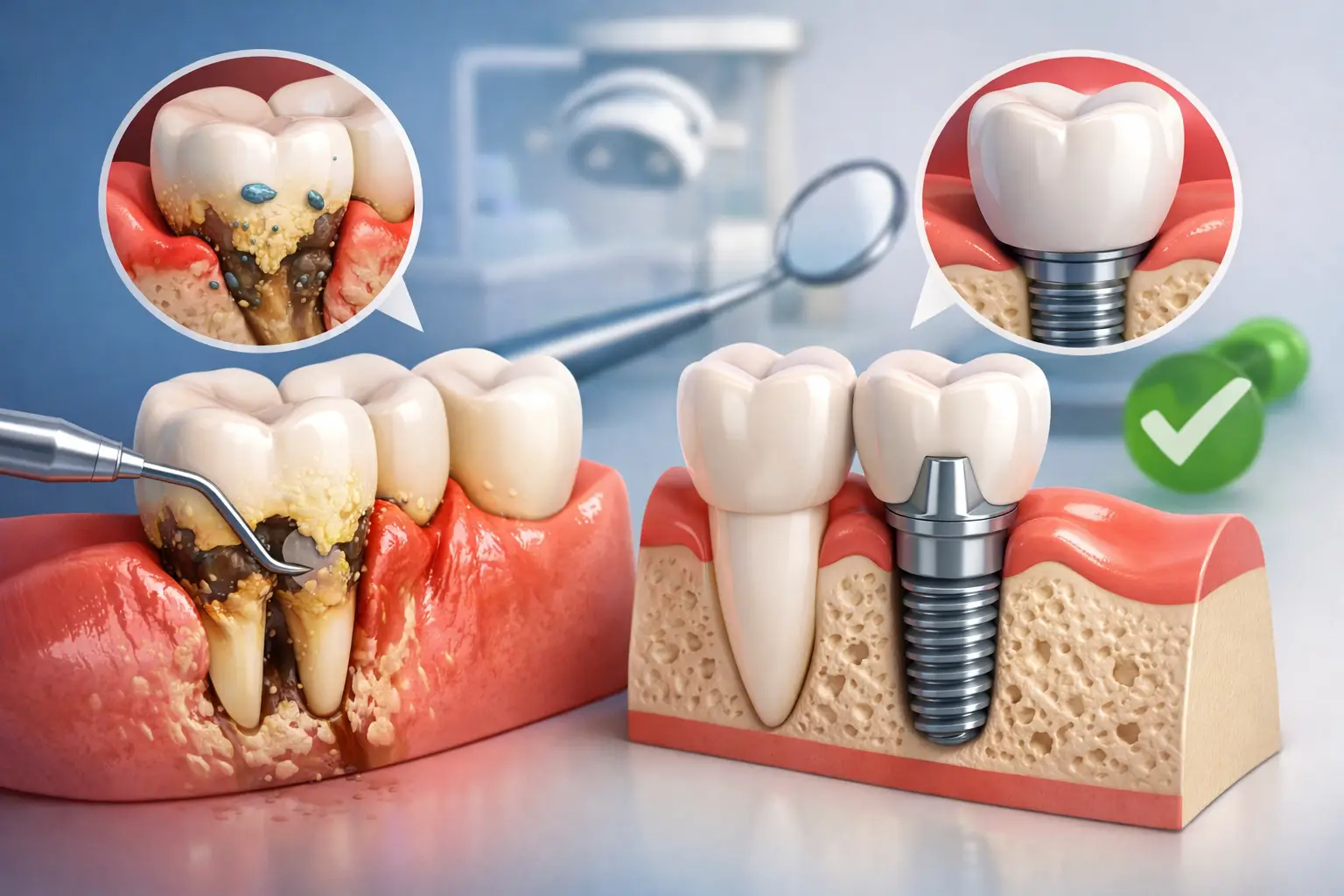
21 July 2026A dental implant can look and feel remarkably like a natural tooth, but it still relies on healthy living tissue around it. Periodontal treatment before implants addresses infection and inflammation in the gums and supporting bone before a new tooth root is placed. For patients considering a single implant, an implant bridge or full-arch restoration, this stage is often what gives the final result the best chance of remaining stable, comfortable and attractive for years.
Why healthy gums matter for dental implants
Dental implants are placed into the jawbone, yet the gum tissue around them has an equally important role. It creates a protective seal around the implant and crown, helping to reduce the risk of bacteria reaching deeper tissues. When gum disease is active, bacteria and inflammation may already be affecting the structures that support the teeth.
This can lead to bleeding gums, persistent bad breath, gum recession, loose teeth and loss of jawbone. In more advanced cases, the damage is not always obvious without a detailed examination and dental imaging. Placing an implant before this is controlled can compromise the foundation needed for treatment.
Implants do not get decay in the same way natural teeth do, but they can develop inflammation and bone loss around the implant. This is known as peri-implant disease. A history of untreated or poorly controlled periodontitis can increase the likelihood of this problem, particularly if daily cleaning and long-term maintenance are inconsistent.
Treating periodontal disease first is therefore not an unnecessary delay. It is a clinical decision that protects your investment in a new smile.
Periodontal treatment before implants: what the assessment involves
Before recommending implants, a dentist and periodontal specialist assess the condition of your gums, teeth and jawbone. The process usually begins with a clinical examination, including measurements around the teeth to identify deep gum pockets, bleeding and recession. Digital X-rays or a CBCT scan may also be used to evaluate bone levels and identify infection that cannot be seen from the surface.
Your treatment plan should consider more than the missing tooth itself. The team will look at whether neighbouring teeth are stable, whether there is enough bone for the planned implant, how your bite works and whether you show signs of clenching or grinding. For full-mouth cases, these details help determine whether an All-on-4, All-on-6 or another restoration approach is appropriate.
Medical history also matters. Smoking, uncontrolled diabetes, certain medications and conditions that affect healing can influence periodontal health and implant planning. These factors do not automatically rule out implants, but they may mean that treatment needs to be adapted and monitored more closely.
How gum disease is treated before implant placement
The right treatment depends on the severity and location of the disease. Early gum inflammation may improve with professional cleaning, tailored oral hygiene advice and consistent home care. When periodontal pockets are deeper, the clinician may recommend scaling and root planing. This carefully cleans below the gum line to remove hardened deposits and bacteria from the root surfaces.
If disease has caused more significant bone loss or deep defects, surgical periodontal treatment may be considered. The aim can be to reduce pockets, reshape affected tissues or, in selected cases, regenerate lost supporting bone. Not every patient needs surgery. The decision is based on the health of the remaining teeth, the planned implant site and what will provide the most predictable long-term outcome.
Sometimes a tooth cannot be saved because infection or bone loss is too advanced. In that situation, extraction may be the healthiest option before implant treatment. Bone grafting or socket preservation may then be recommended to limit bone shrinkage while the area heals. This can make future implant placement more straightforward, although it may add time to the overall plan.
When can an implant be placed after periodontal care?
There is no single waiting period that suits every patient. After non-surgical periodontal treatment, the gums are often reviewed after several weeks to confirm that bleeding, swelling and pocket depths have improved. The clinician will check whether you can maintain effective cleaning at home and whether the disease is stable.
If an extraction, bone graft or periodontal surgery is required, healing time may be longer. In some cases, an implant can be placed soon after extraction. In others, allowing the socket or graft to heal first provides a more predictable bone foundation. Immediate treatment can be appealing, especially for travellers working to a schedule, but speed should never take priority over stability.
For international patients, a well-organised plan is particularly valuable. Digital scans, photographs and X-rays can be reviewed before travel where appropriate, allowing the clinical team to estimate the number of visits and likely treatment stages. Once you are in the clinic, the final plan should still be confirmed after an in-person examination. This protects you from committing to a timetable that does not match your actual periodontal condition.
The relationship between bone loss and implant planning
Periodontitis can gradually reduce the volume and height of the jawbone. This may affect where an implant can be placed and which implant design is suitable. A smaller area of bone loss may be managed with a local graft, while more extensive loss can require advanced planning.
For patients missing many teeth, full-arch treatments may sometimes avoid the need for grafting by using the strongest available areas of bone and placing implants at carefully planned angles. In complex upper-jaw cases with severe bone loss, zygomatic implants may be considered by appropriately experienced specialists. These are not standard solutions for everyone, but they demonstrate why advanced imaging and specialist assessment are essential before making promises about treatment times or costs.
The goal is not simply to place an implant. It is to position it in a way that supports the final crown or bridge, distributes bite forces effectively and allows you to clean around it properly. A digitally planned approach helps the team assess these details before surgery and communicate the proposed result clearly.
Your role in protecting the result
Successful periodontal treatment is a partnership. Professional care removes infection and creates healthier conditions, but daily habits determine how well those improvements are maintained. Brushing twice a day with the technique recommended by your dental team, cleaning between teeth or around implants, and attending hygiene reviews all make a measurable difference.
Smoking cessation is strongly encouraged, as smoking can impair healing and is associated with higher risks of periodontal and implant complications. If you have diabetes, keeping blood glucose well controlled supports gum health and recovery. Patients who grind their teeth may benefit from a night guard to reduce excessive pressure on implants and restorations.
After implant placement, regular maintenance remains essential. Your clinician may recommend more frequent hygiene appointments if you have previously had periodontitis. These visits allow early signs of inflammation to be identified and addressed before they threaten the supporting bone.
Choosing a treatment plan built for the long term
A lower initial price or a shorter treatment schedule can be tempting when you are replacing missing teeth. However, implant dentistry is most cost-effective when it is planned to last. Addressing bleeding gums, hidden infection and bone loss before surgery can prevent avoidable complications and reduce the chance of needing corrective treatment later.
At Dentaglobal, implant planning is approached as part of complete oral health care, with digital diagnostics and specialist-led assessment helping patients understand each stage before treatment begins. Whether you live locally or are travelling to İzmir, clarity about periodontal health, healing time and aftercare should be part of every implant conversation.
If your gums bleed when you brush, your teeth feel loose, or you have been told you have bone loss, arrange a periodontal assessment before setting an implant date. The most reassuring implant plan is not always the fastest one - it is the one built on healthy foundations and supported by care you can maintain long after you return home.