

Can Smokers Get Dental Implants Safely?
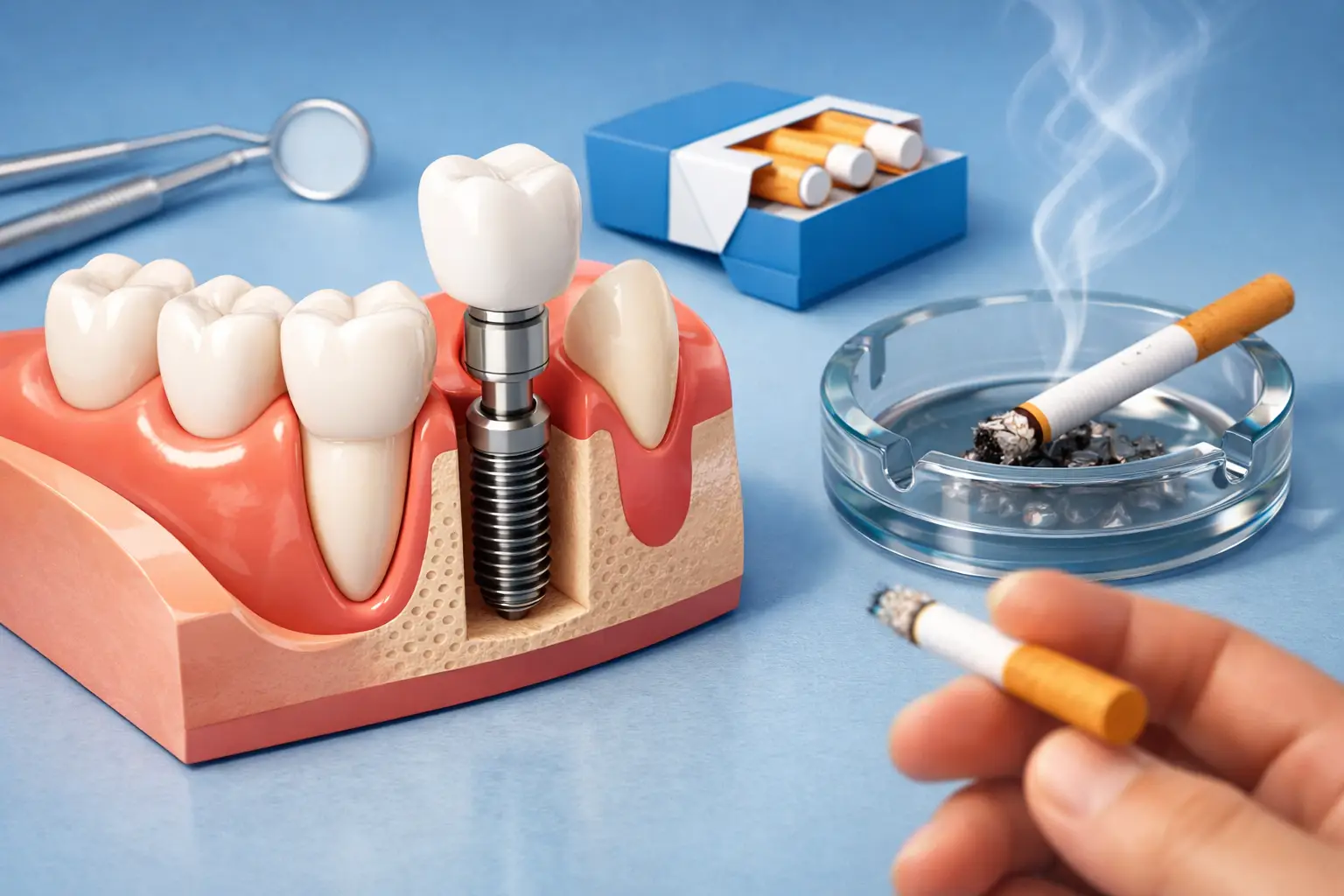
1 July 2026Losing a tooth is frustrating enough. Being told that smoking may complicate treatment can make the next step feel uncertain. So, can smokers get dental implants? In many cases, yes - but the answer is not a simple yes or no. Smoking raises the risk of implant failure, slows healing, and can affect the long-term stability of the result.
That does not mean implants are automatically off the table for smokers. It means planning matters more, healing support matters more, and your dentist needs a clear picture of your smoking habits before treatment begins. For patients considering care abroad as well as at home, this is especially important because the success of implant treatment depends not only on the procedure itself, but on what happens before surgery and during recovery.
Can smokers get dental implants with good results?
Yes, smokers can get dental implants, and many do. However, the success rate is generally lower than it is for non-smokers. The main reason is that tobacco affects blood flow to the gums and bone. When tissues receive less oxygen and fewer nutrients, the body has a harder time healing after implant placement.
Dental implants rely on a process called osseointegration. This is when the implant fuses with the jawbone and becomes stable enough to support a crown, bridge, or full-arch restoration. Smoking can interfere with that process. It also increases the risk of infection, gum inflammation, and bone loss around the implant over time.
The good news is that risk is not all-or-nothing. A person who smokes occasionally and is willing to stop before and after surgery is in a different position from someone who smokes heavily and continues throughout healing. That is why a proper consultation matters. An experienced implant team will assess bone quality, gum health, oral hygiene, medical history, and smoking frequency rather than making assumptions based on one factor alone.
Why smoking makes implant treatment more difficult
The issue is not simply nicotine on its own. Smoking exposes the mouth and body to heat, toxins, and chemicals that affect circulation and tissue repair. After implant surgery, the body needs a clean and stable environment to heal. Smoking works against that in several ways.
First, it reduces blood supply to the surgical area. That means slower healing and a weaker immune response. Second, it increases the amount of plaque and bacteria in the mouth, which can raise the risk of peri-implantitis - an inflammatory condition that affects the gum and bone around implants. Third, the suction and heat from smoking may irritate the area soon after surgery, especially in the first few days when the tissues are at their most vulnerable.
This becomes even more relevant in complex cases. If you need bone grafting, sinus lifting, multiple implants, or full-mouth rehabilitation, the healing demands are greater. In those situations, smoking can have a more noticeable effect on outcomes.
What dentists look at before saying yes
A smoker is not judged by the label alone. The clinical question is whether implant treatment can be carried out predictably and safely.
Your dentist will usually look at how much you smoke each day, how long you have smoked, whether you are willing to stop temporarily, and whether there are already signs of gum disease or bone loss. If the mouth is inflamed before treatment, the first step may be periodontal care rather than immediate implant placement.
Scans and digital imaging are also important. They show bone volume, bone density, and anatomical limitations. Some smokers still have enough healthy bone for standard implants. Others may need additional procedures or may be better suited to a different treatment plan.
A reliable clinic should be honest about these trade-offs. Saying yes to implants when the conditions are poor does not help the patient. In some cases, treatment may need to be delayed until oral health improves. In others, a staged plan can reduce risk and produce a stronger result.
How much smoking is too much?
There is no single number that guarantees success or failure. That said, heavier smoking is generally linked with higher complication rates. Someone smoking a few cigarettes at social occasions is not in the same risk category as someone smoking a pack a day.
Even so, low-level smoking is not harmless for implant healing. The safer approach is always to stop before surgery and continue avoiding cigarettes throughout the healing period. If permanent quitting is possible, that gives the best chance of long-term implant stability.
Stopping smoking before implant surgery
This is one of the most practical ways to improve your odds. Many implant dentists advise stopping smoking at least one week before surgery and for at least two months afterwards. Some recommend a longer smoke-free period depending on the case.
Why that window? The first phase of healing is critical. The gum must close properly, the bone must begin integrating with the implant surface, and inflammation needs to stay under control. Smoking during this period can undermine all three.
Patients often ask whether cutting down is enough. Cutting down is better than changing nothing, but complete abstinence during healing is stronger protection. If stopping fully feels difficult, your dental team should tell you that clearly rather than giving false reassurance.
For international patients, this conversation should happen before you book flights and hotels. A treatment plan is only as good as the conditions supporting it. If you are travelling for implants, it helps to arrive prepared, understand the healing rules in advance, and know what post-operative follow-up will look like once you return home.
Are some implant treatments better for smokers?
Sometimes, yes. The right option depends on how many teeth are missing, the condition of the bone, and whether there is active gum disease.
For a single missing tooth, a straightforward implant may still be suitable if the area is healthy and the patient follows post-operative instructions closely. For full-arch cases such as All-on-4 or All-on-6, smoking does not automatically rule treatment out, but the planning must be meticulous because several implants are carrying a larger restoration.
In more advanced cases with severe bone loss, extra procedures may be required. These can still be successful, but they carry more healing demands. A specialist-led assessment is particularly valuable here because treatment should be based on biology, not just on the patient’s preferred timeline.
Immediate loading can also require extra caution. While some patients can receive temporary teeth quickly after implant placement, others may need a more conservative schedule if smoking increases the risk of movement or poor integration.
How to improve your chances of success
If you smoke and want implants, the goal is not perfection overnight. It is reducing avoidable risk.
The most effective step is to stop smoking before treatment and throughout healing. Good oral hygiene also matters. That includes thorough brushing, interdental cleaning, and attending hygiene or periodontal appointments if recommended. Any gum disease should be stabilised before implants are placed.
It also helps to follow the surgical aftercare precisely. Take prescribed medication as directed, avoid irritating the site, attend review appointments, and report any unusual pain, swelling, bleeding, or mobility early. Waiting too long can turn a manageable issue into a failed implant.
Choosing an experienced clinic matters as well. Implant treatment should include diagnostic imaging, clear case selection, written aftercare advice, and structured follow-up. For patients travelling from the UK or elsewhere in Europe, this level of organisation is especially valuable because treatment involves both clinical precision and coordinated support. Clinics such as Dentaglobal build treatment around that full patient journey, which can make complex care more predictable.
When implants may not be the right choice yet
Sometimes the answer is not no forever, but not right now. If a patient has uncontrolled gum disease, very poor oral hygiene, severe bone loss, or no intention of reducing smoking during recovery, implant treatment may carry too much risk at that stage.
In those situations, a responsible dentist should explain the reasons plainly. Alternative restorations may be discussed, or treatment may begin with stabilising oral health first. That can feel disappointing, but it is often the safer route. The priority should be a result that lasts, not just a fast procedure.
The key point is this: smoking does not automatically disqualify you, but it does change the conversation. Implants can still be possible, and they can still be successful, if the case is assessed properly and the healing phase is taken seriously.
If you smoke and are considering dental implants, the most useful next step is a thorough consultation with honest clinical advice. A good treatment plan should not just tell you what can be done - it should show you how to give your implants the best possible chance to succeed.