


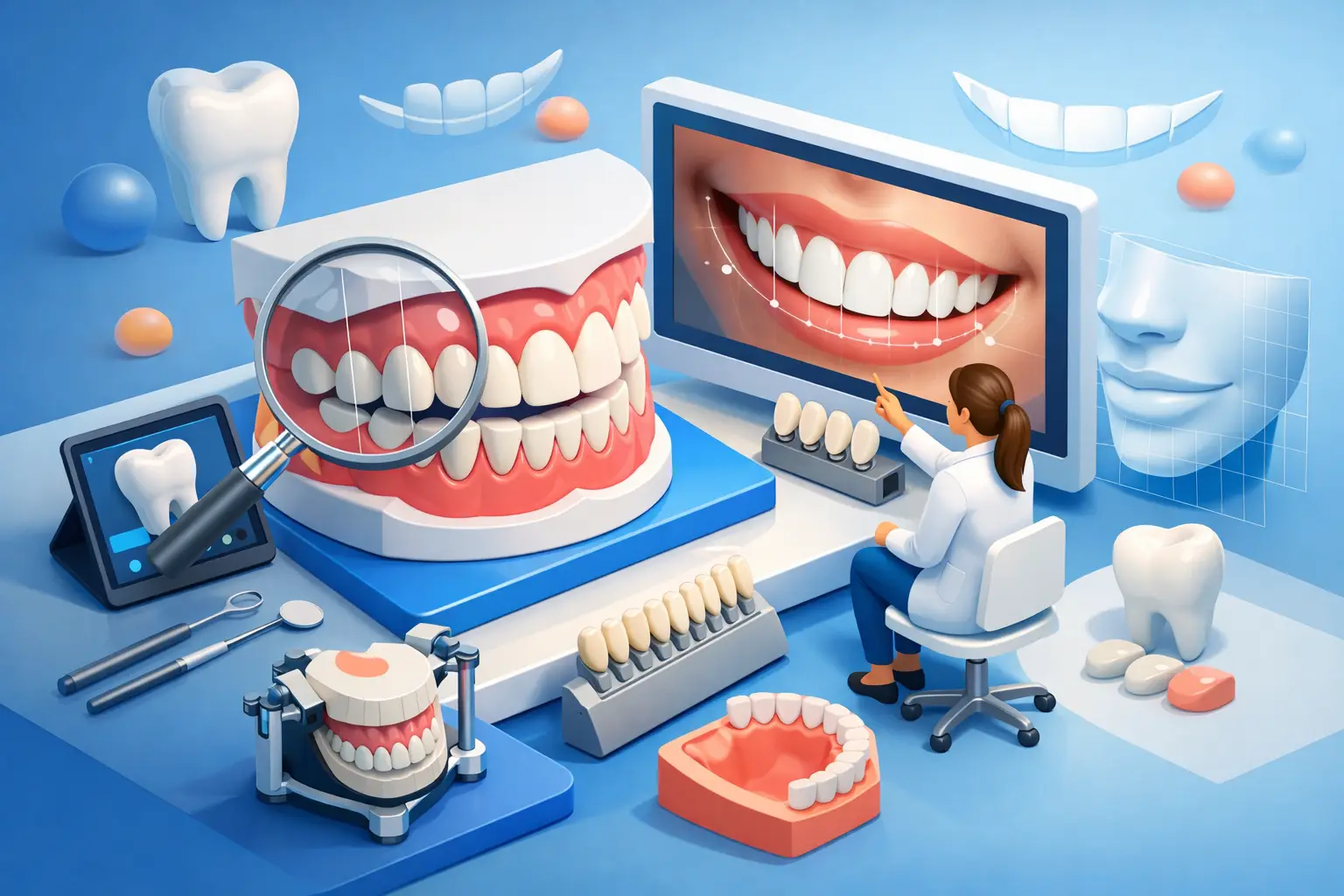
How Smile Design Works in Practice
15 June 2026A smile that looks good in a photo is one thing. A smile that suits your face, feels comfortable, and works properly when you speak and eat is something else entirely. That is the real answer to how smile design works - it is not a single cosmetic procedure, but a carefully planned process that combines aesthetics, dental function, and long-term oral health.
For some patients, smile design means small refinements such as whitening and minor reshaping. For others, it involves veneers, crowns, orthodontics, gum contouring, or implant treatment as part of a full rehabilitation. The right plan depends on your teeth, your facial features, your bite, and what you want to change.
What smile design actually means
Smile design is the process of planning improvements to the appearance of your teeth and gums in a way that matches your face and supports healthy function. The aim is not to create a generic "perfect smile". It is to create a result that looks balanced, natural, and appropriate for you.
That distinction matters. Teeth that are too white, too square, too long, or too uniform can look artificial very quickly. A well-designed smile takes into account proportions, tooth shape, gum levels, lip line, skin tone, facial symmetry, and the way the teeth come together. Cosmetic work should improve your appearance without making the result obvious for the wrong reasons.
How smile design works step by step
The process starts with diagnosis, not treatment. Before any veneer, crown, or aligner is discussed in detail, your dentist needs a clear picture of your oral health and the structural limits of the case.
Consultation and smile assessment
At the first stage, the dentist examines your teeth, gums, jaw relationship, and existing restorations. Photographs, digital scans, and X-rays are often used to assess both visible aesthetics and the foundations underneath. If you are travelling for treatment, this stage may begin remotely with photographs and imaging, then continue in clinic once you arrive.
This assessment is where your goals are matched against what is clinically sensible. A patient may ask for very white veneers when the real issue is uneven gum display. Another may think they need crowns on every tooth when orthodontic correction and whitening would preserve more healthy enamel. Good planning often saves patients from unnecessary treatment.
Facial and dental analysis
Once the basic diagnosis is complete, the design phase becomes more precise. The dentist studies how your teeth relate to your face at rest and when smiling. Important details include the centre line, the angle of the smile, tooth width-to-length ratio, the visibility of the upper teeth, and how much gum shows when you speak or laugh.
This is one reason digital dentistry has become so valuable. Digital scans and clinical photography make it easier to evaluate proportions accurately and show patients what may need to change. Rather than relying on guesswork, the team can compare your current smile with a proposed design in a more measurable way.
Building the treatment plan
After analysis, the dentist creates a plan based on the least invasive route that can still achieve the result. That might include whitening before any restorative work so the final shade can be matched properly. It could involve orthodontics to move crowded teeth into a better position before veneers are considered. In some cases, worn or missing teeth need rebuilding with crowns or implants before cosmetic details are addressed.
This is where treatment planning becomes highly individual. Two patients can want a "Hollywood smile" and need completely different solutions. One may be a good candidate for porcelain veneers. The other may need gum treatment, bite correction, and replacement of old dental work first.
The treatments that may be part of smile design
Smile design is a planning concept, not one fixed procedure. The final result may involve one treatment or several combined in the right order.
Veneers are often chosen when the main concerns are shape, size, mild misalignment, small gaps, or staining that does not respond well to whitening. They can produce a major visual change, but they are not ideal for every patient. If a bite is unstable or a patient grinds heavily, other options may be more appropriate unless protective measures are included.
Crowns are used when teeth are more heavily damaged, weakened, or previously restored. They can improve appearance while also strengthening the tooth. Zirconium crowns are commonly selected for visible areas because they can combine durability with a natural look.
Teeth whitening is sometimes enough on its own, especially where the teeth are already well aligned and healthy. It can also be used before veneers or crowns so surrounding natural teeth blend better with the final work.
Orthodontic treatment, including clear aligners in suitable cases, can improve spacing, crowding, and bite position. This may reduce the need for more aggressive cosmetic treatment later. Many patients are surprised to learn that moving teeth first can create a more conservative and better-looking result.
Gum contouring or gummy smile treatment may be recommended when the teeth appear short or uneven because of excess gum tissue. In these cases, changing the gum line can dramatically improve the smile without making the teeth look bulky.
Implants may be included when missing teeth affect both appearance and function. A well-designed smile cannot ignore gaps, collapsing bite patterns, or poor support from failing teeth.
Why bite and function matter as much as appearance
One of the biggest misconceptions about cosmetic dentistry is that it is mainly about looks. In reality, a smile that looks attractive but disrupts your bite can lead to chipping, jaw discomfort, uneven wear, or repeated repairs.
That is why functional checks are built into proper smile design. The dentist considers how your upper and lower teeth meet, whether there are signs of clenching or grinding, and whether certain restorations would be under too much pressure. Small details, such as the length of front teeth or the contour of the biting edges, can affect speech and comfort as well as appearance.
This is especially important in larger cases such as full-mouth rehabilitation. The aesthetic goal may be a brighter, more symmetrical smile, but the clinical goal is a stable result that remains comfortable over time.
How digital tools improve smile design
Patients often feel more confident when they can see the logic behind the plan. Digital scans, high-resolution photography, and mock-up techniques help make that possible.
A digital workflow allows the team to measure your current smile accurately, simulate changes, and communicate those changes more clearly. In many cases, a trial smile or mock-up can be used so you can preview shape and proportion before the final restorations are made. This reduces uncertainty and allows adjustments before treatment is completed.
For international patients, this level of planning is particularly useful. It supports clearer communication before travel, helps shorten decision-making time in clinic, and makes the treatment journey more predictable. At Dentaglobal, this structured approach is especially valuable for patients who want visible results without feeling rushed into the wrong treatment.
What affects the final result
The quality of a smile design outcome depends on more than materials. It depends on diagnosis, planning, and restraint.
Very white shades can look striking, but they are not always the most natural choice. Larger teeth may appear youthful in some faces and overpowering in others. Perfect symmetry can sound appealing, yet natural smiles often retain slight variations that make them look more authentic. The best result is usually the one that fits your features rather than following a fixed trend.
Budget and treatment time also play a role. Some patients want the fastest possible transformation. Others prefer a phased plan that spreads treatment over time. Neither approach is automatically better, but both need honest discussion about trade-offs. Quicker cosmetic changes may not solve underlying functional issues, while more comprehensive plans require greater commitment.
Is smile design right for everyone?
Smile design can help many adults, but timing matters. If there is active gum disease, untreated decay, infection, or severe bite instability, those issues should be dealt with first. Cosmetic work placed on an unhealthy foundation is more likely to fail.
It is also important to have realistic expectations. Smile design can improve colour, proportion, alignment, and overall harmony, but it should not erase every natural characteristic of your face. The strongest results are usually the ones that still look like you, only healthier, fresher, and more balanced.
If you are considering treatment abroad, it is worth choosing a clinic that can manage both the cosmetic side and the clinical detail behind it. Specialist input, digital planning, and clear follow-up arrangements matter just as much as the before-and-after photos.
A good smile design does not begin with choosing a shade or a veneer shape. It begins with understanding your face, your teeth, and the result you will still feel confident wearing years from now.