


Digital Smile Design Process Explained
28 May 2026A smile makeover should not begin with guesswork. If you are investing in veneers, crowns, implants or full-mouth rehabilitation, you need to see the direction of treatment before anything permanent is placed. That is where the digital smile design process makes a real difference. It gives both patient and clinician a clearer view of the result, the limitations, and the treatment steps needed to get there.
For many patients, especially those travelling abroad for dental care, clarity matters as much as aesthetics. You want to know what can be improved, how long it will take, and whether the final smile will suit your face rather than look artificial. A well-planned digital workflow helps answer those questions early.
What is the digital smile design process?
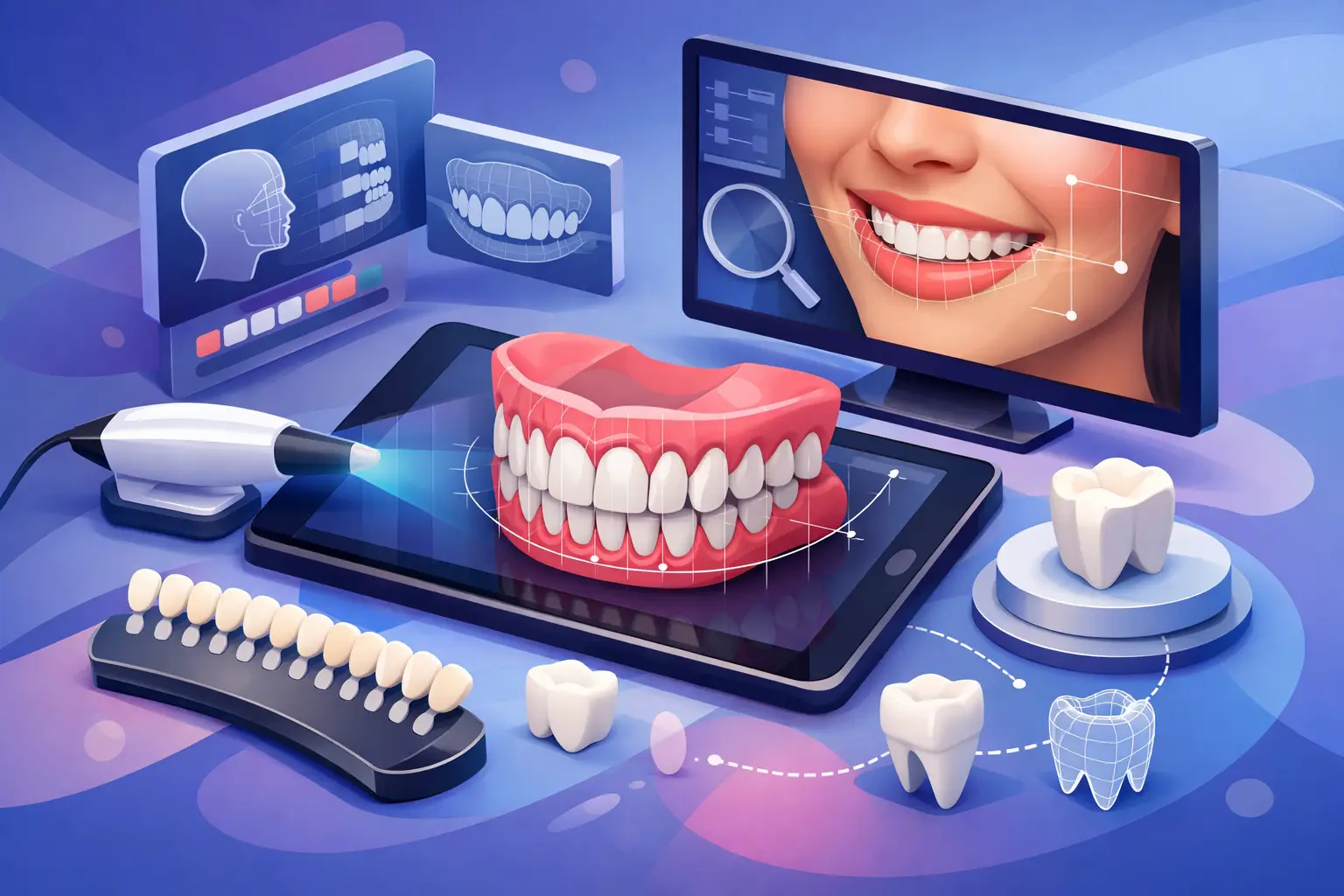
The digital smile design process is a planning method that uses photographs, videos, digital scans and clinical analysis to design a smile before treatment begins. Instead of relying only on visual judgement or traditional impressions, the dentist studies how your teeth, gums, lips and facial proportions work together.
This is not only about making teeth look whiter or straighter. A proper design process considers bite function, speech, gum levels, tooth proportions and the way your smile appears when you talk and laugh. The cosmetic goal needs to work with the clinical reality.
That balance is what makes the process valuable. A smile can look impressive in a static image but feel uncomfortable if the bite is wrong. Equally, a technically correct restoration may still disappoint if it does not suit the patient’s face. Digital planning aims to reduce that gap.
Why patients choose digital planning before treatment
The biggest benefit is predictability. When treatment involves several teeth, or a combination of procedures such as implants, crowns, gum contouring or veneers, small planning errors can become expensive and difficult to correct later.
Digital planning creates a more controlled starting point. It helps the clinical team assess whether the patient needs orthodontics before veneers, whether gum asymmetry should be corrected, or whether existing wear patterns will affect the final shape of the restorations. In other words, it can show when the quickest solution is not the best one.
For international patients, there is another advantage. Time in clinic is often limited. A structured digital workflow can make consultations more efficient because key records are gathered and reviewed in advance. That does not remove the need for clinical examination, but it helps streamline decisions and reduce uncertainty.
Step 1: Consultation and understanding your goals
The first step is not software. It is conversation. The dentist needs to understand what you want to change and why. Some patients dislike worn edges, staining or small gaps. Others are dealing with broken teeth, missing teeth or old dental work that no longer looks natural.
This stage is also where realistic expectations are set. A patient may ask for very bright, very square teeth because that style is common on social media, but that look may not suit their face, age or lip line. A good clinician will not simply copy a trend. The goal is to design a smile that looks balanced and believable.
Medical and dental history matters here too. Grinding, gum disease, untreated decay and jaw joint issues can all affect what is possible. Cosmetic treatment works best when the foundations are healthy.
Step 2: Digital records and facial analysis
Once the consultation is complete, the team gathers records. These usually include high-quality photographs, videos of speech and smiling, and digital intraoral scans. In some cases, X-rays or 3D imaging are also needed, particularly if implants or more complex restorative work are part of the plan.
The facial analysis is one of the most important parts of the process. Teeth should not be designed in isolation. The dentist studies the midline of the face, the curve of the lower lip, smile width, gum display and how much tooth shows at rest. Even a few millimetres can change the final effect.
Digital scans add another layer of precision. They show the current tooth position, bite relationship and available space. Compared with conventional impressions, digital scans are often faster, more comfortable and easier to review in detail.
Step 3: Designing the smile digitally
This is the point where the digital smile design process becomes visible to the patient. Using the records collected, the dentist creates a proposed smile design based on facial proportions, clinical needs and the treatment goals discussed earlier.
The proposed design may include changes to tooth length, width, edge position, symmetry and gum contour. If the patient has missing teeth or heavily worn teeth, the plan may also address vertical dimension and bite support. This is why smile design is not always a veneers-only conversation. In many cases, the attractive result depends on solving deeper structural issues first.
There is always a trade-off to discuss here. A larger, brighter smile may look more dramatic, but it can also seem less natural if pushed too far. A very conservative design protects more tooth structure, but may not deliver the level of change some patients expect. The right plan usually sits somewhere between those extremes.
Step 4: Linking design to the treatment plan
A digital design is useful only if it can be translated into practical dentistry. Once the visual concept is approved, the clinical team maps out the actual treatment sequence.
That sequence depends on the case. A patient may move directly to veneers or crowns if the teeth and gums are already healthy. Another patient may need periodontal treatment, whitening, orthodontic alignment, implant placement or temporary restorations before the final phase begins. In full-mouth cases, the timing can be more complex because function must be stabilised alongside appearance.
This step is especially important for patients comparing clinics on price alone. Two treatment plans can look similar on paper but differ significantly in quality if one includes proper planning, bite analysis and staged care while the other focuses only on speed.
Step 5: Mock-up or trial smile
One of the most useful parts of digital dentistry is the ability to test the design before making it permanent. In many cases, the digital plan can be turned into a mock-up or trial smile. This allows the patient to see the proposed shape in the mouth rather than only on a screen.
A mock-up helps answer practical questions. Do the teeth feel too long? Does the smile suit the face in motion? Is the speech affected? Patients often notice details at this stage that are hard to judge from photographs alone.
It also gives the dentist a chance to refine the plan. Minor adjustments to length, contour or symmetry at the trial stage can improve the final result considerably. That is far preferable to making changes after the restorations are completed.
Step 6: Final restorations and fit
After the design has been tested and approved, the final restorations are prepared. Depending on the treatment, these may be veneers, crowns, implant-supported prosthetics or a combination of different restorations.
Precision matters here. A restoration can look attractive in isolation but fail if the fit, contacts or bite are inaccurate. Digital workflows often help improve consistency between the approved design and the final laboratory work, though outcomes still depend on clinical skill and the quality of the dental technician’s work.
This is why the design phase should never be treated as marketing theatre. Nice visuals are not enough. The final result depends on whether the clinic can carry the plan through from diagnosis to preparation to fit, without losing the details that made the design work in the first place.
Is the digital smile design process right for every patient?
Not always in the same form. For straightforward whitening or a single crown, a full smile design workflow may not be necessary. But for cases involving multiple visible teeth, previous failed cosmetic work, bite changes, implants or a complete smile makeover, the added planning is often worth it.
It is also particularly useful for patients who feel unsure about committing to treatment without seeing a clear direction first. That includes many dental tourism patients, who want confidence before arranging travel and treatment dates.
What matters most is not whether a clinic uses the phrase, but how seriously it applies the process. Good digital planning should lead to better communication, better diagnosis and better treatment decisions. At Dentaglobal, that patient-centred approach is central to making advanced cosmetic and restorative care feel more transparent and manageable.
A well-designed smile should look right, feel right and function properly long after the treatment is finished. The best place to start is with a plan you can understand and trust.