

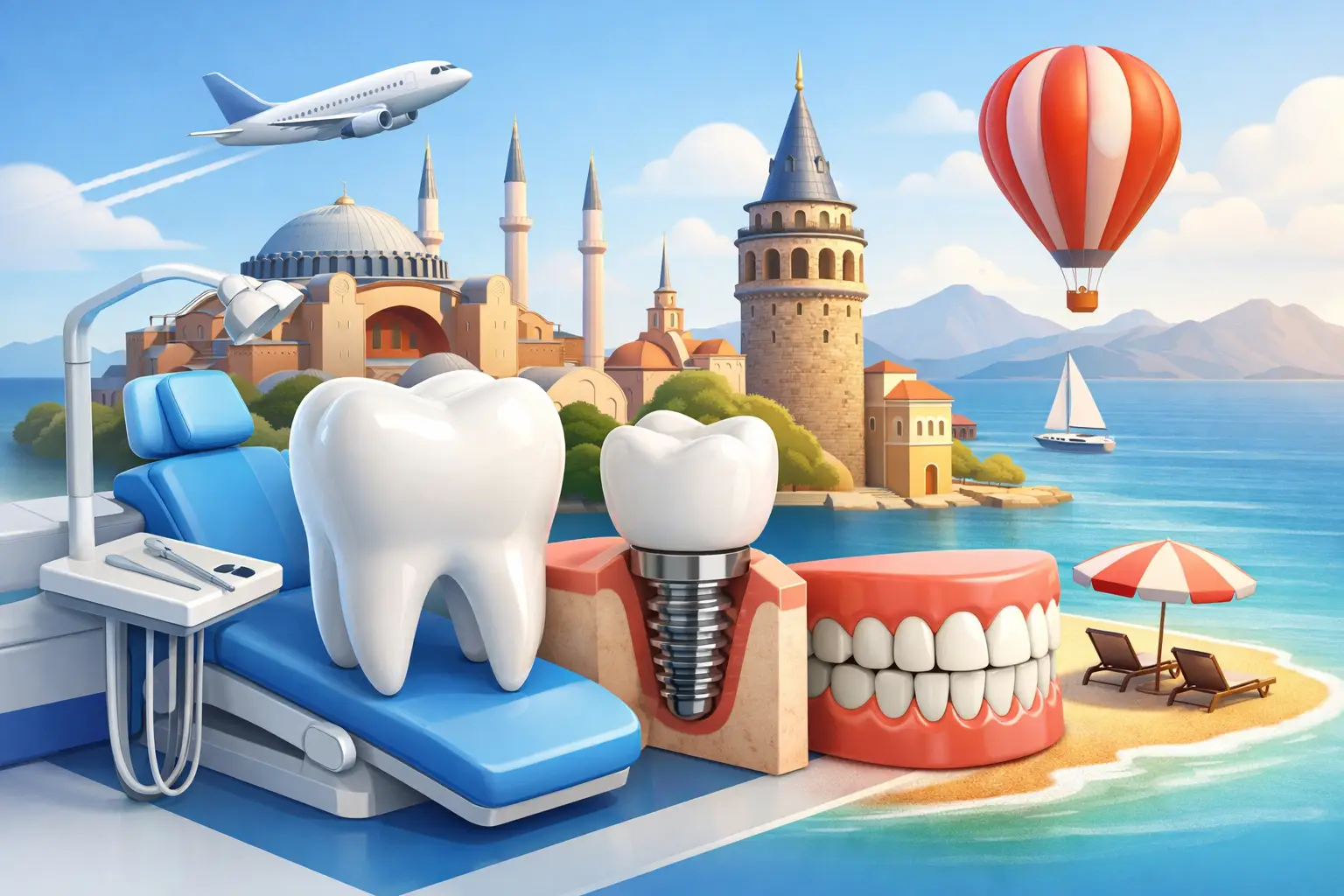
Is Turkey Good for Dental Work?
24 April 2026A full smile makeover in the UK can easily move from expensive to unrealistic once implants, crowns or veneers are involved. That is usually the moment people start asking the same question: is Turkey good for dental work, or does the lower price come with risks that are not worth taking?
The honest answer is that Turkey can be an excellent option for dental treatment, but only if you choose carefully. The country has become one of the most established destinations for dental tourism because it combines experienced clinicians, modern technology and more accessible pricing than many patients find at home. At the same time, not every clinic works to the same standard, and not every treatment is suitable for a fast, one-size-fits-all approach.
For patients considering treatment abroad, the real question is not simply whether Turkey is good for dental work. It is whether the specific clinic, dentist and treatment plan are right for your needs.
Why Turkey became a leading dental destination
Turkey did not build its dental tourism reputation by chance. Demand grew because many international patients were looking for the same thing: reliable treatment at a cost that felt manageable. In the UK and across Europe, larger restorative and cosmetic cases can be financially difficult, especially when several procedures are needed together.
Turkey answered that demand with high-volume private clinics, investment in digital dentistry and a patient journey designed around international travel. In cities such as İzmir, Istanbul and Antalya, clinics often treat patients from abroad every week. That matters because treating international patients well is not only about dentistry. It also involves communication, planning, timing, transport coordination and aftercare.
This is one reason Turkey appeals to patients needing implants, full-mouth rehabilitation, zirconium crowns, veneers or All-on-4 style solutions. These are treatments where both cost and logistics can shape the decision.
Is Turkey good for dental work in terms of quality?
It can be, yes. Many Turkish clinics use advanced imaging, digital smile design, CAD/CAM systems and implant planning technologies that are comparable to those used in respected private clinics elsewhere in Europe. You will also find highly trained dentists and specialists with significant experience in cosmetic and restorative work.
But quality in dentistry is never defined by country alone. It depends on diagnosis, clinical skill, materials, planning and follow-up. A well-run clinic in Turkey may provide excellent care. A poorly run clinic anywhere can produce disappointing or even damaging results.
This is where patients need to look beyond social media photos and headline prices. A smile can look bright in a before-and-after image while masking deeper issues such as bite problems, overtreatment or poor gum health management. Good dentistry is not only about appearance. It is about function, long-term stability and preserving healthy tooth structure wherever possible.
If a clinic offers the same cosmetic package to almost everyone, that should raise questions. Strong clinics assess whether you need veneers, crowns, implants, orthodontics, periodontal treatment or a combination. They explain why.
What makes treatment in Turkey more affordable?
Lower pricing does not automatically mean lower standards. In Turkey, the cost structure is different. Operational expenses, staffing costs and general overheads are often lower than in the UK. That gives clinics more flexibility to offer treatment at prices many international patients consider far better value.
This is especially relevant for complex treatment plans. A patient replacing several missing teeth or restoring a worn dentition may save a substantial amount, even after flights and accommodation are taken into account.
Still, affordability should be viewed properly. The cheapest quote is not always the best value. If treatment needs correcting later, the original saving can disappear quickly. A realistic plan, quality materials and proper aftercare often matter more than securing the lowest possible figure.
The main concerns patients should think about
Cost is usually the first reason people look at Turkey. Safety and trust are what determine whether they go ahead.
One concern is overtreatment. Some patients are quoted for full crowns when veneers, bonding or orthodontic correction may be more conservative. Another is treatment speed. While many procedures can be completed efficiently with good planning, not every mouth should be transformed in a few days. Bone quality, gum health, healing time and bite analysis all affect what is appropriate.
Aftercare is another major point. Dental treatment does not end when you leave the chair. If you are travelling home after implants, crowns or full-arch work, you need to know what happens if something feels wrong later. A dependable clinic should explain review timelines, remote support and what is covered if adjustments are needed.
Language and communication also matter more than many patients expect. You need to understand the diagnosis, the treatment stages, the limitations and the expected outcome. Clear communication reduces the chance of disappointment and helps you give informed consent.
How to judge whether a clinic is right for you
If you are asking whether Turkey is good for dental work, the better approach is to ask what a good Turkish dental clinic looks like.
A strong clinic starts with diagnosis rather than sales. That means reviewing X-rays or scans, discussing your concerns and recommending treatment that fits your oral health, budget and time frame. You should be told if a two-visit plan is necessary. You should also be told if a faster cosmetic option is not the best choice clinically.
Look for evidence of specialist input where relevant. Implant cases, gum disease, root canal retreatment and full-mouth rehabilitation often benefit from a multi-disciplinary approach. This usually leads to better planning and fewer compromises.
Technology is also worth paying attention to, but in a practical way. Digital scans, CBCT imaging and guided planning can improve precision and efficiency. They are not a guarantee of quality on their own, but they are useful signs that a clinic is investing in modern workflows.
Finally, review how the clinic supports international patients. Efficient communication, transparent scheduling and post-treatment contact are not extras. For a patient flying in from the UK, they are part of safe treatment delivery.
Which treatments work well for dental tourism?
Some procedures are especially well suited to treatment abroad. Implants, implant-supported full-arch restorations, crowns, bridges and veneers are common examples because they can often be planned in defined stages. Teeth whitening and some cosmetic treatments also fit easily into a shorter visit.
Other situations require more caution. Active gum disease, unstable bites, severe jaw issues and highly complex restorative cases may need a slower approach or more than one treatment phase. Orthodontics can be very successful in Turkey too, but because it involves ongoing review, patients should understand how follow-up will be handled.
The key point is that suitability depends on your clinical picture, not on what is popular online.
What UK patients should expect from the process
For UK patients, the best experience usually begins well before the flight. A proper consultation process should clarify the likely treatment options, estimated timing, expected healing and total costs. It should also explain what cannot be confirmed until an in-person clinical examination.
Once at the clinic, diagnostics should guide the final plan. Ethical providers do not promise the same result to every patient before they have seen the mouth properly. If there is a difference between the initial estimate and the final recommendation, the reasons should be clear.
After treatment, you should leave with instructions that are easy to follow. That includes guidance on eating, cleaning, temporary sensitivity, review points and what to do if you have concerns after returning home. Clinics that regularly treat international patients understand that reassurance matters just as much as technical work.
For this reason, many patients prefer structured providers such as Dentaglobal, where treatment planning, clinical care and post-treatment communication are designed around the needs of people travelling from abroad.
So, is Turkey good for dental work?
Yes, for many patients it is. Turkey offers access to modern dental care at prices that make complex treatment more achievable, especially for implants, cosmetic restorations and full-mouth cases. That said, the benefits only hold if the clinic prioritises diagnosis, quality materials, realistic planning and aftercare.
A good decision is rarely based on price alone. It comes from understanding what treatment you actually need, who will carry it out and how your care will be supported once you are back home. If a clinic can answer those questions clearly and confidently, Turkey can be a very smart place to have dental work done.
The most helpful way to move forward is to slow the decision down just enough to ask better questions. The right treatment should leave you with more than a lower bill - it should leave you with a healthy, functional smile you can trust.