

Zygomatic Implants Turkey: What to Expect
25 March 2026When standard implants are not an option because the upper jaw has lost too much bone, zygomatic implants Turkey searches usually begin for one reason - people want a fixed solution without being told they need long, complex grafting first. That is where this treatment stands apart. It is designed for patients with severe upper jaw bone loss who still want stable teeth, a clear plan, and a realistic route back to normal eating and smiling.
For many international patients, the appeal is not only the procedure itself. It is the chance to access advanced implant treatment with specialist planning, digital diagnostics, and a more manageable overall cost than they may face in the UK or wider Europe. But zygomatic implants are not a routine, one-size-fits-all treatment. They are a highly specific option, and the right clinic will say so plainly.
What are zygomatic implants?
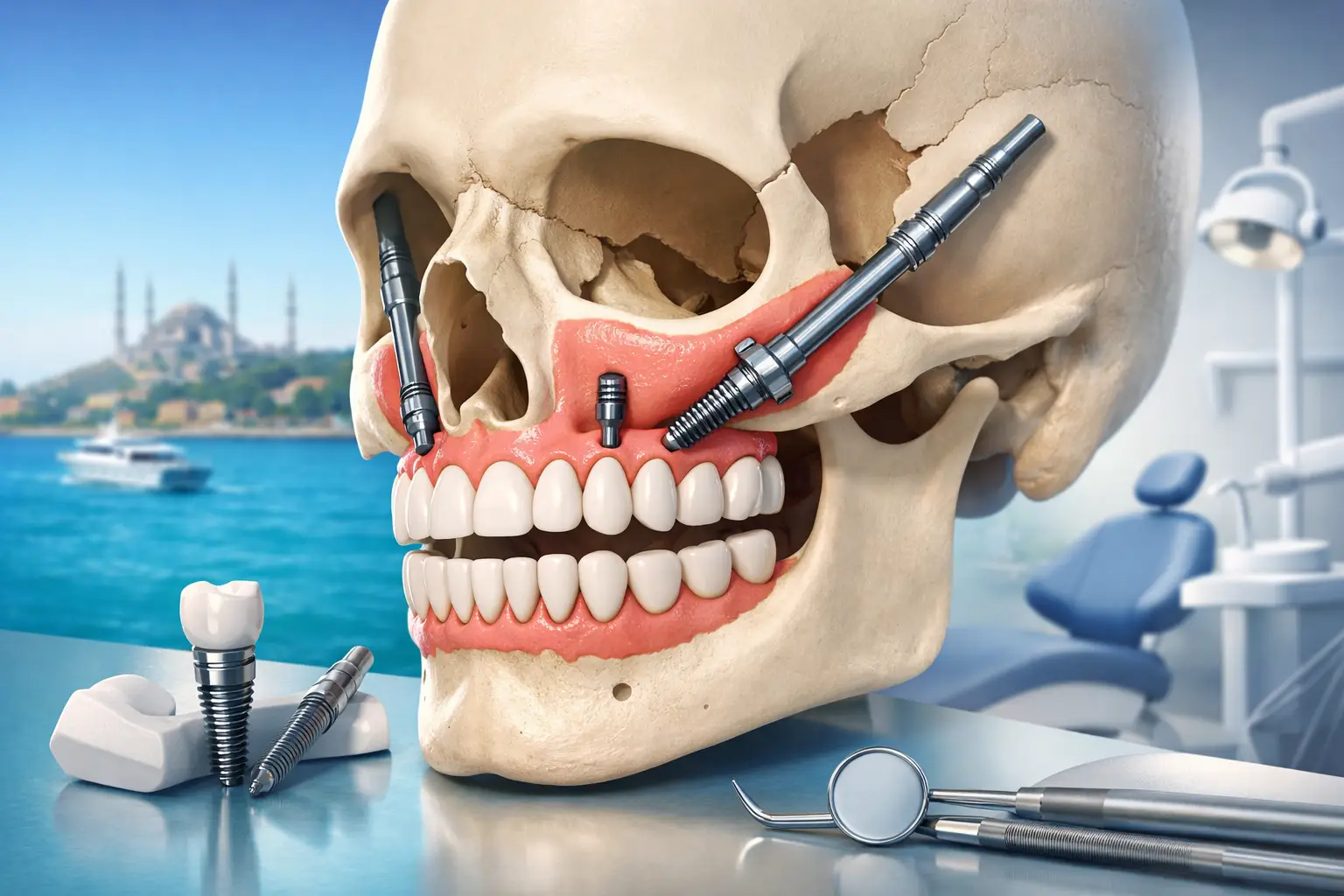
Zygomatic implants are longer implants placed into the zygomatic bone, commonly known as the cheekbone, rather than relying only on the upper jawbone. Because the cheekbone is naturally dense and strong, it can provide support for fixed teeth when the maxilla does not have enough bone for conventional implants.
This makes them especially useful for patients who have worn dentures for many years, have experienced advanced bone resorption, or have been told elsewhere that they are not suitable for implants without major grafting. In many cases, zygomatic implants can reduce or remove the need for sinus lifts and bone grafts, which can shorten the overall treatment timeline.
That said, this is not always the simpler route. The surgery is more advanced, and treatment should be planned by clinicians with specific experience in full-arch rehabilitation and complex implant cases.
Who may need zygomatic implants in Turkey?
Patients considering zygomatic implants in Turkey are usually dealing with more than one dental problem at the same time. It may be severe bone loss in the upper jaw, failing teeth, old bridges that can no longer be maintained, or dentures that have become unstable and uncomfortable.
You may be a suitable candidate if you have been told you have insufficient bone for traditional implants, especially in the posterior upper jaw. You may also be suitable if you want to avoid multiple grafting procedures and are looking for a fixed full-arch option.
Suitability depends on detailed imaging, medical history, oral condition, and treatment goals. A CT scan or similar 3D diagnostic assessment is essential. Good clinics do not make promises based on photographs alone, especially for this kind of surgery.
Why patients look at zygomatic implants Turkey options
Cost matters, but it is not the only reason patients travel. People comparing zygomatic implants Turkey options are often looking for three things at once: specialist-led treatment, efficient planning, and a smoother patient journey.
Turkey has become a strong choice for complex dental care because many clinics serving international patients have built systems around speed and coordination. That includes remote consultation, multilingual communication, digital treatment planning, airport and accommodation guidance, and follow-up support after the patient returns home.
For advanced implant work, those details are not secondary. They affect confidence before treatment and comfort afterwards. If you are travelling for a procedure as significant as zygomatic implants, you need clear timings, transparent explanations, and a team that can manage both the dental and logistical side properly.
How the treatment process usually works
The first stage is assessment. This often begins with photographs, a brief dental history, and any existing X-rays or scan reports. Once you arrive at the clinic, 3D imaging and in-person examination confirm whether zygomatic implants are clinically appropriate.
If they are, the next step is a detailed treatment plan. This includes the number of implants needed, whether extractions are required, whether a fixed provisional bridge can be placed quickly, and how long you should remain in Turkey after surgery. Many patients seeking full-arch treatment want immediate function, but this depends on bone quality, implant stability, and overall surgical conditions.
The procedure itself is usually carried out under carefully controlled clinical protocols. Because zygomatic implants involve longer implants and a more complex anatomical area, planning is precise. Digital imaging helps determine implant angulation and final prosthetic design.
After surgery, patients are monitored closely. Temporary fixed teeth may be provided in suitable cases, followed later by the final restoration once healing and stability are confirmed. The exact sequence varies. Some patients need a staged approach, while others can move more quickly.
What makes zygomatic implants different from standard implants?
The main difference is where support comes from. Standard implants depend on the jawbone having enough height and width to hold the implant securely. Zygomatic implants use the cheekbone when that support is missing in the upper jaw.
This changes treatment possibilities for patients who might otherwise be limited to removable dentures or major grafting. It can also shorten the path to fixed teeth. Instead of spending months rebuilding bone before implant placement, some patients can move directly into a rehabilitation plan.
Still, there are trade-offs. Zygomatic implants are technically demanding and not necessary for every patient with bone loss. If enough usable bone remains for conventional implants, that may still be the more straightforward option. The best treatment plan is the one that fits your anatomy, not the one with the most dramatic name.
Recovery and aftercare
Recovery varies from patient to patient, but some swelling, tenderness, and temporary dietary restrictions are normal. Most patients are advised to follow a soft-food plan initially and maintain careful oral hygiene while the area heals.
Good aftercare matters just as much as the surgery. You should expect clear written instructions, medication guidance, hygiene advice, and a defined point of contact if you have concerns after leaving the clinic. This is particularly important for international patients, because reassurance should not end at the airport.
Long-term success depends on regular reviews, appropriate cleaning, and looking after the prosthesis properly. Zygomatic implants are strong, but they still rely on a healthy maintenance routine.
What to ask before choosing a clinic
If you are comparing clinics for zygomatic implants, ask direct questions. How often does the surgical team carry out this procedure? What imaging is used for planning? Who designs and fits the prosthetic work? What does the quoted fee include, and what could increase the cost later?
You should also ask about contingencies. If your scans show that you are not suitable for the original plan, what alternatives are available? A trustworthy provider will explain different options, whether that means conventional implants, grafting, removable prosthetics, or a revised full-arch approach.
For many patients, confidence comes from structure. A clinic that can explain the stages clearly, provide realistic timescales, and stay responsive after treatment is usually far easier to trust than one that focuses only on price.
Cost, value, and the real comparison
Zygomatic implant treatment is never a bargain-basement procedure, nor should it be. It requires advanced diagnostics, surgical expertise, and carefully coordinated restorative work. When patients compare Turkey with UK prices, the difference can still be substantial, but value should be measured properly.
The real comparison is not just the headline fee. It is the combination of clinician experience, technology, implant system quality, temporary and final prosthetic planning, aftercare, and patient coordination. A lower quote may not include all stages, while a higher one may reflect a more complete pathway.
That is why transparent planning matters. Patients should know what they are paying for and what outcomes are realistically expected.
Why a structured patient journey matters
Complex treatment becomes less stressful when every stage has been thought through. From the first consultation to post-treatment communication, patients need consistency. That is especially true for overseas visitors arranging time off work, flights, and accommodation around major dental care.
At Dentaglobal, this structured approach is central to the patient experience. Advanced diagnostics, specialist-led planning, multilingual support, and follow-up communication all help reduce uncertainty around a treatment that already feels significant.
For many people, the decision is not only about replacing missing teeth. It is about restoring confidence in daily life - eating comfortably, speaking without worry, and no longer planning every social moment around unstable dentures or failing upper teeth.
If you are considering zygomatic implants in Turkey, the right next step is not rushing into surgery. It is getting a careful assessment from a team that understands both the clinical complexity and the practical reality of travelling for treatment.